Key Takeaways
- The best inexpensive watch brand is Casio, followed by Seiko and Citizen — these three Japanese manufacturers offer genuine horological quality from $15 to $300 that fashion brands charging twice as much cannot match in reliability, movement quality, or heritage.
- The $500–$1,500 range is the value sweet spot for Swiss watches — Hamilton, Tissot, and Longines deliver 80-hour power reserves, COSC certification, and silicon hairsprings at prices that would have been unimaginable a decade ago.
- Rolex is not the best watch — it’s the best investment — with 95–165% resale retention on sport models, no other brand offers the same combination of wearability, prestige, and financial security. But a $50 Casio keeps better absolute time.
- Every brand in this guide is a legitimate watchmaker — no fashion labels, no dropshipped microbrands, no rebranded Chinese movements. From the $15 Casio F-91W to the $500,000 Patek Philippe grand complication, these companies have earned their reputations over decades or centuries.
Why “Best” Depends Entirely on Price
Asking “what is the best wrist watch brand?” without specifying a budget is like asking “what’s the best car?” without mentioning whether you have $15,000 or $500,000 to spend. A Casio F-91W at $15 is just as perfect at its price point as a Patek Philippe Nautilus at $35,000 is at its own. Both represent the pinnacle of what’s available for the money. The worst mistake new watch buyers make is comparing across price tiers instead of within them.
This guide breaks the entire watch market into five clear tiers — from sub-$300 budget picks to six-figure haute horlogerie — and names the best brand and specific model at each level. The price examples come from the guide’s original publication period; they are not current verified quotes or a transaction study. If you already own a watch and want to know its current value, you can scan it with Grailr for indicative pricing and active eBay listings where available in seconds.
For readers specifically looking for affordable options, our best budget watches guide goes even deeper on the sub-$500 market. For those ready to invest in luxury, our complete luxury watch brands guide covers the upper tiers in exhaustive detail.
Tier 1: Best Budget Watch Brands ($15–$300)
The sub-$300 market is where the best inexpensive watch brands live — and it’s far more interesting than most people realize. These aren’t compromises; they’re some of the most iconic, proven, and genuinely functional timepieces ever manufactured. The four brands below have a combined 500+ years of watchmaking heritage, and every model listed has earned a cult following among collectors who could afford to spend ten times as much.
Casio
Founded 1946 · Japan · $15–$500
Casio is the undisputed king of budget watchmaking. The F-91W ($15) is the most successful watch ever made — over 3 billion units sold since 1989 — and it remains in production because nothing at any price does the fundamentals more reliably. A 7-year battery, ±30 seconds per month accuracy, and a 21-gram resin case that is effectively indestructible. Presidents, billionaires, and special-forces operators wear it not because they can’t afford better, but because nothing is better at being a pure time-telling instrument.
Step up to the G-Shock DW5600 ($55) and you enter the realm of watches that have survived everything humans can throw at them: 10-meter drops onto concrete, 200m water immersion, and decades of military abuse. The DW5600 is the original “square” G-Shock that started the entire shock-resistant category in 1983, and its retro-digital aesthetic has made it a streetwear icon. NASA engineers, Navy SEALs, and construction workers trust it because it simply will not break. At $55, it’s the most capable tool watch per dollar in the entire industry.
Timex
Founded 1854 · USA · $30–$200
America’s oldest watch company has been making timepieces for over 170 years, and the Weekender ($35) is their modern classic. A clean field-style dial, universally wearable 38mm case, and Timex’s legendary Indiglo backlight — a full-dial electroluminescent glow that is genuinely one of the best low-light legibility systems ever put on a watch at any price. Swap the NATO strap in 30 seconds for a completely different look. The Expedition ($50) adds 50m water resistance and a more rugged field-watch aesthetic for outdoor enthusiasts.
Seiko
Founded 1881 · Japan · $120–$3,000+
Seiko is the single most important brand in the budget-to-mid-tier space. The SNK809 ($120) is the gateway drug to mechanical watches — a 37mm military-style automatic with Seiko’s 7S26 movement, day-date display, and exhibition caseback showing the beating heart of the caliber. It’s the watch that has converted more quartz wearers into mechanical enthusiasts than any other timepiece in history. For something dressier, the Presage Cocktail Time ($295) offers a stunning sunburst dial with applied indices and the upgraded 4R35 automatic movement — a watch that looks like it should cost $800.
Citizen
Founded 1918 · Japan · $120–$1,000+
Citizen’s Eco-Drive technology is the best of both worlds: quartz accuracy with no battery changes — ever. A solar cell beneath the dial converts any light source into power, storing enough energy for 6+ months of darkness. The Eco-Drive BM8180 ($120) is the perfect everyday watch: 37mm case, day-date display, 100m water resistance, and a clean military-inspired dial that transitions from office to weekend without effort. Citizen is the brand watch enthusiasts recommend when someone says “I just want a watch that works forever without thinking about it.”
Tier 2: Best Mid-Range Watch Brands ($300–$1,500)
This is where watchmaking gets serious. Between $300 and $1,500, you gain access to Swiss-made movements, sapphire crystals, 80-hour power reserves, and brands with over a century of continuous production. The mid-range tier is where most enthusiasts find their sweet spot — genuine horological quality without the five-figure commitment. For more picks in this range, see our best affordable watches guide.
Orient
Founded 1950 · Japan · $150–$500
Orient is Seiko’s sister brand and uses exclusively in-house movements — a claim few brands at any price can make. The Bambino ($280) is the best dress watch under $500: a 40.5mm case with a domed mineral crystal, applied indices, and Orient’s F6722 automatic caliber. It looks like a $1,000 watch and wears like one too. The Kamasu ($310) is the diver option — 200m water resistance, sapphire crystal, and an in-house F6922 automatic with hand-winding and hacking. At $310, it competes with watches costing twice as much.
Hamilton
Founded 1892 · Swiss-Made · $400–$2,500
Hamilton occupies a unique position: American heritage, Swiss manufacturing, and Swatch Group access to ETA movements. The Khaki Field Automatic ($525) uses the H-10 caliber with an 80-hour power reserve — a specification that cost $2,000+ just ten years ago. Take it off on Friday night and it’s still running Monday morning. The military-inspired dial traces back to Hamilton’s role as the official supplier to the U.S. Army in both World Wars. The Jazzmaster Open Heart ($795) exposes the balance wheel through a dial aperture, offering a mesmerizing view of the mechanical movement for well under $1,000.
Tissot
Founded 1853 · Swiss-Made · $250–$2,000
Tissot has been making watches since before the American Civil War, and their current lineup is arguably the strongest in the brand’s 173-year history. The PRX Powermatic 80 ($650) is the watch of the moment — an integrated-bracelet design that channels 1970s luxury sports watch aesthetics at a fraction of the cost. The Powermatic 80 movement delivers an 80-hour reserve with silicon hairspring for improved accuracy and shock resistance. The Gentleman Powermatic 80 ($650) is the versatile daily wearer — dressy enough for a boardroom, sporty enough for weekends, with the same excellent movement and a more conservative design.
Longines
Founded 1832 · Swiss-Made · $1,000–$3,500
Longines is where mid-range starts feeling like luxury. Part of the Swatch Group, Longines leverages access to top-tier ETA movements and adds COSC chronometer certification and silicon hairsprings — technology normally found at double the price. The Spirit ($2,350) is the standout: a 40mm pilot’s watch with chronometer certification, column-wheel chronograph, and a silicon balance spring. At $2,350, you’re getting specifications and finishing that directly compete with $5,000 competitors. Longines has been making watches since 1832, giving it more continuous heritage than Rolex, Omega, or almost any brand on this list.
Brand Comparison: Budget to Mid-Range
| Brand | Key Model | Price | Movement | Best For |
|---|---|---|---|---|
| Casio | G-Shock DW5600 | $55 | Quartz digital | Durability & value |
| Timex | Weekender | $35 | Quartz analog | Casual everyday |
| Seiko | SNK809 | $120 | Auto (7S26) | First automatic |
| Citizen | Eco-Drive BM8180 | $120 | Solar quartz | Zero maintenance |
| Orient | Bambino V2 | $280 | Auto (in-house) | Dress watch value |
| Hamilton | Khaki Field | $525 | Auto (H-10, 80hr) | Swiss field watch |
| Tissot | PRX Powermatic 80 | $650 | Auto (80hr, Si) | Modern Swiss style |
| Longines | Spirit | $2,350 | COSC chrono (Si) | Near-luxury specs |
Prices reflect typical street pricing as of June 2026. Si = silicon hairspring. Auto = automatic mechanical. All prices in USD and may vary by retailer and region.
Check Any Watch Price in Seconds
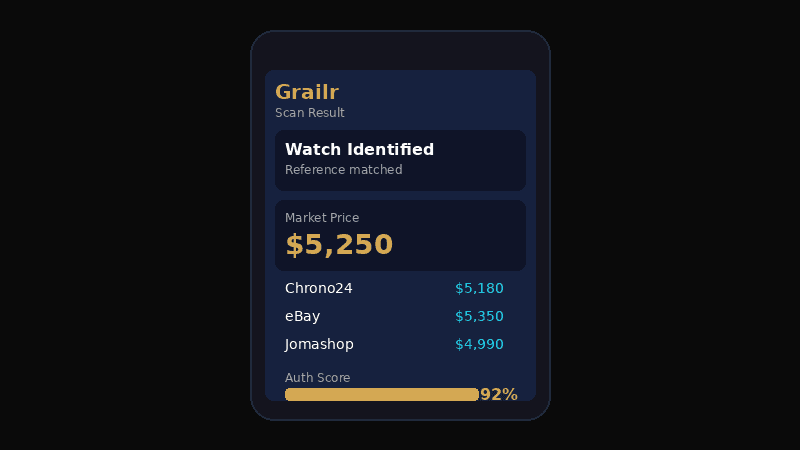
Grailr uses a photo to suggest a watch identity and an indicative price estimate, with active eBay listings where available. Check the exact reference and condition independently; a photo scan cannot authenticate a watch.
- Grailr suggests brand, model & reference
- Active eBay listings where available
- Identification confidence, not authentication
Tier 3: Best Premium Luxury Brands ($1,500–$5,000)
At this tier, you’re buying watches that serious collectors respect — brands with in-house movements, proprietary materials, and finishing that you can feel the moment the bracelet clicks onto your wrist. These are the watches that make people in the know nod approvingly. For a broader look at watches that deliver exceptional long-term value, our watches that hold their value guide covers the financial angle in depth.
Omega
Founded 1848 · Swiss · $3,100–$50,000+
Omega is Rolex’s closest competitor in brand recognition and technical capability — and in several areas, it surpasses Rolex entirely. The Speedmaster Professional ($6,400) went to the Moon and remains NASA flight-qualified. The Seamaster 300M ($5,500) is James Bond’s watch. Both feature Omega’s Master Chronometer certification, which tests movements to 15,000 gauss magnetic resistance — far beyond COSC standards and beyond what most Swiss brands achieve at any price. The co-axial escapement reduces friction and extends service intervals to 8–10 years. For collectors who want Swiss prestige and genuine technical innovation without the Rolex waitlist, Omega is the rational answer.
TAG Heuer
Founded 1860 · Swiss · $1,650–$20,000+
TAG Heuer’s connection to motorsport is not just marketing — the brand invented the oscillating pinion in 1887 and the first dashboard chronograph. The Carrera Chronograph ($3,150) is their icon: a clean, legible racing chronograph originally designed for drivers who needed to read elapsed time at a glance on the track. In 2026, the Carrera features an in-house TH20 caliber with 80-hour power reserve. TAG Heuer sits in a sweet spot between accessible and aspirational, making it a strong entry point into luxury chronographs.
Tudor
Founded 1926 · Swiss · $2,725–$5,500
Rolex’s sister brand has evolved from “affordable Rolex alternative” into a genuine powerhouse. The Black Bay 58 ($4,475) is one of the finest dive watches at any price: 39mm case, 200m water resistance, METAS Master Chronometer certification (a standard shared with Omega and beyond what most Swiss brands achieve), and vintage proportions that wear beautifully on any wrist size. Tudor delivers approximately 90% of the Rolex experience at 40% of the price, making it the smartest gateway into high-end watchmaking. Resale retention of 75–90% confirms the collector market agrees.
Grand Seiko
Founded 1960 · Japan · $3,000–$50,000+
Japan’s answer to Swiss supremacy. Grand Seiko’s Zaratsu polishing creates mirror-like surfaces that rival Patek Philippe at a fraction of the cost. The Heritage Collection ($3,000–$6,000) offers dial work that is genuinely world-class — textured finishes inspired by Japanese seasons that catch light in ways no photograph can capture. The exclusive Spring Drive movement is a hybrid of mechanical and electronic technology that produces the smoothest seconds hand sweep in all of watchmaking. No other brand offers this level of finishing under $5,000. It’s the connoisseur’s choice.
Tier 4: Best Aspirational Luxury Brands ($5,000–$30,000)
This is where watches become more than accessories — they become statements. The brands in this tier are household names for a reason: uncompromising quality, century-spanning heritage, and resale values that make them some of the most rational luxury purchases you can make. These are watches your grandchildren will wear.
Rolex
Founded 1905 · Swiss · $5,800–$75,000+
The most recognized luxury watch brand on Earth needs no introduction, but it does need context. Rolex doesn’t make the most complicated watches or the most finely finished — but it makes the most reliable, desirable, and liquid. Every model uses Superlative Chronometer certification (±2 sec/day), proprietary Oystersteel (904L stainless), and a minimum 70-hour power reserve. The Oyster Perpetual ($5,800) is the entry point: a time-only watch in the iconic Oyster case. The Submariner ($10,250) is the benchmark dive watch against which every competitor is measured. Resale retention of 95–165% on sport models means a Rolex is as much a financial asset as a timepiece. If you can get an allocation from an authorized dealer, buying at retail is virtually risk-free from an investment standpoint.
Cartier
Founded 1847 · Swiss/French · $3,050–$200,000+
Cartier invented the modern wristwatch. In 1904, Louis Cartier created the Santos for his aviator friend Alberto Santos-Dumont, who needed to check the time without taking his hands off the controls. That watch — the Santos ($7,850) — is still in production and still turning heads 122 years later. The Tank Must ($3,050) is the most iconic rectangular watch ever designed, worn by everyone from Jackie Kennedy to Michelle Obama. Cartier’s jewellery heritage gives its watches an elegance that pure watchmakers struggle to replicate. Resale retention of 65–85% is strong for a brand that prioritizes design over pure horological complexity.
IWC Schaffhausen
Founded 1868 · Swiss · $5,000–$150,000+
IWC combines German engineering precision with Swiss craftsmanship from its manufacture in Schaffhausen, near the German border. The Portugieser Chronograph ($8,200) is one of the most elegant chronographs ever designed — a 41mm dress chronograph with a clean, perfectly proportioned dial that has graced the wrists of CEOs and architects for decades. The Pilot’s Watch lineup draws from WWII aviation heritage with oversized crowns and high-legibility dials. IWC is the thinking person’s luxury watch — understated, engineered, and quietly excellent.
Breitling
Founded 1884 · Swiss · $3,400–$30,000+
The aviator’s choice. Breitling’s Navitimer ($9,500) features the iconic circular slide-rule bezel that pilots have used since 1952 to calculate fuel consumption, rate of climb, and ground speed. It’s one of the longest-produced chronographs in history and remains an instrument-rated pilot’s favourite in the cockpit. Under new ownership, Breitling has streamlined its lineup into three clear pillars — air, land, and sea — with robust chronographs and a no-nonsense tool-watch philosophy that resonates with professionals who actually use their watches.
Tier 5: Best Ultra-Luxury Brands ($30,000+)
The summit of watchmaking. These brands represent the absolute pinnacle of horological craftsmanship — hand-finished movements that take months to assemble, materials selected with obsessive precision, and heritage measured in centuries. This is where watches transcend timekeeping and become art. For a full exploration of this tier, our luxury watch brands guide provides the complete picture.
Patek Philippe
Founded 1839 · Swiss · $25,060–$500,000+
“You never actually own a Patek Philippe; you merely look after it for the next generation.” It’s not just marketing — Patek maintains a complete service archive dating back to its 1839 founding and can restore any watch they’ve ever made. The Calatrava ($25,060) is the definitive dress watch: a 39mm round case with a clean dial and a hand-finished movement visible through the caseback. The Nautilus 5811 ($35,000 retail, $80,000+ secondary) is the most coveted luxury sports watch in existence. Patek is known for perpetual calendars, minute repeaters, and hand-finishing that takes 9–12 months per movement. Resale retention of 100–400% on sport models makes Patek the safest investment in horology.
Audemars Piguet
Founded 1875 · Swiss · $25,300–$300,000+
AP changed the entire luxury watch industry in 1972 when Gérald Genta designed the Royal Oak — the first luxury sports watch in stainless steel. Its octagonal bezel secured by visible hexagonal screws and the tapisserie dial remain the most recognizable design in horology. The Royal Oak 15510ST ($31,900) is the icon. Every component is hand-finished to a standard that takes weeks per case. AP resale ranges from 90–150% on steel models, with certain Royal Oak references commanding significant premiums. The brand produces fewer than 50,000 watches per year, ensuring genuine exclusivity.
Vacheron Constantin
Founded 1755 · Swiss · $18,000–$500,000+
The oldest continuously operating watch manufacturer in the world — Vacheron Constantin has been making watches without interruption since 1755, two decades before the American Revolution. The Overseas ($25,200) competes with the Nautilus and Royal Oak as a luxury sports watch but flies under the radar, which is exactly its appeal. The Patrimony and Traditionnelle lines represent classical watchmaking at its absolute finest. Vacheron is quieter than Patek and AP, producing refined pieces for collectors who prefer whispered excellence over billboard recognition. If you know, you know.
A. Lange & Söhne
Founded 1845 · German · $18,000–$400,000+
Germany’s finest. From their atelier in Glashutte, Saxony, Lange produces some of the most beautifully finished movements in existence — German silver plates, hand-engraved balance cocks, and the signature Lange outsize date. Every movement is assembled twice: once for regulation, then completely disassembled, cleaned, and reassembled for final delivery. The Saxonia ($18,000) is the entry point into a world of craftsmanship that rivals Patek Philippe. The Lange 1 is an icon of asymmetric dial design. If your collection is all Swiss, a Lange adds something genuinely, fundamentally different.
Full Brand Comparison: Every Tier at a Glance
| Brand | Entry Price | Flagship Model | Flagship Price | Resale |
|---|---|---|---|---|
| Casio | $15 | G-Shock DW5600 | $55 | Low (limited editions excepted) |
| Seiko | $120 | Presage Cocktail | $295 | Moderate (discontinued refs rise) |
| Hamilton | $525 | Khaki Field | $525 | 75–85% |
| Tissot | $650 | PRX Powermatic 80 | $650 | 60–75% |
| Omega | $3,100 | Speedmaster | $6,400 | 60–90% |
| Tudor | $2,725 | Black Bay 58 | $4,475 | 75–90% |
| Rolex | $5,800 | Submariner | $10,250 | 95–165% |
| Cartier | $3,050 | Santos | $7,850 | 65–85% |
| Patek Philippe | $25,060 | Nautilus | $35,000 | 100–400% |
| Audemars Piguet | $25,300 | Royal Oak | $31,900 | 90–150% |
| Vacheron Constantin | $18,000 | Overseas | $25,200 | 70–85% |
| A. Lange & Söhne | $18,000 | Saxonia | $18,000 | 70–85% |
Resale data based on 2026 secondary market averages from Chrono24, WatchCharts, and dealer networks. Retention percentages represent typical pre-owned value relative to original retail after 3–5 years.
How to Choose the Right Tier for You
The most common mistake new watch buyers make is stretching beyond their comfort zone because the internet told them a $5,000 watch is the “minimum for a real watch.” That’s nonsense. The right tier for you depends on three factors: your budget, your lifestyle, and what you actually want from a watch.
If you want pure function and zero worry, spend $15–$300 on Casio, Seiko, or Citizen. A $50 G-Shock will survive literally anything your life throws at it, keeps better time than any mechanical watch at any price, and you’ll never think about servicing, insurance, or scratching it. For many people — including wealthy collectors who own six-figure watches — a cheap Casio is their most-worn piece precisely because it’s so liberating to not care.
If you appreciate craftsmanship and want “Swiss-made” on the dial, the $500–$1,500 range with Hamilton, Tissot, and Longines delivers genuine horological quality. You’re getting 80-hour power reserves, sapphire crystals, and movements that are assembled in the same Swiss villages as watches costing five times more. This is the tier where most enthusiasts find their long-term sweet spot.
If you want investment-grade luxury, Rolex is the rational choice. The Oyster Perpetual at $5,800 is the most affordable way to own a watch that will almost certainly retain or appreciate in value. But be honest with yourself: if buying a Rolex means putting it on a credit card, you’re not in Rolex territory yet — and that’s perfectly fine. Use Grailr’s appraisal tool to check fair market pricing before committing to any purchase.
If you want the pinnacle of watchmaking art, the Holy Trinity — Patek Philippe, Audemars Piguet, and Vacheron Constantin — represents the absolute summit. But understand that you’re paying for hand-finishing measured in months per movement, materials selected with obsessive precision, and heritage spanning centuries. The functional time-telling difference between a $25,000 Patek and a $15 Casio is zero. What you’re buying is art, engineering, and a legacy.
Frequently Asked Questions
What is the best wrist watch brand overall?
There is no single best brand — it depends entirely on budget and priorities. For under $100, Casio is unmatched. For $100–$500, Seiko and Citizen dominate. For $500–$2,000, Hamilton and Tissot deliver Swiss quality. For luxury, Omega and Tudor offer the best value between $3,000–$6,000. Rolex dominates resale from $5,800. At the pinnacle, Patek Philippe and Audemars Piguet represent the peak of the craft.
What is the best inexpensive watch brand?
Casio is the best inexpensive watch brand overall. The F-91W ($15) is the most successful watch ever made, and the G-Shock DW5600 ($55) is virtually indestructible. For automatics on a budget, Seiko (SNK809 at $120) and Orient (Bambino at $280) are unbeatable. Citizen’s Eco-Drive line starting at $120 offers solar-powered quartz that never needs a battery change.
Is Rolex worth the money compared to cheaper brands?
Rolex justifies its price through industry-leading resale value (95–165%), Superlative Chronometer accuracy (±2 sec/day), and proprietary materials. A $50 Casio keeps better time than a $10,000 Submariner, but Rolex offers mechanical craftsmanship, prestige, and investment value that quartz cannot match. If you prioritize pure function, spend $50–$500 on Casio or Seiko. If you value engineering, heritage, and resale, Rolex is among the most rational luxury purchases available.
What watch brands hold their value best?
Rolex leads with 95–165% resale retention on sport models. Patek Philippe Nautilus models appreciate 200–400%. Audemars Piguet Royal Oak retains 90–150%. Tudor holds 75–90%. At the budget end, certain Casio G-Shock limited editions and discontinued Seiko references trade at or above retail. The pattern: watches with genuine enthusiast demand and limited supply hold value; fashion brands depreciate 30–50% immediately.
Should I buy quartz or automatic for my first watch?
For pure practicality, quartz wins — more accurate, zero maintenance, and cheaper. A $50 Casio quartz outperforms a $5,000 mechanical in timekeeping. But automatic watches offer a mechanical engine on your wrist powered by your movement, with a sweeping seconds hand and centuries of tradition. Solar quartz (Citizen Eco-Drive) gives you quartz accuracy with no battery changes. For mechanical romance, start with a Seiko SNK809 ($120) or Orient Bambino ($280).
What is the best watch brand between $500 and $1,000?
Hamilton and Tissot dominate this range. Hamilton’s Khaki Field ($525) offers an 80-hour Swiss automatic with military heritage. Tissot’s PRX Powermatic 80 ($650) is one of the best-looking watches at any price with an integrated bracelet and 80-hour power reserve. Both are Swiss-made with serious heritage — Hamilton since 1892, Tissot since 1853.
Related Articles
Best Watch on a Budget in 2026
Read article Brand GuideThe 20 Best High-End Watch Brands
Read article Buying GuideBest Affordable Watches in 2026
Read article Brand GuideThe Complete List of Luxury Watch Brands
Read article Brand GuideBest Michael Kors Watches for Women: Every Collection Compared
Read articleThe Bottom Line
The best wrist watch brand in 2026 is whichever one matches your budget, your lifestyle, and your priorities — not the one with the most Instagram followers or the longest waitlist. A $15 Casio F-91W keeps time as accurately as a $35,000 Patek Philippe Nautilus. A $55 G-Shock survives abuse that would destroy a $30,000 Royal Oak. A $525 Hamilton Khaki Field delivers an 80-hour Swiss power reserve that rivals $2,500 Longines pieces. The specs are real; only the price tags and finishing differ.
What every brand on this list shares is substance earned over decades or centuries. These companies have staked their reputations on every single watch they ship. Casio has been perfecting digital quartz since the 1970s. Seiko invented the quartz movement and the Spring Drive. Hamilton supplied the U.S. military. Omega went to the Moon. Rolex defined modern luxury. Patek Philippe has maintained service records since 1839. These aren’t marketing stories — they’re engineering legacies.
Our recommendation: pick the tier that fits your budget without stress, choose the brand and model that makes your heart rate spike, and use Grailr’s indicative pricing to verify you’re paying fair market value. The best watch is the one you wear every day with a smile. At every price from $15 to $500,000, that watch exists — and it’s waiting for you.
Identify & Price Any Watch Instantly
Grailr uses a photo to suggest a watch identity and an indicative price estimate, with active eBay listings where available. Check the exact reference and condition independently; a photo scan cannot authenticate a watch.
Sources and price context
- Citizen Eco-Drive explanation — Confirms light-powered operation; charging and reserve depend on the model.
- Audemars Piguet Royal Oak history — Documents the 1972 launch and later collection developments.
These primary sources support the specific history, specification or policy points noted above. Prices and resale percentages elsewhere in this guide are indicative editorial figures, not a verified transaction dataset or guaranteed returns. Confirm the exact reference, region, condition and current quote before buying; asking prices are not completed-sale prices.