Key Takeaways
- There is no formal “waitlist” — ADs use allocation based on relationship and purchase history, not a first-come-first-served queue.
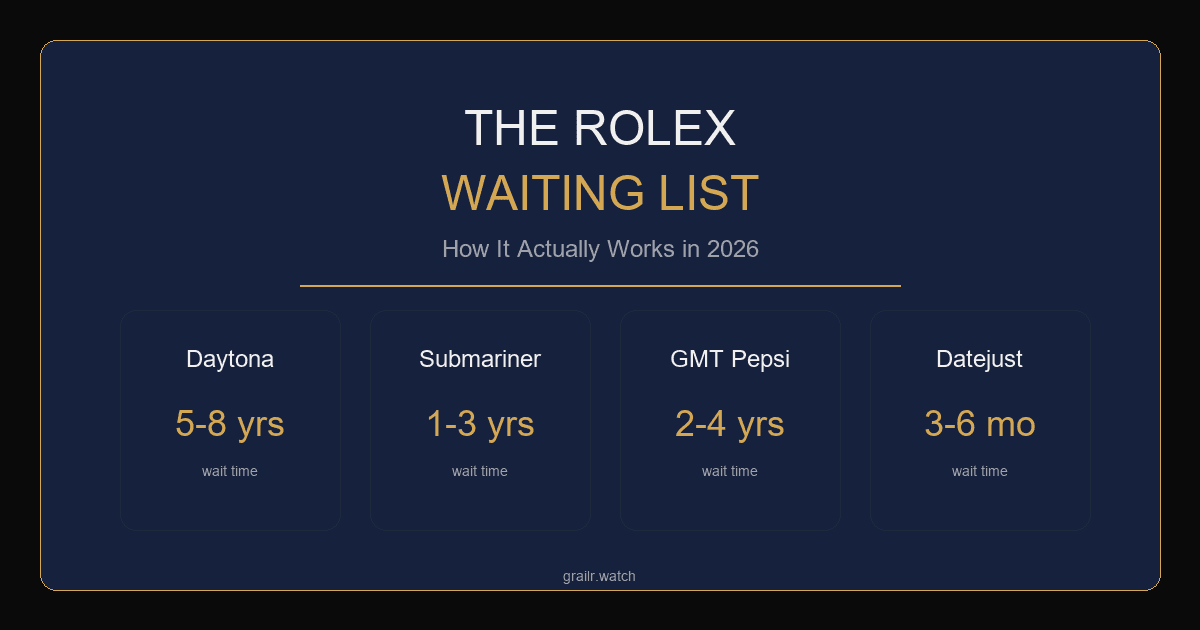
- Wait times range from immediately available (Oyster Perpetual, Day-Date) to 5–8+ years (steel Daytona) depending on the model.
- The grey market lets you skip the wait entirely, but at premiums of 20–100%+ above retail depending on the reference.
- Two-tone and precious metal models are the smartest entry point for building AD purchase history toward a steel sports allocation.
Walk into any Rolex authorized dealer in 2026 and ask for a steel Submariner, GMT-Master, or Daytona. You'll hear the same thing: “We can put you on the list.” But what does that actually mean? How long will you wait? And is there anything you can do to improve your chances?
The truth is more nuanced — and more frustrating — than most people realize. Rolex doesn't operate a waitlist in any traditional sense. What actually exists is an allocation system where authorized dealers receive limited stock and decide who gets offered each piece. Understanding how this system works is the first step to navigating it.
How the Rolex “Waiting List” Really Works
Let's be clear about what happens when you “get on the list” at a Rolex AD:
It's not a queue
ADs register your interest but don't assign positions. Two people who register the same day may wait vastly different amounts of time based on their relationship and purchase history.
Allocation is discretionary
When a desirable piece arrives, the AD decides who gets the call. Factors: purchase history, likelihood of keeping (not flipping), relationship quality, and yes — total spend.
Rolex corporate has never publicly confirmed how allocation works, but the pattern is clear from thousands of collector experiences: ADs prioritize customers who have an established buying relationship, who collect and wear their watches (rather than immediately listing them on Chrono24), and who are patient and respectful throughout the process.
Some ADs are more transparent than others. A few will tell you roughly where you stand; most will simply say “we'll call you when something comes in.” The lack of transparency is by design — it keeps the brand exclusive and gives ADs flexibility in how they allocate.
Wait Times by Model in 2026
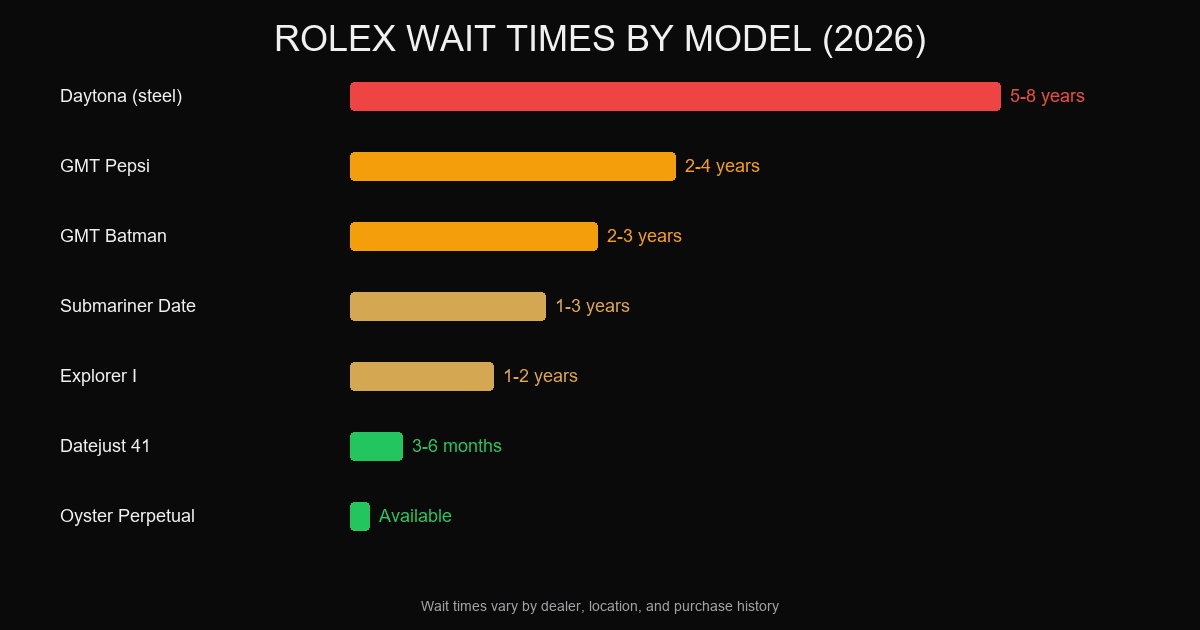
Here's what collectors are actually experiencing in 2026. These are estimates based on community reports, forum discussions, and AD feedback — your experience will vary by location, dealer, and relationship.
| Model | Estimated Wait | Retail Price | Difficulty |
|---|---|---|---|
| Cosmograph Daytona (steel) | 5–8 years (10+ reported) | $15,100 | Extreme |
| GMT-Master II “Pepsi” | 2–4 years | $11,300 | Very Hard |
| GMT-Master II “Batman” | 2–4 years | $11,300 | Very Hard |
| Submariner Date (steel) | 1–3 years | $10,250 | Hard |
| Submariner No-Date | 6–18 months | $9,100 | Moderate |
| Explorer I (36mm/40mm) | 1–2 years | $7,800 | Moderate |
| Datejust 41 (Jubilee/fluted) | 3–12 months | $10,800 | Moderate |
| Datejust 41 (Oyster/smooth) | 1–6 months | $8,550 | Easier |
| GMT-Master II (two-tone) | 6–12 months | $17,100 | Moderate |
| Oyster Perpetual 36mm | Available – 3 months | $6,150 | Easy |
| Day-Date 36/40 (gold) | Available – 3 months | $38,900+ | Easy |
Notice the pattern: the cheaper the steel sports model, the longer the wait. Meanwhile, precious metal pieces costing 3–4x more often sit in display cases. This tells you everything about what drives demand: the combination of a stainless steel sport watch at a “accessible” price point from the world's most recognized watch brand creates insatiable demand.
The AD Relationship Strategy
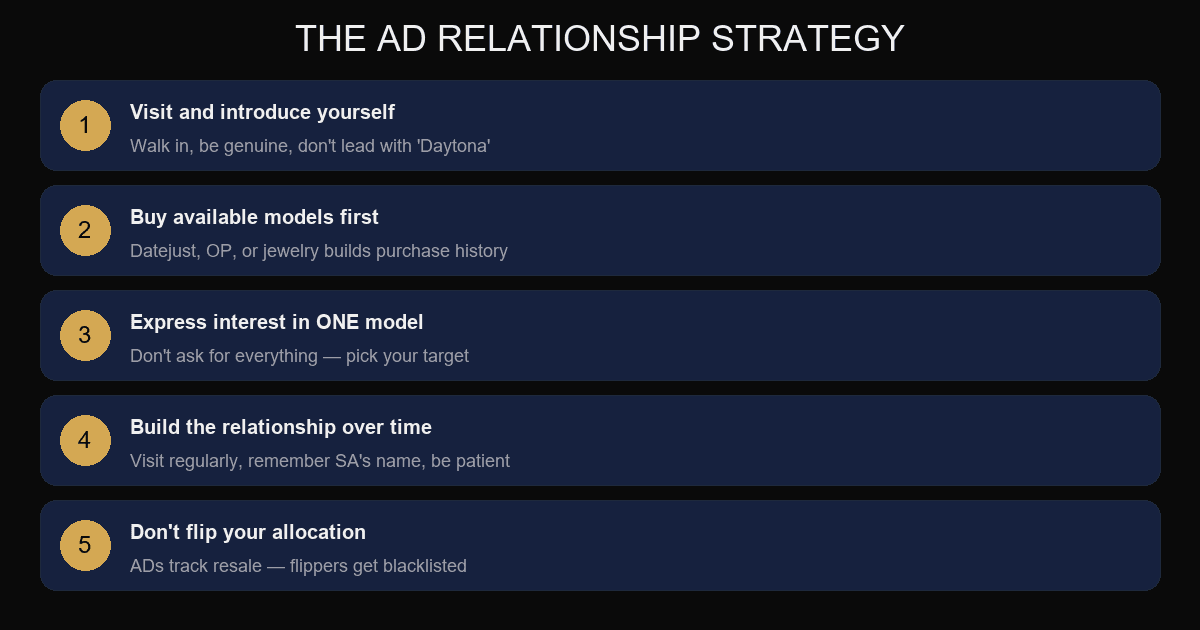
If you want to get allocated a desirable Rolex at retail price, you need to understand what ADs are actually looking for. Here's what consistently works based on collector experiences:
Buy what's available first
Purchase a Datejust, two-tone model, or other available piece from the AD. This demonstrates you're a real customer, not someone who only wants the impossible-to-get models. Many collectors report their first sports allocation came after 1–2 prior purchases.
Build a genuine relationship
Visit regularly (not obsessively). Learn your SA's name. Ask about the brand, share your enthusiasm. ADs allocate to people they like and trust — not to people who walk in demanding a Daytona on day one.
Express interest in ONE specific model
Don't ask to be put on the list for five different references. Pick the one you truly want and be specific about it. ADs remember focused, genuine requests over scattered wish lists.
Signal you'll keep the watch
ADs hate flippers. Wearing your previous purchases when you visit, talking about your collection, and making clear you want the watch for yourself (not to list on Chrono24 next week) dramatically improves your chances.
Be patient and polite
Calling every week to ask “is my watch here yet?” is counterproductive. Check in every 2–3 months. Send a holiday card. Remember: the SA controls your allocation — make their job pleasant, not stressful.
A word of caution: some ADs have been known to pressure customers into buying jewelry, accessories, or unwanted watches as a “prerequisite” for allocation. This practice (sometimes called “bundling”) is frowned upon by Rolex corporate. You should never feel forced to buy something you don't want. If an AD is pushy about it, find a different dealer.
Grey Market: What You'll Pay to Skip the Wait
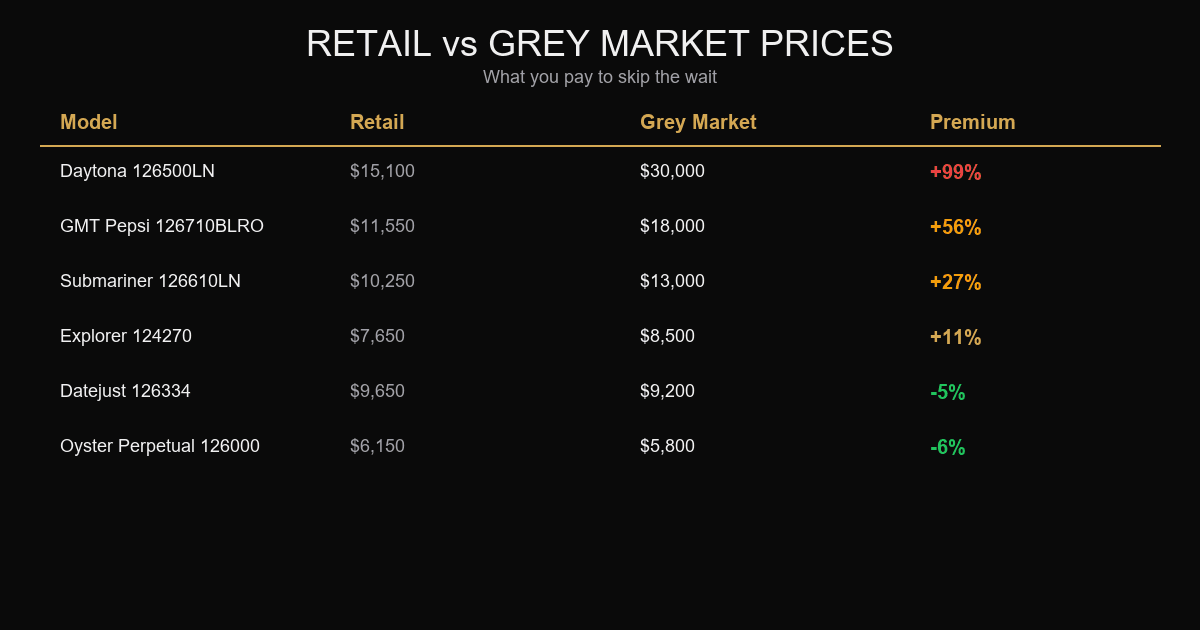
Don't want to wait years? The grey market (Chrono24, Bob's Watches, DavidSW, and countless independent dealers) has every Rolex model available right now. The trade-off is a significant premium above retail — sometimes double the MSRP.
| Model | Retail | Grey Market | Premium |
|---|---|---|---|
| Daytona (steel, black dial) | $15,100 | $28,000–$32,000 | ~85–110% |
| GMT-Master II “Pepsi” | $11,300 | $19,000–$22,000 | ~70–95% |
| Submariner Date | $10,250 | $12,000–$14,000 | ~20–35% |
| Explorer I | $7,800 | $9,500–$11,000 | ~22–40% |
| Datejust 41 (Jubilee/fluted) | $10,800 | $10,200–$11,500 | -5% to +7% |
| Oyster Perpetual 36mm | $6,150 | $5,800–$6,500 | -5% to +5% |
The premium is essentially the “cost of impatience.” For a Daytona, you're paying an extra $13,000–$17,000 to avoid a 5–8 year wait. For a Submariner, it's a more modest $2,000–$4,000 premium to skip 1–3 years. Whether that trade-off makes sense depends entirely on your financial situation and how urgently you want the watch on your wrist.
Note that Datejust and Oyster Perpetual models often trade at or below retail on the secondary market. If you're not picky about having a “brand new” piece, pre-owned examples of these models can be genuine bargains.
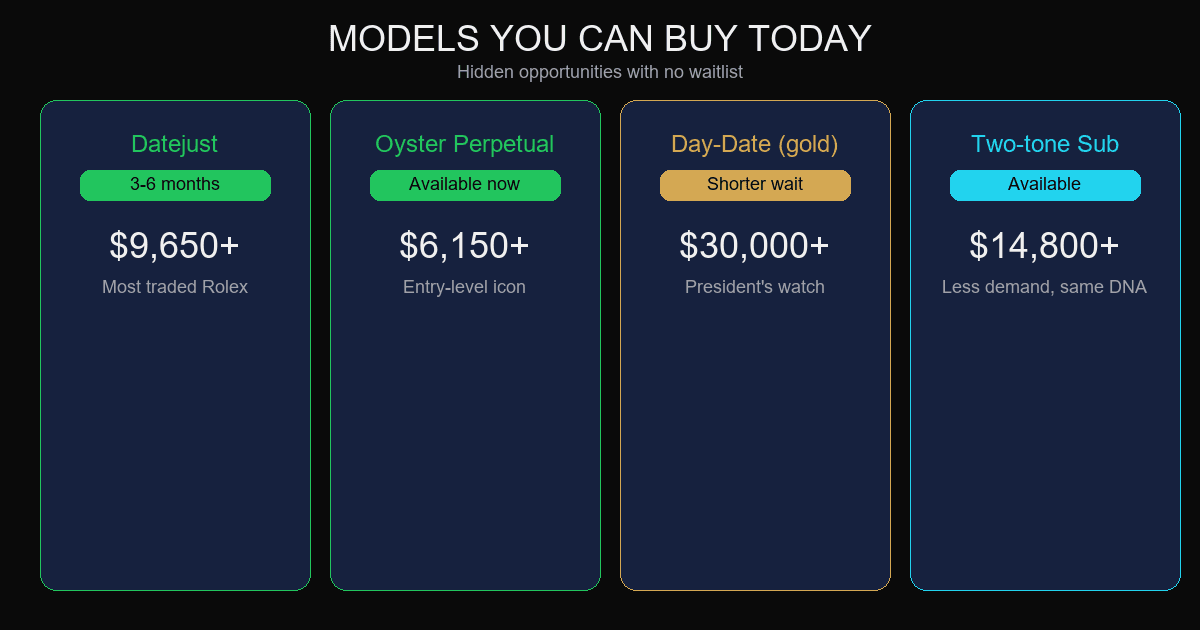
Models You Can Buy Today (Hidden Opportunities)
Not every Rolex requires years of waiting. Several collections are genuinely available at ADs — and some of them serve double duty as purchase history builders for future sport watch allocations.
Oyster Perpetual
The entry-level Rolex, starting at $6,150. The 36mm is generally available. The 41mm in popular dial colors (like “Tiffany Blue”) may still have short waits, but most configurations are walk-in purchases.
Day-Date (President)
Available in yellow gold, white gold, rose gold, and platinum. Starting at $38,900+, the price filters out most demand. These are statement pieces that signal serious collecting intent to your AD.
Two-Tone Models
Submariner, GMT-Master, and Datejust two-tone (Rolesor) variants have significantly shorter waits than their all-steel siblings. A two-tone Sub might be available within 6 months vs. 1–3 years for steel.
Datejust (Oyster bracelet)
While the Jubilee/fluted combo is the most popular Datejust config (moderate wait), the Oyster bracelet with smooth bezel is often available to order. Many ADs can even configure dial color to your preference.
The strategic play: buy a two-tone Submariner or a Day-Date at full retail. You get a genuinely excellent watch on your wrist immediately, and you build the purchase history that makes your AD far more likely to allocate you a steel Daytona or Pepsi GMT down the road. Think of it as investing in the relationship, not just spending money.
Frequently Asked Questions
How long is the Rolex waiting list in 2026?
It varies dramatically by model. A steel Daytona can take 5–8 years (some dealers report 10+). A Submariner Date is typically 1–3 years. GMT-Master II models run 2–4 years. Datejust and Oyster Perpetual models are often available within months or immediately. Precious metal models generally have shorter waits despite higher prices.
Is the Rolex waiting list actually a queue?
No. Rolex authorized dealers don't maintain a formal first-come-first-served queue. They register interest and allocate watches based on purchase history, relationship quality, and their assessment of whether you'll keep the watch versus flip it. Two people can register interest on the same day and receive their watch years apart.
How do I get on a Rolex waiting list?
Visit your local authorized dealer in person, build a genuine relationship with a sales associate, and express interest in ONE specific model. Buying other available pieces from the same AD demonstrates commitment. Be patient, stay in touch periodically, and make it clear you intend to wear the watch — not flip it for profit.
Can I buy a Rolex without waiting?
Yes. The grey market has every model available immediately at a premium (20–100%+ above retail depending on the model). At ADs, several models have minimal waits: Oyster Perpetual 36mm, Day-Date in precious metal ($38,900+ entry), two-tone Datejust variants, and less popular dial configurations. Pre-owned is also an option with zero wait.
Related Articles
The Bottom Line
The Rolex “waiting list” isn't a list at all — it's an allocation system that rewards patience, genuine enthusiasm, and purchase history. If you want a steel Daytona at retail, you're looking at years of relationship-building with no guarantee. If you want a Submariner, it's more achievable but still requires effort. And if you want a Rolex on your wrist today, the grey market or less-hyped models are your path.
The smartest approach combines both: buy what's available now (two-tone, Datejust, OP), enjoy those watches, build your AD relationship, and eventually you'll get the call for the piece you really want. The worst approach is walking into a dealer cold, demanding a Daytona, getting frustrated when it doesn't materialize, and paying double on the grey market out of impatience.
Check If the Grey Market Price Is Fair
Grailr can suggest a model and reference from a clear photo and provide an indicative AI price estimate. Active eBay listings, when available, show asking prices for comparison. Confirm the reference and condition with the seller; a photo scan does not authenticate a watch.
Sources and price context
- Rolex ownership FAQ — Availability, retail pricing and care guidance from Rolex.
- Rolex buying guidance — Authorised retail channels and the manufacturer guarantee.
The links identify the specific manufacturer information and marketplace guidance used for this guide. Price ranges and resale percentages in this guide are illustrative, not live quotes or guaranteed returns; compare the exact reference, condition and sale date before relying on them.