Seiko Alpinist Buying Guide: Every Model and Price
The SPB121, SPB117, SPB241, and the legendary SARB017 compared — with real pricing, movement specs, and honest resale data.
Price context: this guide includes indicative prices from its original publication period. They have not all been refreshed to current quotes. Use the linked primary sources for specifications and policies, and verify prices independently.
- Current Alpinist models retail from $725 (SPB121) to $750 (SPB117), all powered by the 6R35 automatic with a 70-hour reserve
- Every reference offers 200m water resistance, a sapphire crystal, and Seiko’s signature compass bezel
- The discontinued SARB017 now trades between $500 and $800 — well above its original $400–$450 retail
- The SPB121 green dial is our top pick for most buyers: best value, most iconic Alpinist colour, and strong resale
What Is the Seiko Alpinist?
The Alpinist is Seiko’s dedicated mountain watch, and its lineage stretches back further than most people realise. The original 1959 Laurel Alpinist was designed for the Japanese Alpine Club — a tool watch built for elevation, wind direction, and survival. It wasn’t a marketing exercise. It was gear.
The modern Alpinist line sits inside Seiko’s Prospex collection, which covers everything from dive watches to field instruments. What separates the Alpinist from generic field watches is the rotating compass bezel — a real orienteering tool that, combined with the watch hands and the sun, provides a rough directional reading. No other watch in its price range offers this complication.
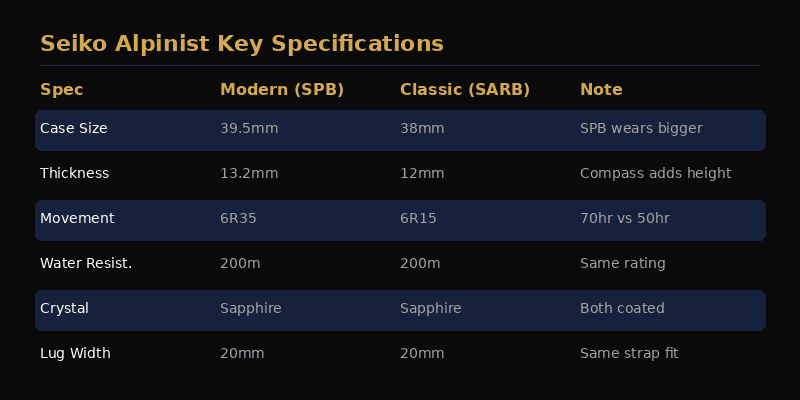
The current generation launched in 2020 with the SPB121 and SPB117, replacing the cult-classic SARB017. They upgraded the movement from the 6R15 (50-hour reserve) to the 6R35 (70-hour reserve), bumped the case from 38mm to 39.5mm, and added Lumibrite on the hands and indices. The compass bezel and sunburst dial — the two details that make an Alpinist an Alpinist — survived intact.
The Complete Alpinist Lineup
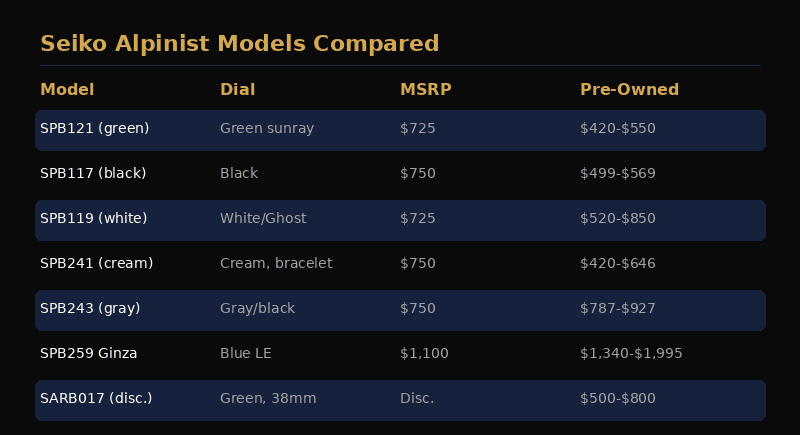
SPB121 — Green Sunburst Dial ($725)
The signature Alpinist. The green sunburst dial with a gold compass bezel is the look that defines this collection, a direct descendant of the SARB017. It comes on a brown leather strap and uses the same 6R35 automatic as every current reference. At $725 it’s the most affordable entry, and it’s the one that turns up most often in collector discussions. If you buy one Alpinist, this is likely the one.
SPB117 — Black Dial ($750)
The stealth option. The SPB117 pairs a black sunburst dial with a silver compass bezel and Lumibrite markers. It reads more like a traditional sports watch than the green model and layers well under a suit. The $25 premium over the SPB121 reflects strap material and finishing differences, not a movement upgrade.
SPB241 — Cream Dial on Bracelet ($750)
Launched in 2021, the SPB241 introduced a stainless steel bracelet option and a warm cream dial that gives the Alpinist a dressier character. The bracelet adds a few grams but eliminates the need to hunt for an aftermarket option. Pre-owned, these trade near $420–$650, making them strong value on the secondary market.
SPB243 — Dark Dial Variant ($750)
The SPB243 carries a darker gray-to-black dial with the same bracelet option as the SPB241. It appeals to buyers who want the bracelet convenience without the vintage-leaning cream colourway. Pre-owned asking prices currently range from $787 to $927, reflecting lower circulation rather than higher demand.
SPB259 — Ginza Limited Edition ($1,340+)
A limited run honouring Seiko’s Ginza district heritage. The SPB259 features a unique silver-textured dial with blue accents and comes on a bracelet. Production numbers were restricted, and secondary market prices now sit between $1,340 and $1,995. It’s a collector piece, not a daily driver recommendation.
SPB119 — “Ghost” White Dial ($850+)
The SPB119 “Ghost” Alpinist features a white textured dial with a silver compass bezel. It was released alongside the SPB121 and SPB117 as part of the 2020 relaunch. While it’s not a limited edition, lower production numbers have pushed pre-owned prices above its original retail, with asking prices currently between $520 and $850 depending on condition.
SARB017 — The Discontinued Legend ($500–$800 Pre-Owned)
The watch that built the Alpinist cult following. Produced from roughly 2006 to 2018, the SARB017 used a 38mm case, the 6R15 movement (50-hour reserve), and the now-iconic green sunburst dial. Seiko originally retailed it around $400–$450. Discontinuation and collector demand have pushed prices well past original retail — expect to pay $500–$800 for a clean example with box and papers.
Specifications and Pricing
Every current Alpinist shares a common mechanical platform. The differences come down to dial, strap or bracelet, and market availability. The table below covers the full current lineup plus the discontinued SARB017 for reference.
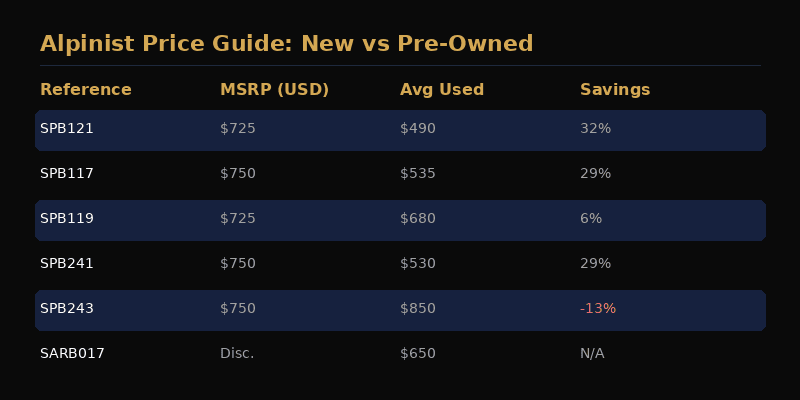
| Model | Dial | Size | MSRP | Pre-Owned |
|---|---|---|---|---|
| SPB121 | Green sunburst | 39.5mm | $725 | $420–$675 |
| SPB117 | Black sunburst | 39.5mm | $750 | $499–$569 |
| SPB241 | Cream | 39.5mm | $750 | $420–$650 |
| SPB243 | Gray / black | 39.5mm | $750 | $787–$927 |
| SPB119 | White “Ghost” | 39.5mm | $725 | $520–$850 |
| SPB259 | Silver (Ginza LE) | 39.5mm | ~$950 | $1,340–$1,995 |
| SARB017 | Green sunburst | 38mm | $400–$450* | $500–$800 |
*SARB017 retail price reflects its original price before discontinuation. All other MSRPs are indicative 2026 figures. Verify current pricing independently.
The 6R35 Movement Explained
The Seiko caliber 6R35 is the engine behind every current Alpinist. It’s an in-house automatic movement with 24 jewels, a 21,600 vph beat rate (6 beats per second), and hacking seconds — meaning the second hand stops when you pull the crown, letting you set the time precisely. It also hand-winds, which is useful if the watch has been sitting for more than three days.
The headline upgrade over the older 6R15 is the 70-hour power reserve, up from 50 hours. In practical terms, that means you can take the watch off Friday evening and put it back on Monday morning without needing to reset the time. The accuracy spec is +25 to –15 seconds per day, which is typical for an unregulated mechanical at this price. Many owners report real-world accuracy closer to +5 to +10 seconds per day after settling in.
| Specification | 6R35 (Current) | 6R15 (SARB017) |
|---|---|---|
| Power Reserve | 70 hours | 50 hours |
| Accuracy | +25 / –15 sec/day | +25 / –15 sec/day |
| Jewels | 24 | 23 |
| Beat Rate | 21,600 vph | 21,600 vph |
| Hacking | Yes | Yes |
| Hand-winding | Yes | Yes |
The 6R35 isn’t a COSC-certified movement, and Seiko doesn’t position it as a chronometer. For that level of certification in a Seiko, you’d step up to the Presage Sharp Edged line or the Grand Seiko range. But for an everyday field watch priced under $800, the 6R35 delivers excellent reliability and a three-day power reserve that most Swiss movements in the same bracket don’t match.
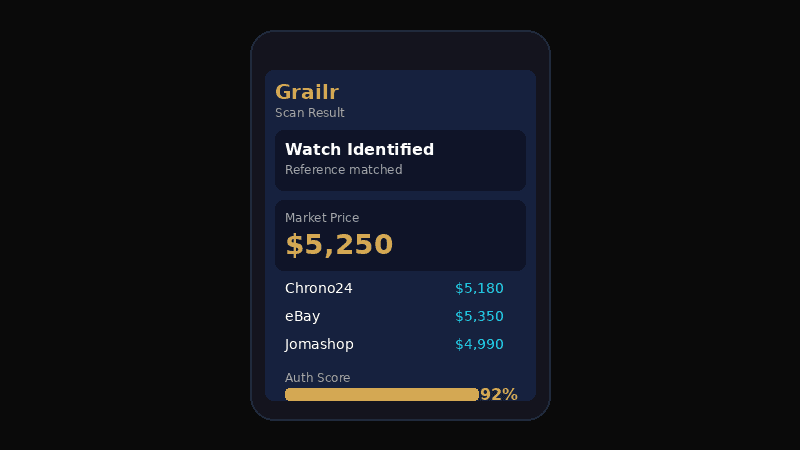
Check Any Watch Price in Seconds
Grailr scans your watch photo and pulls live pricing from Chrono24, eBay, and Jomashop.
- AI identifies brand, model & reference number
- Live market prices from 3+ sources
- Authentication confidence score
Alpinist vs Hamilton Khaki Field
The Hamilton Khaki Field is the Alpinist’s most direct competitor: similar price, similar size, similar field-watch DNA. But they serve slightly different purposes. The Alpinist is an exploration tool with a compass bezel and 200m water resistance. The Khaki Field is a military-heritage watch with cleaner legibility and a thinner profile.
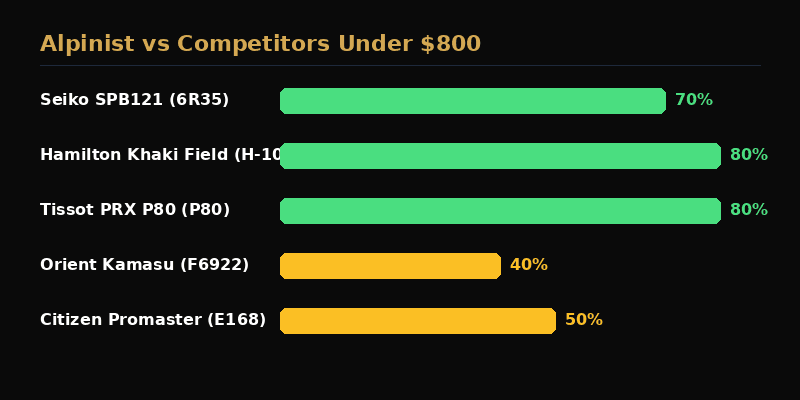
The Hamilton uses an ETA-based H-10 movement with an 80-hour power reserve — 10 hours more than the Seiko. But the H-10 beats at 21,600 vph with a lowered beat rate to achieve that reserve, which some argue gives the second hand a slightly less smooth sweep. Both are excellent daily-wear automatics; the choice comes down to whether you want the compass bezel and Seiko finishing (Alpinist) or the slimmer profile and longer reserve (Khaki Field).
On the secondary market, both hold value respectably for sub-$1,000 watches. The Alpinist tends to retain more of its retail percentage, particularly the green-dial SPB121, thanks to its collector community. The Khaki Field is more widely available at discount through grey-market dealers and sales, which means pre-owned prices track lower but entry costs can be lower too.
Resale Value and the SARB017 Effect
The SARB017 is one of a handful of sub-$500 watches that has genuinely appreciated in value. Seiko originally sold it for $400–$450, and clean examples with box and papers now trade between $500 and $800 — a return that most luxury watches struggle to match. The cult following, combined with a fixed supply of discontinued units, created a secondary market that rewards patient sellers.
Current SPB references haven’t replicated that trajectory. Most trade at 60–85% of retail on the secondary market, which is roughly in line with other Seiko Prospex models. The SPB121 green dial holds the strongest among current references, trading at the upper end of that range when in good condition. The bracelet models (SPB241, SPB243) tend to move a bit slower due to higher initial retail and the perception that the strap models are more “authentic” Alpinists.
Limited editions like the SPB259 Ginza can trade well above retail, but that’s a collector speculation play, not a value investment. If you’re buying an Alpinist with an eye on resale, the SPB121 on leather offers the best combination of low entry cost and strong secondary demand. For a deeper look at watches that hold their value, see our dedicated guide.
5 Tips Before You Buy an Alpinist
1. Try the 39.5mm On Your Wrist
The Alpinist wears larger than 39.5mm suggests because of its 13.2mm thickness and 46.4mm lug-to-lug. If you have a wrist under 6.5 inches, the 38mm SARB017 may be more comfortable — but you’ll pay a premium for the discontinued model.
2. Budget for a Strap Swap
The stock leather straps on the SPB121 and SPB117 are serviceable but not exceptional. Many owners swap immediately for a higher-quality leather or NATO strap. The 20mm lug width is standard, so aftermarket options are plentiful and inexpensive.
3. Check J1 vs Non-J1 Designation
SPB121J1 indicates a Japan-made unit; SPB121 without the J suffix is assembled outside Japan. Mechanically identical, but J1 models carry a slight premium on the secondary market due to collector preference. Verify the case back if buying pre-owned.
4. Scan Before You Buy Pre-Owned
Use Grailr’s free scanner to photograph any listing and check the reference against current market pricing. This is especially important for the SARB017, where condition dramatically affects value and counterfeits have appeared.
5. Consider the Bracelet Models
The SPB241 and SPB243 trade lower on the secondary market than the strap models despite identical specs. If you prefer a bracelet and don’t mind the cream or gray dial, the bracelet Alpinist is one of the best sub-$1,000 watches on the pre-owned market.
Frequently Asked Questions
What movement does the Seiko Alpinist use?
Current Alpinist models use the Seiko 6R35 automatic caliber with a 70-hour power reserve and an accuracy rating of +25 to -15 seconds per day. The discontinued SARB017 used the older 6R15 with a 50-hour reserve.
How much does a Seiko Alpinist cost?
Retail prices range from roughly $725 for the SPB121 green dial to about $750 for the SPB117 black dial. Pre-owned examples trade from around $420 to $675 depending on the reference and condition. Limited editions like the SPB259 Ginza command $1,300 or more.
Is the Seiko Alpinist a good first automatic watch?
Yes. The Alpinist offers a sapphire crystal, 200-meter water resistance, a 70-hour power reserve, and a compass bezel for under $800. Few watches at this price combine that feature set with Seiko's in-house movement quality.
What is the difference between the SPB121 and the SARB017?
The SPB121 is 39.5mm with a 6R35 movement (70-hour reserve) and 200m water resistance. The discontinued SARB017 is 38mm with the older 6R15 (50-hour reserve) and 200m resistance. Both have green sunburst dials and compass bezels, but the SPB121 has Lumibrite indices and updated case finishing.
Does the Seiko Alpinist hold its value?
Reasonably well for a sub-$1,000 watch. Most current SPB references retain roughly 60-85% of retail on the secondary market. The discontinued SARB017 has appreciated well past its original retail, now trading between $500 and $800 depending on condition.
Is the Seiko Alpinist too thick?
At 13.2mm the Alpinist is thicker than a typical dress watch, but the compact 39.5mm diameter and moderate lug-to-lug of 46.4mm keep the proportions balanced. Most wrists above 6.5 inches will find it comfortable under a shirt cuff with some adjustment.
Related Articles
The Bottom Line
The Seiko Alpinist is one of the best field watches you can buy under $800. The SPB121 green dial is our top recommendation for most buyers — it has the most iconic Alpinist colour, the strongest resale, and costs $25 less than the black or bracelet models. If you want a bracelet, the SPB241 cream dial is excellent value on the secondary market. And if you can find a clean SARB017 at a fair price, it’s one of the few affordable watches that has genuinely rewarded its owners over time. Whatever you pick, the 6R35 movement, sapphire crystal, and 200m water resistance mean you’re getting a serious tool watch — not just a pretty dial.
Found an Alpinist You Like?
Grailr uses a photo to suggest a watch identity and an indicative price estimate, with active eBay listings where available. Check the exact reference and condition independently; a photo scan cannot authenticate a watch.
Scan a Watch NowSources and price context
- Seiko heritage timeline — Covers the 1959 Laurel Alpinist origins and the evolution of the Prospex collection.
- Hodinkee: Seiko Prospex Alpinist hands-on — Independent editorial review covering dial finishing, movement specs, and wrist presence.
These primary sources support the specific history, specification or policy points noted above. Prices and resale percentages elsewhere in this guide are indicative editorial figures, not a verified transaction dataset or guaranteed returns. Confirm the exact reference, region, condition and current quote before buying; asking prices are not completed-sale prices.