
Key Takeaways
- Analog beats digital for learning — preschoolers develop spatial awareness of time through watch hands, not digits on a screen.
- You don’t need to spend more than $35 — the Casio LRW200H offers 100m water resistance, luminous hands, and a rotating bezel for under $30 at most retailers.
- Size matters more than brand — stick to 30–33mm cases with short lug-to-lug measurements. An oversized watch won’t stay on a small wrist.
Buying a first watch for a young child is one of those quiet parenting wins that pays compound interest. It teaches time awareness, builds routine and responsibility, develops fine motor skills, and provides screen-free engagement — all wrapped up in something a kid is genuinely excited to wear. But most of what you’ll find in the “kids’ watches” aisle is disposable plastic junk that breaks within a week or, worse, a licensed character watch with zero readability and no water resistance whatsoever.
This editorial shortlist compares seven watches for ages 3–7 by their stated features, legibility and intended use. It is not a hands-on durability or child-safety test. Whether you’re a watch enthusiast who wants your little one to share the passion or a parent simply looking for a reliable time-teaching tool, this guide has you covered. And if you’re curious about watches that represent the best value across all budgets, we have a companion guide for that too.
Why Give a Preschooler a Watch?
At first glance, giving a three-year-old a wristwatch seems premature. They can’t read numbers yet, let alone tell time. But the benefits extend far beyond time-reading itself.
Time awareness and routine. Even before a child can read the clock, they begin associating hand positions with daily events. “When the short hand points here, we eat lunch.” This visual anchor helps preschoolers understand sequencing and transitions — concepts that reduce tantrums around schedule changes because the child can see what’s coming next.
Responsibility and ownership. A watch is often one of the first “real” items a child is trusted to care for. Taking it off before bath time, placing it on the nightstand, not banging it against the playground — these are small acts of responsibility that build confidence. Research in early childhood development consistently shows that children given age-appropriate responsibilities develop stronger executive function skills.
Fine motor skill development. Fastening a buckle or pressing a Velcro strap requires bilateral coordination and finger dexterity — the same skills that prepare a child for writing, buttoning shirts, and tying shoes.
Screen-free engagement. In an era where the default answer to “what time is it?” involves handing a child a phone or tablet, an analog watch provides information without a screen. No notifications, no apps, no rabbit holes. Just two hands and twelve numbers.
What to Look for in a Preschooler’s Watch
Not every watch marketed as “for kids” is actually appropriate for a preschooler. Here are the criteria that actually matter:
Analog vs Digital
For ages 3–7, analog is the clear winner. Children develop a spatial understanding of time through the circular relationship of hours. They see that 3:00 is “a quarter of the way around” and 6:00 is “halfway.” Digital displays strip this spatial context entirely. Save digital for age 7+ when the analog foundation is solid. If you’re wondering about the broader automatic vs quartz debate, quartz is non-negotiable for children — accuracy, durability, and no power-reserve anxiety.
Case Size: 30–33mm
A preschooler’s wrist circumference typically ranges from 120mm to 145mm. A 30–33mm case with a lug-to-lug measurement under 38mm sits comfortably without overhanging. Anything larger slides around, catches on things, and ends up in a drawer.
Durability
Preschoolers are not gentle. The watch will be banged against tables, dropped on tile, dragged along walls, and possibly bitten. Plastic and resin cases absorb impact better than metal. Mineral or acrylic crystals are more shatter-resistant than sapphire at this age (sapphire is scratch-proof but can crack under sharp impact). Screwed-in case backs prevent curious fingers from opening them.
Water Resistance
This is non-negotiable. Children forget to remove watches. At minimum, you need 30m (3 ATM) for handwashing and rain. Ideally, 100m (10 ATM) so it can survive bath time, swimming, and water play without concern. A watch that dies after one hand-washing incident is money wasted.
Strap Type
Velcro and elastic straps are easiest for preschoolers to manage independently. Buckle straps look more “grown-up” but most 3–5 year olds cannot fasten them without help. Check that the strap and fasteners remain secure, and keep detached parts away from young children.
Dial Readability
All 12 hour markers should be printed as numerals (not indices). Minute markers should be clearly visible. The hour and minute hands must be visually distinct — ideally different colors. Avoid cluttered dials with date windows, sub-dials, or excessive decoration that makes the core time-telling function harder to parse.
Best Watches for Preschoolers: Our Top Picks
Every watch below has been evaluated for durability, readability, water resistance, strap design, and overall value. Prices reflect current market averages as of May 2026.
Casio LRW200H — $20–$36
The Casio LRW200H is the watch we recommend most often for young children, and it’s not even close on a value-per-feature basis. For around $25, you get a 33mm resin case with 100 meters of genuine water resistance — meaning it can handle swimming pools, bath time, beach trips, and aggressive handwashing without breaking a sweat. The rotating bezel provides a tactile element that kids enjoy fidgeting with (and can later be used to teach elapsed time). Luminous hands mean your child can check the time under blankets at night. A date window adds functionality as they grow. The replaceable resin strap means you can swap it out when it inevitably gets chewed, stained, or outgrown. Available in dozens of colors.
Flik Flak Story Time — $55
Made by the Swatch Group in Switzerland, Flik Flak has been the world’s leading children’s watch brand since 1987. The Story Time range ($45–$65 depending on the design) features a 32mm plastic case purpose-built for time education. The hour hand is one color, the minute hand is another, and the corresponding numbers on the dial match those colors — so a child intuitively knows which hand to match with which set of numbers. The minute track is fully numbered in fives. The textile strap should be checked regularly for wear and secure attachment. It does not eliminate small-parts hazards. Water resistance is rated at 30 meters — adequate for splashes and handwashing, though you’ll want to remove it before swimming. The fun character designs (dinosaurs, space, animals, unicorns) give kids a reason to actually want to wear it.
Timex Kids Analog — $25–$35
Timex has been making affordable, legible watches for over a century, and their Kids Analog line carries that DNA forward. The easy-read dial features all 12 hour numerals in a large, clear font with prominent minute markers between them. The hour and minute hands are distinct shapes, making them identifiable even without color coding. The adjustable elastic strap stretches over a child’s hand without needing to fumble with a buckle or Velcro — which means a four-year-old can put it on and take it off independently. Water resistance is 30 meters: fine for everyday use, but remove it before pool time. Timex’s Indiglo backlight is a fun bonus for nighttime reading. For parents watching the budget, these offer dependable performance at a price point where a lost or broken watch isn’t a crisis. If you’re looking for other budget-friendly watch options, we have a full guide on affordable timepieces across all categories.
Blok 33 — $179
The Blok 33 is the watch for parents who refuse to accept that “kids’ watch” must mean “disposable.” This is a genuinely serious timepiece in a child-sized package. The 33mm case is machined from bio-polymer — an eco-friendly, impact-resistant material that absorbs knocks without cracking. Inside sits a Swiss ETA quartz movement, the same caliber family found in adult watches costing several hundred dollars. The crystal is sapphire — virtually scratch-proof, so it looks new after a year of playground abuse. Water resistance is an impressive 100 meters with a screw-down crown, matching dive-watch construction standards. The design is clean, minimal, and modern — no cartoon characters, no gimmicks. It looks like a proper watch that happens to be small. At $179, it’s an investment, but one that will likely outlast every other watch on this list and can be passed to a younger sibling afterward.
Parchie Pal — $65
Parchie occupies a unique niche: watches designed with genuine horological care but sized and styled for children. The Pal features a 32mm aluminum case that’s lightweight yet solid, powered by a Japanese Seiko quartz movement known for long-term accuracy and reliability. The dial design borrows cues from adult minimalist watches — clean indices, a balanced layout, thoughtful proportions — while remaining perfectly readable for young eyes. The Velcro strap is soft, adjustable, and easy for small hands to manage. Water resistance is 30 meters. What truly sets Parchie apart is the aesthetic: these look like watches a design-conscious adult would choose, shrunk down with care. If you’re a watch enthusiast who wants your child to appreciate good design from the start, rather than associating watches with cheap plastic toys, Parchie delivers that experience.
Casio G-Shock Mini — $60–$80
If your child is the type who treats every piece of furniture as a climbing wall and every puddle as a swimming pool, the G-Shock Mini is built for them. Casio’s G-Shock line is legendary for its near-indestructibility, and the Mini versions bring that same shock-resistant construction to a smaller wrist. Water resistance is an absurd 200 meters — more than any child will ever need, but it means you never have to think about it. The analog-digital hybrid display shows time both ways, though the dial can feel slightly busy for pure time-learning. This is best suited for ages 5–7 who have already grasped basic time concepts and now need something that can survive aggressive play, sports, and general chaos. The backlight, stopwatch, and alarm functions add practical utility as they grow. It is, quite simply, the watch you buy when you’ve already broken two others.
Preschool Collection — $45
Specifically engineered for children who are too young for numbers, the Preschool Collection takes a radically different approach to time-teaching. Instead of relying on numerals, these watches use animals, colors, and shapes to mark the hours. A lion at 12, a fish at 3, a bird at 6, a bunny at 9 — allowing a three-year-old to say “when the hand points to the fish, we go to the park.” This bridges the gap between purely decorative toddler watches and functional time-teaching tools. The cases are approximately 32mm in a soft-touch material that’s gentle against skin. Straps are Velcro with printed designs that match the dial theme. Water resistance is 30 meters. These are the only watches on our list designed specifically for children who haven’t yet learned their numbers — making them the ideal first watch for a three-year-old.
Comparison Table
| Model | Price | Case Size | WR | Movement | Strap Type | Best For |
|---|---|---|---|---|---|---|
| Casio LRW200H | $20–$36 | 33mm | 100m | Quartz | Resin (replaceable) | Overall value |
| Flik Flak Story Time | $45–$65 | 32mm | 30m | Swiss quartz | Textile (fixed) | Time teaching |
| Timex Kids Analog | $25–$35 | ~30mm | 30m | Quartz | Elastic (adjustable) | Budget pick |
| Blok 33 | $179 | 33mm | 100m | Swiss ETA quartz | Bio-polymer | Premium durability |
| Parchie Pal | $65 | 32mm | 30m | Seiko quartz | Velcro | Design-forward |
| G-Shock Mini | $60–$80 | ~34mm | 200m | Quartz (ana-digi) | Resin | Extreme durability |
| Preschool Collection | $45 | ~32mm | 30m | Quartz | Velcro | Ages 3–4 (pre-number) |
Analog vs Digital: Which Is Better for Preschoolers?
This debate surfaces constantly in parenting forums, and the answer is unambiguous for children under seven: analog is better for learning.
Here’s why. An analog clock face is a visual map of the day. The circular layout teaches fractions intuitively — a child can see that half the day is gone when the hour hand is at 6. They develop a sense of duration by observing how far the minute hand travels during a song, a meal, or a car ride. This spatial understanding of time is a foundational mathematical concept that digital displays simply cannot provide.
Digital watches display a number. To a preschooler who can barely count to 20, “3:45” is essentially meaningless. They cannot intuit the relationship between 3:45 and 4:00, or sense how close bedtime is. With an analog dial, they can see the minute hand approaching the 12 — they understand that “almost” visually.
An analog dial gives you a visual way to discuss elapsed time: show how far the minute hand moves during a familiar activity. Treat this as a teaching exercise, not a claim that wearing a watch improves a child’s development.
The one exception: if your child is seven or older and already reads analog confidently, adding a digital watch as a second timepiece can reinforce the connection between analog positions and their numerical equivalents. But as a first watch? Analog. Every time.
While You’re Shopping for Them… Check the Value of Yours
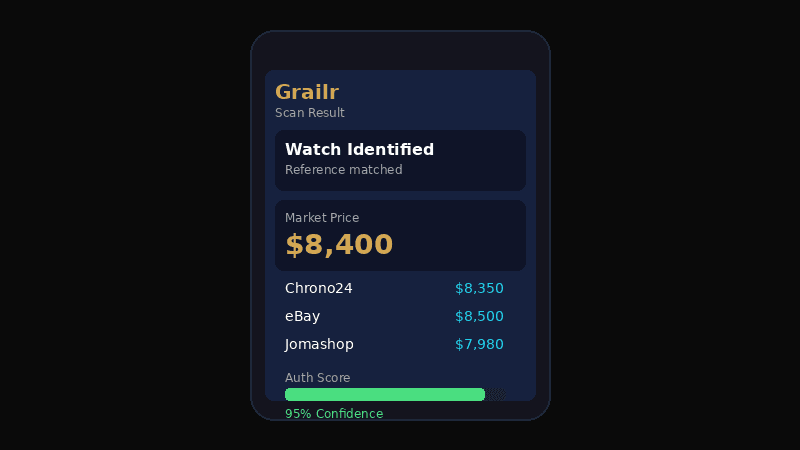
If you’re the kind of parent browsing a kids’ watch guide on a site called Grailr, chances are you have a watch collection of your own. Curious what your pieces are worth in today’s market? Snap a photo of any watch and use Grailr technology to explore a suggested identification, an indicative value estimate and available asking-price comparisons.
How to Teach Your Child to Tell Time with a Watch
Buying the watch is step one. Teaching them to use it is the longer, more rewarding journey. Here’s a practical progression that works for most children ages 3–7:
Phase 1: The hour hand only (ages 3–4). Ignore the minute hand entirely at first. Teach your child to focus on the short hand and identify “about what time it is.” Use daily anchors: “When the small hand points to 7, it’s morning time. When it points to 12, it’s lunch. When it points to 8, it’s bedtime.” For pre-number children (ages 3–4), use the Preschool Collection’s animal markers: “When it points to the fish, we eat lunch.”
Phase 2: On the hour and half past (ages 4–5). Once your child reliably identifies the approximate hour, introduce the minute hand but only at two positions: pointing to 12 (on the hour) and pointing to 6 (half past). “When the big hand points straight up, the small hand tells you exactly what time it is. When the big hand points straight down, it’s half past.”
Phase 3: Quarter hours (ages 5–6). Add the 3 position (quarter past) and 9 position (quarter to). Now your child has four reference points around the dial. Relate these to a pizza or pie: “The big hand has eaten a quarter of the pizza.”
Phase 4: Five-minute intervals (ages 5–7). This is where color-coded watches like Flik Flak shine. Count by fives around the dial — most watches have minute markers at 5, 10, 15, 20, 25, etc. “The big hand is pointing to the 3, which means 15 minutes past.”
Phase 5: Individual minutes (ages 6–7). Once five-minute intervals are mastered, fill in the gaps. “The big hand is one tiny mark past the 3, so it’s 16 minutes past.”
The key throughout this entire progression is patience and consistency. Ask your child what time it is at natural moments throughout the day. Celebrate approximations. Never scold inaccuracy. A child who says “it’s almost 3” when it’s 2:50 is demonstrating excellent time awareness even if the answer isn’t technically precise.
Common Mistakes Parents Make When Buying Kids’ Watches
After years of hearing from parents about kids’ watches that failed, here are the most common pitfalls — and how to avoid them:
Buying too large. A 36mm or 38mm watch might seem “only a little bigger,” but on a preschooler’s wrist it’s the equivalent of an adult wearing a 55mm dinner plate. It won’t sit flat, it’ll catch on sleeves and furniture, and the child will stop wearing it within days. Stick to 30–33mm.
Choosing fragile straps. Leather looks nice but deteriorates rapidly from sweat, water, and the general abuse of childhood. Thin silicone straps tear at the pin holes. The best options for this age are textile (Flik Flak), Velcro (Parchie), elastic (Timex), or chunky resin (Casio). These survive the realities of preschool life.
Ignoring water resistance. “They can just take it off before washing hands” is the logic of someone who has never met a four-year-old. Children forget. Water is everywhere. A watch with zero or minimal water resistance is guaranteed to die within weeks. 30m WR is the absolute minimum; 100m is ideal.
Prioritizing fashion over function. Licensed character watches from movie franchises are wildly popular but almost universally terrible as actual timepieces. They typically feature unreadable decorative dials, zero water resistance, straps that break within days, and movements that lose minutes per day. Your child might love the character for three months, but the watch won’t survive that long. Buy a quality watch and let them choose a fun strap color instead.
Spending too much too soon. Unless you’re buying the Blok 33 specifically for its indestructibility, there’s a real risk of a $100+ watch being lost at school, left at a friend’s house, or destroyed in a moment of creative experimentation. Start with a Casio LRW200H or Timex Kids. If the child demonstrates consistent wear and care over several months, upgrade to something nicer. If you’re thinking about starting a watch collection for your child to grow into, our guide outlines the smart way to build incrementally.
Frequently Asked Questions
What age should a child get their first watch?
Most children are ready between ages 3 and 5. At age 3, a watch serves as a routine and sensory tool — they associate hand positions with activities even without reading numbers. By age 5–6, most children can begin learning analog time with a proper time-teaching watch like the Flik Flak or Timex Kids.
Are analog or digital watches better for preschoolers?
Analog is significantly better for learning. It builds spatial and mathematical understanding of time that digital displays cannot provide. Children who learn on analog clocks develop stronger time-estimation skills and better understand the passage and duration of time. Save digital for age 7+ once analog is mastered.
How much water resistance does a kids’ watch need?
Minimum 30 meters (3 ATM) for handwashing and rain. If your child swims, plays with water, or is likely to forget to remove the watch, 100 meters (10 ATM) is ideal. The Casio LRW200H offers 100m WR for under $30 — there’s really no reason to buy a watch with less.
What size watch fits a preschooler’s wrist?
A 30–33mm case diameter with a lug-to-lug under 38mm. Preschooler wrists typically measure 120–145mm in circumference. Choose Velcro or elastic straps that adjust to this range. Anything larger than 34mm will slide around and eventually get abandoned.
Is the Flik Flak worth it compared to a $25 Timex?
They serve different purposes. The Flik Flak is purpose-built for time education with color-coded hands, Swiss construction, and textile strap options. The Timex is a solid everyday watch at a lower price point. If your primary goal is teaching time, Flik Flak justifies the premium. If you want a durable daily-wear watch at the lowest possible cost, go Timex or Casio.
Can a preschooler wear a G-Shock?
The G-Shock Mini series fits wrists as small as 130mm and is virtually indestructible with 200m WR. However, the analog-digital hybrid display is busier and less ideal for pure time-learning. Best for ages 5–7 who are active in sports and have already learned basic time-telling on a simpler analog watch.
How long do batteries last in kids’ quartz watches?
Most quartz movements in kids’ watches (including Casio, Timex, and Flik Flak) use SR626SW or similar silver oxide batteries that last 2–3 years. The Swiss ETA movement in the Blok 33 typically lasts 3–4 years. Ask a qualified repairer about replacement costs and water-resistance testing. Keep button cells and detached parts out of children’s reach.
Related Articles
Best Watches for Value in 2026
12 watches across every budget that deliver the most quality per dollar — from $280 to $7,750.
How to Start a Watch Collection
Build a meaningful collection without overspending — frameworks for every budget level.
Automatic vs Quartz: Which Is Right for You?
The definitive comparison of movement types — accuracy, maintenance, cost, and longevity.
Best Cheap Watches in 2026
Quality timepieces that punch well above their price point across every style and category.
The Bottom Line
A good first watch for a preschooler doesn’t need to be expensive, but it does need to be thoughtful. The Casio LRW200H stands out as our top overall pick because it delivers exceptional water resistance, readability, and durability at a price point where loss or damage isn’t devastating. For parents focused specifically on time education, the Flik Flak Story Time is purpose-built for the job with Swiss precision behind it. And for those who want a premium piece that will genuinely last years, the Blok 33 brings adult-watch construction standards to a child-sized package.
Whatever you choose, remember that the watch itself is less important than the conversations it enables. Every “what time is it?” is a learning opportunity. Every glance at the wrist is a moment of growing independence. Start simple, be patient, and let your child’s curiosity lead the way. The lifelong appreciation for horology — well, that’s a bonus that might develop on its own.
Know What Your Collection Is Worth
You’re researching the perfect $30 watch for your kid — but do you know the current market value of the watches on your wrist? Use Grailr to scan, identify, and appraise any watch in seconds.
Sources and price context
- Flik Flak Color Blast Pink specifications — Documents 3-bar resistance and a textile strap washable at 40°C for this model; check instructions for the exact watch.
These primary sources support the specific history, specification or policy points noted above. Prices and resale percentages elsewhere in this guide are indicative editorial figures, not a verified transaction dataset or guaranteed returns. Confirm the exact reference, region, condition and current quote before buying; asking prices are not completed-sale prices.