How to Start a Watch Collection
The beginner’s roadmap from your first $200 Seiko to your grail Rolex — with budget tiers, the perfect 5-watch set, and mistakes that cost real money.
Price context: this guide includes indicative prices from its original publication period. They have not all been refreshed to current quotes. Use the linked primary sources for specifications and policies, and verify prices independently.
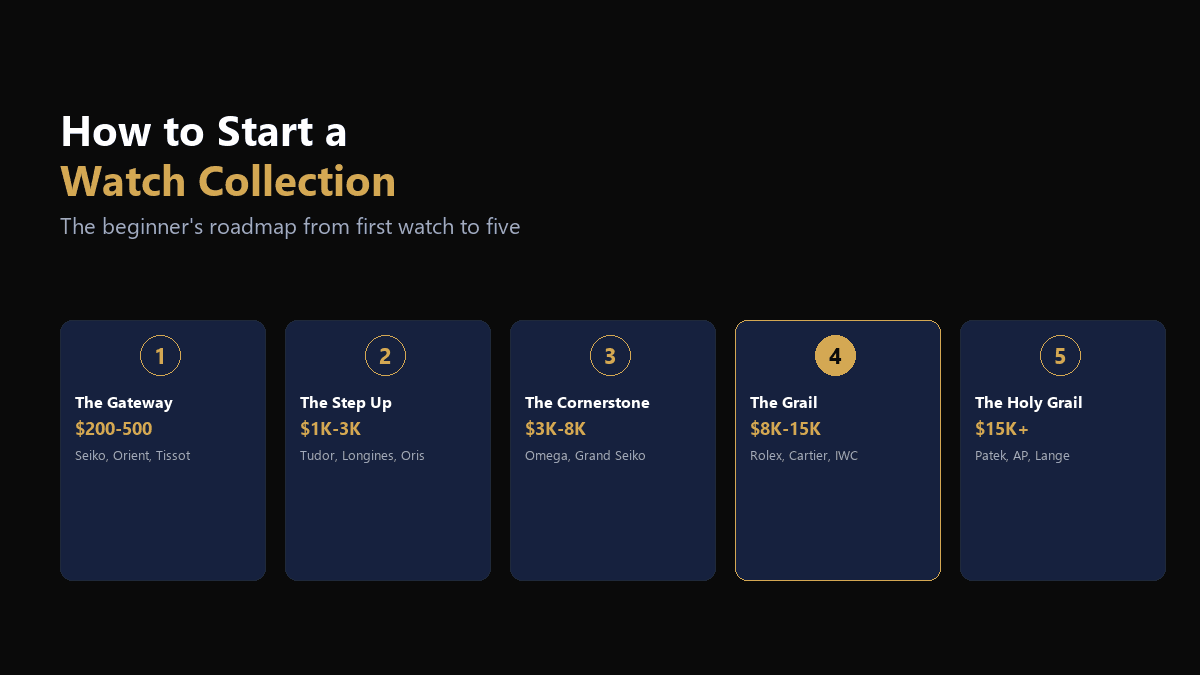
- Start with $200–$500 — Seiko, Orient, and Tissot teach you what you value without breaking the bank
- The perfect collection has 5 roles: daily driver, dress, sport, chronograph, and wildcard
- Buy what you love wearing, not what Instagram tells you is “investable”
- Always verify pricing and authenticity before buying pre-owned
The Philosophy of Collecting
Watch collecting is a journey, not a destination. The goal isn’t to accumulate the most expensive timepieces — it’s to curate a collection that reflects your taste, fits your lifestyle, and brings you genuine joy every time you open your watch box. The best collections tell a story about their owner.
A different strap can also change how a watch fits into your collection. Use our leather watch strap guide to compare sizing, materials and buckle compatibility before ordering.
Start small. Learn what you like. Upgrade deliberately. The collector who started with a $200 Seiko and worked up to a Rolex over five years understands their own taste far better than someone who walked into a boutique and bought whatever the AD recommended.
The 5-Stage Collection Roadmap
Most collectors naturally progress through five stages. You don’t need to rush through them — some people spend years happily at Stage 2, and that’s perfectly fine.
Stage 1: The Gateway ($200–$500)
Your first mechanical watch. Seiko Presage Cocktail Time ($420), Orient Kamasu ($280), Tissot PRX Powermatic ($650), or a Casio G-Shock ($150). This is where you learn: do you prefer automatics or quartz? Dress or sport? Steel or leather?
Stage 2: The Step Up ($1,000–$3,000)
Your first “real” watch purchase. Tudor Black Bay 58 ($3,575), Longines Spirit ($2,350), Oris Aquis ($2,200). At this level, you’re getting in-house or high-grade movements, sapphire crystals, and 200m+ water resistance. This is also where many collectors find their sweet spot.
Stage 3: The Cornerstone ($3,000–$8,000)
The centrepiece of your collection. Omega Speedmaster ($6,300), Grand Seiko Snowflake ($5,800), Cartier Santos ($7,400). These watches have heritage, serious movements, and the kind of finishing you can appreciate for decades.
Stage 4: The Grail ($8,000–$15,000)
The watch you’ve been building toward. Rolex Explorer ($7,350), Rolex Datejust ($9,650), IWC Portugieser ($9,250). This is the watch that makes you feel like you’ve arrived.
Stage 5: The Holy Grail ($15,000+)
The dream. Rolex Daytona ($15,100+), Patek Philippe Calatrava ($24,500), AP Royal Oak ($21,900). Not everyone reaches this stage, and not everyone needs to. But if you do, the investment potential is real.
Building Your First 5-Watch Collection
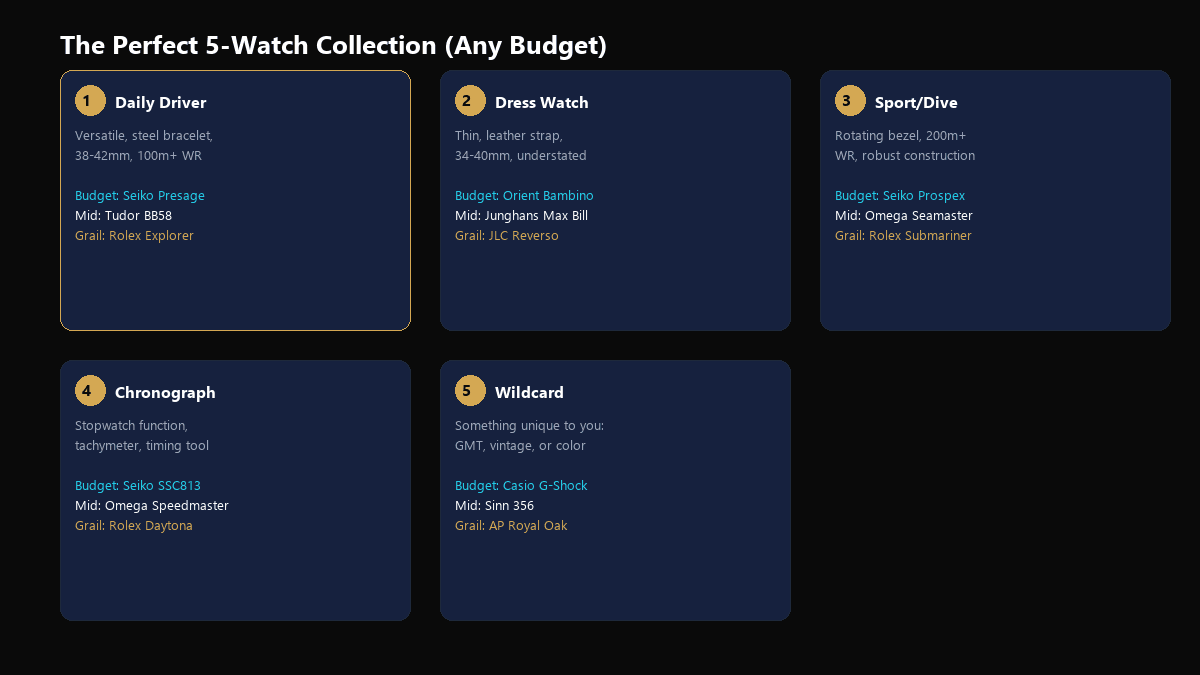
Every well-rounded collection needs five roles filled. Here are our picks at three budget levels:
| Role | Budget | Mid-Range | Grail |
|---|---|---|---|
| Daily Driver | Seiko Presage | Tudor BB58 | Rolex Explorer |
| Dress Watch | Orient Bambino | Junghans Max Bill | JLC Reverso |
| Sport/Dive | Seiko Prospex | Omega Seamaster | Rolex Submariner |
| Chronograph | Seiko SSC813 | Omega Speedmaster | Rolex Daytona |
| Wildcard | Casio G-Shock | Sinn 356 Flieger | AP Royal Oak |
Build Your Collection Smarter
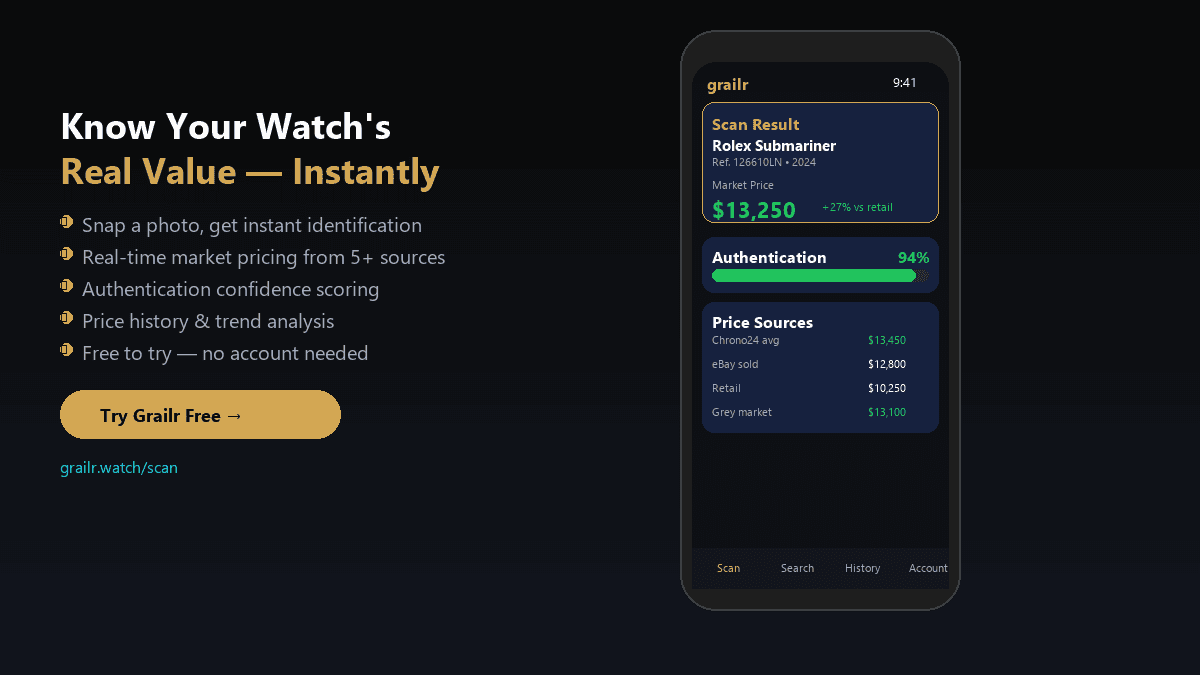
Grailr uses a photo to suggest a watch identity and an indicative AI price estimate, with active eBay listings where available. Check the exact reference and condition independently; a photo scan cannot authenticate a watch.
- Verify any watch in seconds
- Compare prices across platforms
- Avoid overpaying on your next piece
Budget Guide: What to Spend at Each Level
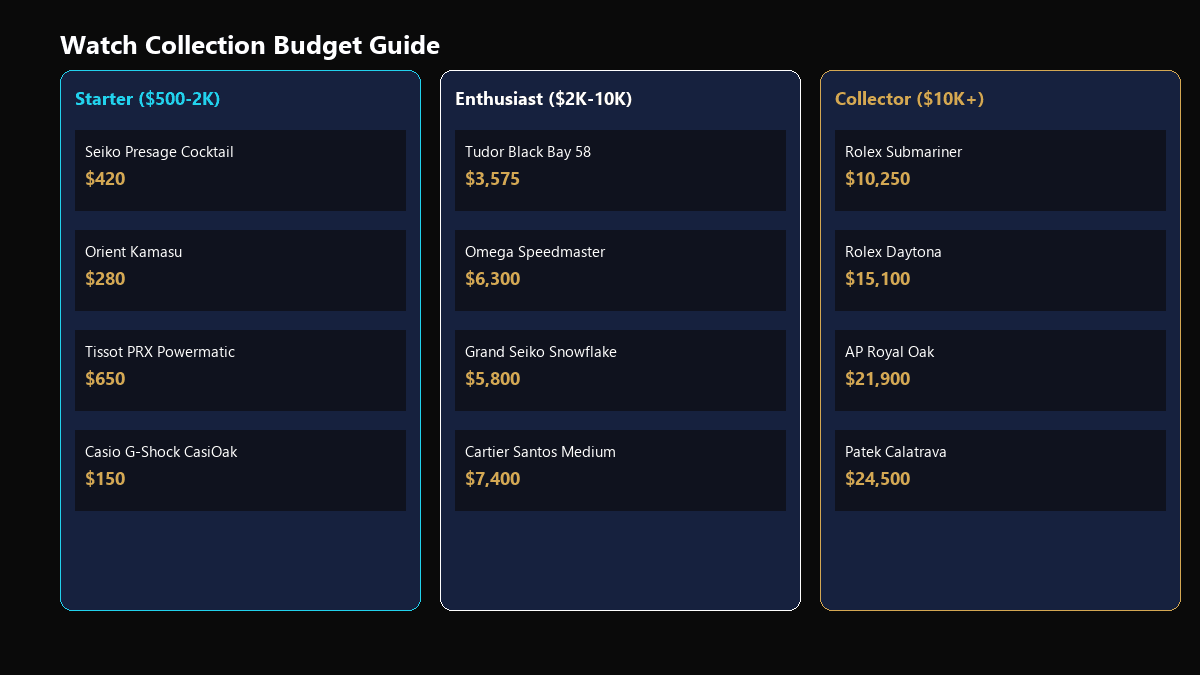
The golden rule: never spend more than you can comfortably afford to lose. A watch is not a savings account. Budget 5–10% of your annual discretionary income per watch purchase, and save up rather than financing. Remember to budget for service costs too — a $10,000 watch needs an $800 service every 5–7 years.
7 Beginner Mistakes That Cost Real Money
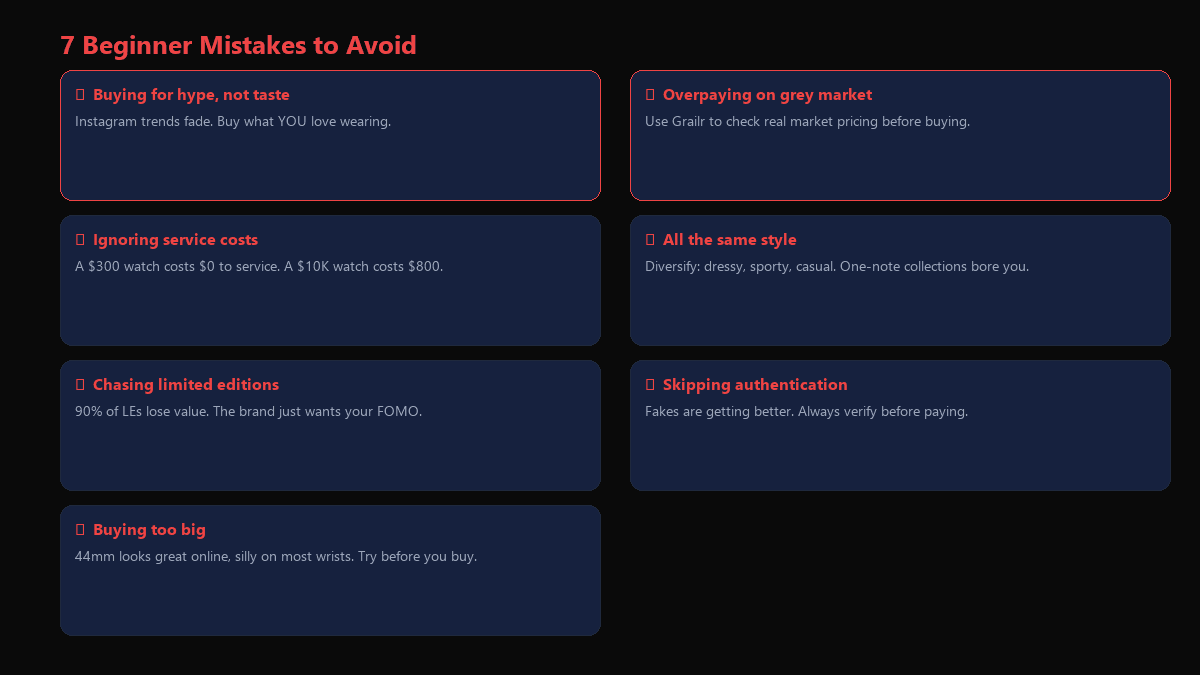
1. Buying for hype, not taste
Instagram trends fade in months. Buy what YOU love wearing, not what influencers are pushing.
2. Overpaying on the grey market
Use Grailr for an indicative estimate, then compare independent quotes before committing.
3. Ignoring service costs
A $300 Seiko costs nothing to service. A $10,000 Rolex costs $800+ every 5-7 years.
4. Collecting all the same style
Five dive watches don't make a collection — they make redundancy. Diversify across roles.
5. Chasing limited editions
90% of LEs lose value after the hype fades. The brand just wants your FOMO.
6. Skipping authentication
Fakes are getting dangerously good. Always verify before paying, especially pre-owned.
7. Buying too big
44mm looks great online but silly on most wrists. Always try on before committing.
Where to Buy
Authorized Dealers
Full warranty, guaranteed authentic, retail price. Best for new purchases, especially Rolex and other waitlisted brands.
Pre-Owned Dealers
10–30% savings, wider selection, dealer warranty. Crown & Caliber, Bob’s Watches, and Watchfinder are reputable. Always verify authenticity.
Chrono24 & eBay
Widest selection, competitive pricing. Use buyer protection and use Grailr as one indicative price reference before purchasing.
Private Sales
Best prices but highest risk. Meet in person, use Grailr for an indicative estimate, and never wire money before seeing the watch.
Frequently Asked Questions
How much should I spend on my first watch?
Start with $200-$500. Seiko, Orient, and Tissot offer genuine mechanical watches that teach you what you value in a timepiece without breaking the bank.
How many watches should a collection have?
Five is the sweet spot: a daily driver, dress watch, sport/dive, chronograph, and a wildcard. This covers every occasion without redundancy.
What is the best first luxury watch?
The Tudor Black Bay 58 ($3,575), Omega Speedmaster ($6,300), and Rolex Explorer ($7,350) are all excellent first luxury watches with heritage and value retention.
Should I buy watches as investments?
Buy watches you love to wear. Some appreciate (especially Rolex), but most lose 20-40% on the secondary market. If investment is your primary goal, the stock market is more reliable.
Related Articles
The Bottom Line
The best watch collection is the one that makes you happy. Start with what you can afford, learn what you love, and upgrade deliberately. Every great collector started with a cheap watch and a lot of curiosity. Welcome to the hobby.
Ready to Add to Your Collection?
Grailr uses a photo to suggest a watch identity and an indicative AI price estimate, with active eBay listings where available. Check the exact reference and condition independently; a photo scan cannot authenticate a watch.
Scan a Watch NowSources and price context
- Rolex Certified Pre-Owned process — Explains physical authentication, servicing and the two-year programme guarantee.
- Seiko water-resistance guidance — Distinguishes swimming and diving suitability; water resistance requires ongoing maintenance.
These primary sources support the specific history, specification or policy points noted above. Prices and resale percentages elsewhere in this guide are indicative editorial figures, not a verified transaction dataset or guaranteed returns. Confirm the exact reference, region, condition and current quote before buying; asking prices are not completed-sale prices.