Best Gold Watches for Men in 2026: Yellow Gold, Rose Gold & Two-Tone Compared
From a $30 Casio digital to a $51,500 Audemars Piguet Royal Oak — every type of gold watch for men compared with real 2026 pricing, investment data, skin-tone advice, and the honest truth about PVD vs solid gold.
Price context: this guide includes indicative prices from its original publication period. They have not all been refreshed to current quotes. Use the linked primary sources for specifications and policies, and verify prices independently.

- Yellow gold is the classic, traditional choice; rose gold (Everose for Rolex, Sedna for Omega) is the modern trending pick — and 2026’s fastest-growing segment
- Gold watches start at ~$30 for a gold-plated Casio and scale to $50,000+ for solid 18K pieces from Rolex, Patek Philippe, and Audemars Piguet
- PVD and gold-plated watches deliver the aesthetic at 5–10% of the cost of solid gold but don’t hold resale value and will fade over time
- Gold content alone does not predict resale value; compare the exact reference, condition and recent transactions before buying
Gold Types Explained: Yellow Gold vs Rose Gold vs White Gold vs Two-Tone
Not all gold watches are created equal. The term “gold watch” can mean anything from a $30 gold-plated digital to a $50,000 solid 18-karat masterpiece. Before comparing specific models, you need to understand the different types of gold used in watchmaking — because the difference between them affects price, durability, appearance, and resale value dramatically.
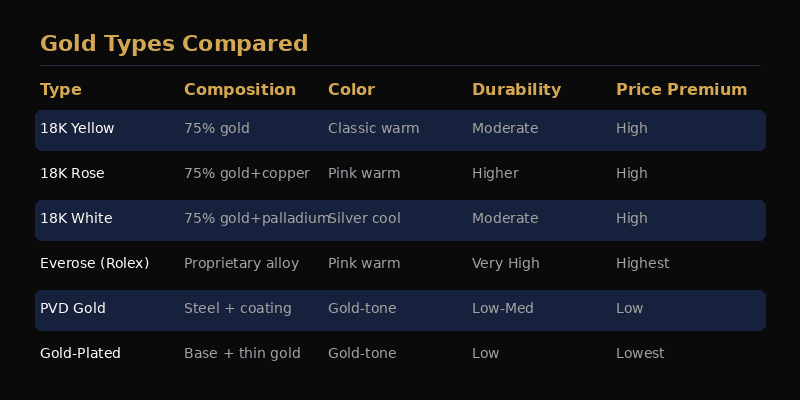
18K Yellow Gold (75% Pure Gold)
The classic. Rich, warm, and unmistakably luxurious, 18K yellow gold is the standard for Swiss luxury watchmaking. Rolex, Patek Philippe, and Audemars Piguet all use 18K as their baseline. The remaining 25% is typically a mix of silver and copper, which gives the alloy its strength. Yellow gold has been the default “gold watch” for over a century and remains the most traditional choice.
18K Rose Gold (Everose, Sedna, King Gold)
Rose gold gets its distinctive pinkish-copper warmth from a higher proportion of copper in the alloy. Each major brand has its own proprietary formula: Rolex calls theirs Everose (which includes a trace of platinum to prevent fading), Omega uses Sedna gold (with palladium for colour stability), and Hublot brands theirs King Gold. Rose gold has surged in popularity since 2018 and is now the preferred gold tone for men under 45.
14K Gold (58.3% Pure Gold)
More common in American jewelry and mid-range watches than in Swiss haute horlogerie. 14K gold is harder and more scratch-resistant than 18K due to its higher alloy content, but it has a slightly paler, less saturated colour. You’ll find 14K gold cases on some vintage Omega, Hamilton, and Longines pieces, though modern Swiss luxury brands have standardized on 18K.
Two-Tone (Rolesor, Steel & Gold)
Two-tone watches combine stainless steel with gold, typically placing gold on the bezel, crown, and center bracelet links while using steel for the case middle and outer links. Rolex trademarked this as Rolesor back in 1933. Two-tone delivers the visual warmth of gold at roughly 50–60% of the price of a full-gold equivalent. For a deep dive, see our complete two-tone Rolex guide.
PVD / Gold-Plated / Gold-Tone
The most affordable route to a gold aesthetic. PVD (Physical Vapour Deposition) bonds a thin gold-coloured coating to a steel or base-metal case using a vacuum process — it’s more durable than traditional gold plating but still only 0.5–5 microns thick. Gold plating (electroplating) deposits an even thinner layer and is the least durable option. Neither contains meaningful gold content, neither holds resale value, and both will eventually fade or wear through. But they look great on day one and cost a fraction of solid gold.
Best Budget Gold Watches Under $500
You don’t need thousands of dollars to wear a gold watch that looks genuinely sharp. These five picks deliver the gold aesthetic with real watchmaking credibility — no fashion-brand markups, no flimsy construction.
Casio A168WG — ~$30
The internet’s favourite gold watch, and for good reason. This gold-tone stainless steel digital has been in production since the 1980s and has become a genuine cultural icon — worn by everyone from tech founders to hip-hop artists. It’s water-resistant to 30m, runs on a CR2016 battery for about 7 years, and weighs just 51 grams. Is it “real gold”? No — it’s resin-coated steel. But at $30, nobody cares. It’s the most fun you can have for the price of a pizza dinner.
Seiko SNKL23 — ~$150
A genuine automatic mechanical movement (Seiko 7S26) in a gold-tone case for $150 — that’s borderline absurd value. The 38mm case size hits the sweet spot for a dress watch, the champagne dial with applied indices looks far more expensive than its price, and the exhibition caseback lets you watch the rotor spin. The gold-tone plating is modest but tasteful. This is the watch that launched a thousand “best watches under $200” lists, and it deserves every mention.
Citizen Corso BM7332-53P — ~$250
Citizen’s Eco-Drive technology means this gold-tone watch never needs a battery — it charges from any light source and holds a six-month power reserve in the dark. The 40mm gold-tone stainless steel case sits on a matching bracelet, and the champagne dial with date window gives it a clean, dressy appearance. At $250, you get a solar-powered watch with sapphire crystal and 100m water resistance — features that many brands charge triple for.
Orient Bambino Gold Tone (RA-AC0M04Y) — ~$280
The Orient Bambino has earned a reputation as one of the best dress watches at any price, and the gold-tone version amplifies that vintage charm. The 40.5mm gold-plated case houses Orient’s in-house F6724 automatic caliber with a 40-hour power reserve. The domed mineral crystal, applied gold indices, and cream dial evoke 1960s elegance. It’s the best “old money” gold watch you can buy for under $300.
Tissot PRX Gold PVD — ~$395
The Tissot PRX has been the breakout watch of the 2020s, and the gold PVD version is the one that turns the most heads. The 40mm integrated-bracelet design channels luxury sport watch vibes at a fraction of the cost, and the quartz movement keeps it thin and accurate. Tissot’s PVD coating is higher quality than most in this price range, and the Swiss-made pedigree adds genuine credibility. If you want the gold sport-watch look without spending thousands, this is the one.
Best Mid-Range Gold Watches: $500–$5,000
This is where gold watches get serious. At the mid-range tier, you start seeing genuine Swiss movements, better PVD coatings, gold accents on steel cases, and your first real encounters with solid gold bezels and crowns. These five models represent the best the segment has to offer.
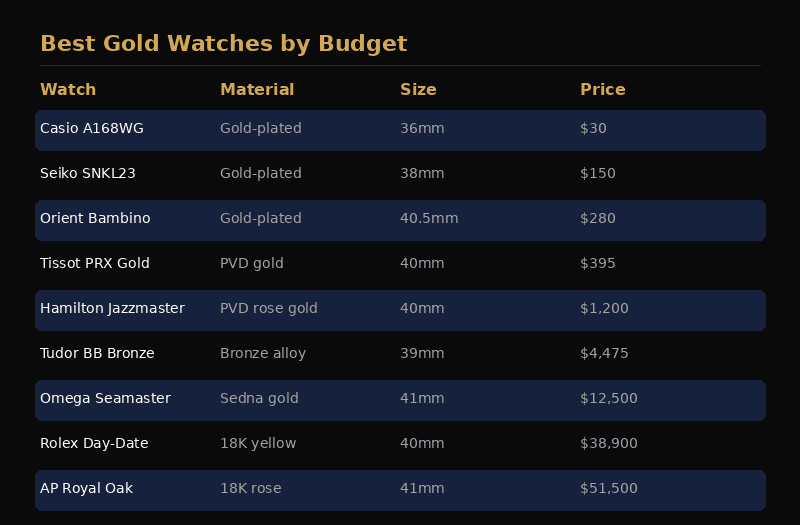
Hamilton Jazzmaster Open Heart Gold PVD — ~$1,200
Hamilton bridges the gap between affordable and luxury with genuine Swiss credibility (they’re owned by the Swatch Group alongside Omega and Longines). The Jazzmaster Open Heart in gold PVD features a 42mm case, an H-10 automatic movement with an 80-hour power reserve, and a dial cutout that reveals the balance wheel. The gold PVD coating is robust, and the overall build quality is a significant step up from the sub-$500 tier. It’s the entry point to “real” Swiss gold-tone watchmaking.
Longines Master Collection Gold — ~$2,800
Longines punches well above its weight class. The Master Collection in gold PVD delivers a COSC-certified chronometer movement (L888), 72-hour power reserve, sapphire crystal on both sides, and the kind of finishing that rivals watches twice the price. The 40mm case is gold PVD over steel, and the silver-white dial with barleycorn texture gives it a distinctly old-world European flavour. For collectors who appreciate heritage — Longines has been making watches since 1832 — this is a tremendous value proposition.
Omega Aqua Terra Two-Tone (Steel & Sedna Gold) — ~$4,100
Your first encounter with genuine 18-karat gold in this price range. The Aqua Terra 38mm in steel and Sedna gold features Omega’s proprietary rose gold alloy on the bezel and bracelet center links, a Master Chronometer-certified Co-Axial caliber with 60-hour power reserve, and 150m water resistance. The teak-pattern dial is distinctive and elegant. At ~$4,100, you’re getting real precious metal, top-tier movement certification, and a brand name that holds genuine secondary market value.
TAG Heuer Carrera Gold Edition — ~$4,300
TAG Heuer’s Carrera in 18-karat rose gold and steel offers a sporty chronograph aesthetic with genuine precious metal. The 41mm case houses the TH20-06 automatic chronograph with a 80-hour power reserve. The rose gold bezel and pushers against the brushed steel case create a modern, masculine look that leans more sport than dress. It’s the gold chronograph for the man who doesn’t want to look like he’s trying too hard.
Tudor Black Bay Bronze — ~$4,475
Technically not gold, but the Tudor Black Bay Bronze deserves inclusion because its warm, golden-brown aluminium bronze case delivers a gold-adjacent aesthetic that develops a unique patina over time. The 43mm case houses Tudor’s in-house MT5601 with a 70-hour power reserve and COSC certification. Bronze is significantly harder than gold, so it handles daily wear like a tool watch should. It’s the thinking person’s gold-tone sport watch — and the patina means no two examples look quite the same after a year of wear.
Check Any Watch Price in Seconds
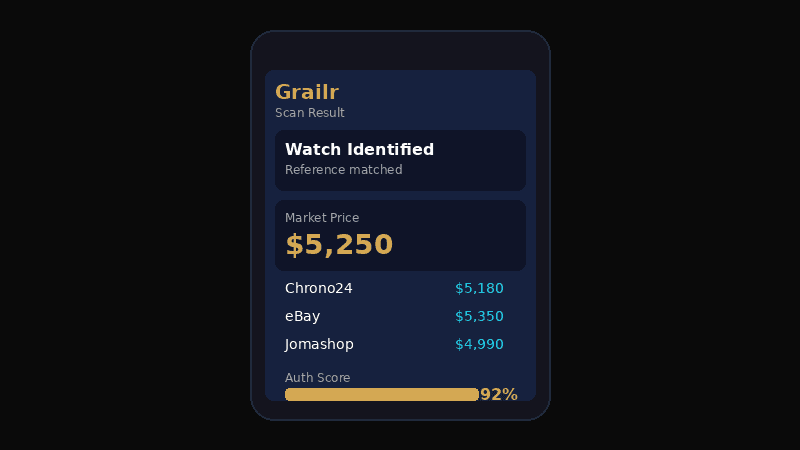
Grailr uses a photo to suggest a watch identity and an indicative price estimate, with active eBay listings where available. Check the exact reference and condition independently; a photo scan cannot authenticate a watch.
- Grailr suggests brand, model & reference
- Active eBay listings where available
- Identification confidence, not authentication
Best Luxury Gold Watches: $5,000–$25,000
This is the tier where solid gold becomes the norm rather than the exception. Cases, bezels, and bracelets are crafted from 18-karat gold — not plated, not coated, but solid precious metal throughout. These watches don’t just look expensive; they contain thousands of dollars in raw gold. More importantly, they hold their value in ways that PVD and plated watches simply cannot. For a broader perspective on which watches retain value best, see our watches that hold value guide.
Breitling Navitimer Automatic 41 Rose Gold — ~$10,900
Breitling’s iconic aviator watch in 18K red gold is a striking departure from the typical Navitimer-in-steel formula. The 41mm solid gold case houses the Breitling Caliber 32 (based on the reliable SW200) with a 38-hour power reserve. The gold slide-rule bezel retains the Navitimer’s signature flight-computer functionality, and the brown alligator strap pairs naturally with the warm rose tone. It’s a pilot’s watch that doubles as a dress watch — a rare combination.
Omega Seamaster Aqua Terra Sedna Gold — ~$12,500
The full Sedna gold Aqua Terra is one of the most beautiful men’s rose gold watches in production. The 41mm solid Sedna gold case houses Omega’s Co-Axial Master Chronometer caliber 8900 with a 60-hour power reserve and anti-magnetic resistance to 15,000 gauss. The silvery-white dial with horizontal teak pattern against the warm rose case creates a refined, sophisticated contrast. Sedna gold is engineered to resist fading — it will look this good in 30 years.
Rolex Datejust 41 Two-Tone (Yellow Rolesor) — ~$14,800
The Datejust in Yellow Rolesor is arguably the most recognizable gold watch in the world. The combination of Oystersteel with an 18K yellow gold fluted bezel and Jubilee bracelet center links has been a status symbol since the 1940s. The Cal. 3235 delivers a 70-hour power reserve, and the Cyclops date magnification at 3 o’clock is pure Rolex DNA. At ~$14,800, it’s the most accessible way into solid Rolex gold — and the secondary market value remains strong at approximately 88% retention.
Cartier Santos Medium Rose Gold — ~$15,400
The Santos de Cartier in 18K rose gold is a masterclass in elegant design. The square case with exposed screws, the seamless integration with the rose gold bracelet, and Cartier’s QuickSwitch system (which lets you swap between bracelet and leather strap without tools) make it one of the most versatile luxury gold watches available. The 35.1mm × 41.9mm medium case wears larger than the numbers suggest, and the Cartier Caliber 1847 MC automatic delivers reliable daily performance. It’s the gold watch for the man who values design as much as horological provenance.
Rolex Day-Date 36 Yellow Gold — ~$38,900
The “President’s Watch.” Available exclusively in precious metals, the Day-Date is Rolex’s most prestigious model. The 36mm solid 18K yellow gold case on the President bracelet, spell-out day display at 12 o’clock, and date at 3 o’clock have made it the definitive gold dress watch for over 60 years. The Cal. 3255 provides a 70-hour power reserve. It’s the gold Rolex — the one that presidents, CEOs, and heads of state have worn since 1956. Resale values hold at approximately 90–95% of MSRP for current references.
Best Ultra-Luxury Gold Watches: $25,000+
At the summit of gold watchmaking, you’re buying more than a timepiece — you’re acquiring a piece of horological art backed by centuries of craft. These watches represent the absolute pinnacle of men’s rose gold and yellow gold watches, with movements finished to a level that most watch owners will never see through a loupe.
Patek Philippe Calatrava Rose Gold (5227R) — ~$33,300
The Calatrava is the purest expression of a dress watch in existence. The 39mm solid 18K rose gold case — just 8.9mm thin — houses the Cal. 324 S C with a 45-hour power reserve. The officer’s-style hinged caseback, hand-applied Breguet numerals, and lacquered cream dial are finished to a standard that borders on the obsessive. Patek Philippe’s rose gold has a distinctively warm, slightly pinkish tone that photographs beautifully. This is the watch that watch collectors buy when they’ve owned everything else and want to strip it all back to essentials.
Rolex Day-Date 40 Everose Gold (228235) — ~$38,900
The modern 40mm Day-Date in Rolex’s proprietary Everose gold is the rose gold Rolex. The Cal. 3255 chronometer delivers 70-hour power reserve with Rolex’s Chronergy escapement. The fluted bezel, President bracelet, and day/date complications are all rendered in solid Everose gold — an 18K alloy for which Rolex lists gold, copper, palladium and indium. The chocolate or olive-green dial variants have become particularly sought-after, with secondary market prices holding firm at 90–95% of MSRP.
Vacheron Constantin Overseas Rose Gold (4500V) — ~$44,800
Vacheron Constantin’s luxury sport watch in 18K rose gold competes directly with the AP Royal Oak and delivers a distinct aesthetic. The 41mm case features the Overseas’ signature Maltese Cross bezel, and the three-strap interchangeable system (steel bracelet, leather, rubber) makes it genuinely versatile. The Cal. 5100 automatic is Geneva Seal-hallmarked — a stricter standard than COSC — with a 60-hour power reserve. It’s the connoisseur’s alternative to the Royal Oak: less recognized on the street, more respected in the watch community.
Audemars Piguet Royal Oak 15500OR Rose Gold — ~$51,500
The Royal Oak in 18K rose gold is the undisputed king of luxury sport watches in precious metal. Gerald Genta’s iconic octagonal bezel with exposed hexagonal screws, the tapisserie dial, and the integrated bracelet are instantly recognizable. The 41mm solid rose gold case houses the Cal. 4302 with a 70-hour power reserve. At ~$51,500, it’s the most expensive watch on this list — and one of the few that regularly trades above retail on the secondary market. The blue dial variant (15500OR.OO.1220OR.01) is the most sought-after, with pre-owned prices often exceeding $60,000.
Gold Watch Comparison Table
Here’s a side-by-side comparison of the standout gold watches across every price tier, with material, case size, 2026 pricing, and estimated value retention.
| Watch | Material | Size | Price | Retention |
|---|---|---|---|---|
| Casio A168WG | Gold-tone resin/steel | 36mm | $30 | N/A |
| Seiko SNKL23 | Gold-tone plating | 38mm | $150 | ~60% |
| Orient Bambino Gold | Gold-tone plating | 40.5mm | $280 | ~55% |
| Tissot PRX Gold PVD | Gold PVD steel | 40mm | $395 | ~65% |
| Hamilton Jazzmaster Gold | Gold PVD steel | 42mm | $1,200 | ~60% |
| Omega Aqua Terra Two-Tone | Steel + 18K Sedna gold | 38mm | $4,100 | ~78% |
| Tudor Black Bay Bronze | Aluminium bronze | 43mm | $4,475 | ~80% |
| Breitling Navitimer Rose Gold | 18K red gold | 41mm | $10,900 | ~75% |
| Omega Seamaster Sedna Gold | 18K Sedna gold | 41mm | $12,500 | ~80% |
| Rolex Datejust Two-Tone | Steel + 18K yellow gold | 41mm | $14,800 | ~88% |
| Cartier Santos Rose Gold | 18K rose gold | 35 × 42mm | $15,400 | ~82% |
| Patek Calatrava Rose Gold | 18K rose gold | 39mm | $33,300 | ~92% |
| Rolex Day-Date 40 Everose | 18K Everose gold | 40mm | $38,900 | ~93% |
| Vacheron Overseas Rose Gold | 18K rose gold | 41mm | $44,800 | ~88% |
| AP Royal Oak Rose Gold | 18K rose gold | 41mm | $51,500 | ~110%+ |
Retention percentages reflect estimated 3-year resale value for complete sets with box and papers. These are editorial estimates from the original publication period; no underlying sales dataset is provided.
PVD vs Solid Gold: What’s the Difference?
This is the single most important distinction in gold watches, and it’s one that marketing departments work very hard to blur. Understanding it will save you from overpaying for a gold-tone watch or undervaluing a genuine solid gold piece.
PVD (Physical Vapour Deposition) applies a microscopically thin layer of gold-coloured material — typically titanium nitride or zirconium nitride, not actual gold — to a stainless steel or base-metal case in a vacuum chamber. The coating is harder than traditional gold plating and bonds more securely to the substrate, but it’s still only 0.5–5 microns thick. For context, a human hair is about 70 microns. With daily wear, PVD coatings last 3–7 years before showing visible wear-through, typically at high-friction points like bracelet clasp edges and the sides of lugs.
Gold plating (electroplating) deposits actual gold onto the case surface, but at even thinner layers — typically 0.5–2 microns. It looks great initially but wears faster than PVD and is more susceptible to chemical reactions from sweat and perfume. Most watches under $500 labelled “gold” use electroplating or ion plating.
Solid gold means the case, bezel, or bracelet components are machined from a gold alloy that is gold all the way through. An 18K gold case contains 75% gold by weight — it can be scratched, polished, scratched again, and polished again indefinitely. It will never “wear through” because there is no substrate underneath. Solid gold also has intrinsic material value: a solid 18K gold Rolex case contains approximately $3,000–$5,000 in raw gold at current market prices, providing a natural price floor that plated watches lack entirely.
The bottom line: PVD and gold-plated watches are perfectly fine if you want the gold look at a low cost and understand they’re essentially disposable luxury. Solid gold watches contain precious metal, but their resale value can fall. Polishing removes material and cannot be repeated indefinitely without changing the case shape. If you’re spending over $2,000, make sure you’re getting solid gold components, not PVD. Use Grailr’s identification tool to suggest a model; confirm materials using the exact reference and a physical inspection.
Which Gold Tone Suits Your Skin & Style?
Choosing the right gold tone isn’t just an aesthetic preference — certain gold tones genuinely look better against certain skin tones. This is the same principle that jewellers have used for centuries, and it applies directly to watches. Here’s the practical guide.
Warm Skin Tones (Olive, Golden, Tan, Deeper Complexions)
Best match: Yellow gold. Warm skin tones have yellow, golden, or peachy undertones that harmonize naturally with yellow gold. The warmth amplifies the richness of your skin rather than creating contrast. A yellow gold Rolex Day-Date against a warm skin tone is one of the most flattering combinations in watchmaking. Rose gold also works beautifully here, though it creates slightly more contrast.
Cool Skin Tones (Pink, Blue, or Red Undertones)
Best match: Rose gold or white gold. Cool skin tones have pink, blue, or reddish undertones. Rose gold’s copper-pink warmth complements these undertones without clashing, making it universally flattering. White gold or two-tone watches also work well because the cooler steel/white gold tones mirror your natural undertone. Yellow gold can feel overly warm against cool skin, though it’s by no means a rule-breaker.
Neutral Skin Tones (Mix of Warm and Cool)
Best match: Any gold tone. Lucky you. Neutral skin tones balance warm and cool undertones, which means yellow gold, rose gold, white gold, and two-tone all work. Rose gold tends to be the most universally flattering single choice because it sits between yellow and white on the colour spectrum, but you genuinely can’t go wrong here.
The quick test: Look at the veins on the inside of your wrist. If they appear predominantly green, you have warm undertones (lean yellow gold). If they appear predominantly blue or purple, you have cool undertones (lean rose gold or white gold). If you see a mix, you’re neutral (pick whatever you like). This isn’t prescriptive — wear whatever makes you happy — but it’s a useful starting point if you’re genuinely torn between gold tones.
Gold Watch Investment & Resale Value
Gold watches occupy an interesting position in the investment landscape. On one hand, the intrinsic gold content provides a natural price floor that steel watches don’t have. On the other, gold watches from the wrong brands depreciate just as harshly as any other consumer product. The key is buying from brands that hold secondary market demand.
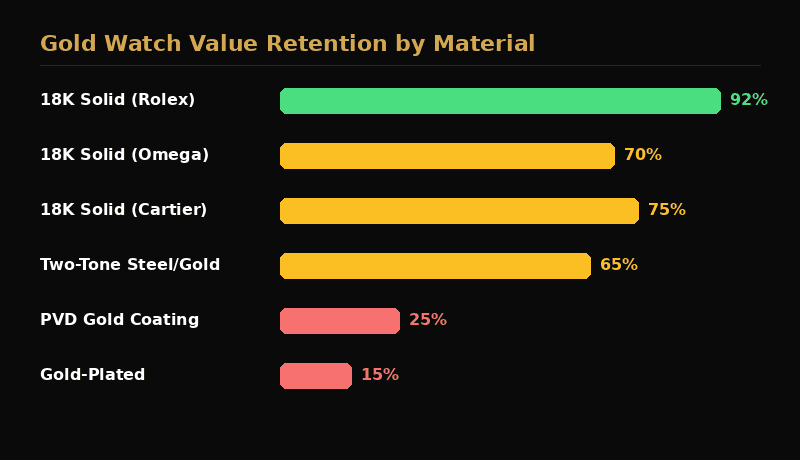
Rolex gold watches lead the retention charts. The Day-Date in Everose gold retains approximately 90–95% of its MSRP after three years. The Daytona in yellow gold actively appreciates, with pre-owned prices exceeding retail. Rolex’s proprietary Everose alloy — which is engineered never to fade — adds a practical advantage that supports long-term value.
Patek Philippe and Audemars Piguet in gold hold value exceptionally well for the same reasons their steel models do: extreme supply scarcity, strong collector demand, and brand prestige. The AP Royal Oak in rose gold regularly trades above MSRP, and Patek’s gold Calatravas and Nautiluses are considered blue-chip collectables.
Omega and Cartier gold watches retain roughly 75–85% of retail, which is respectable but below Rolex and the holy trinity. The exception is the Omega Speedmaster Moonwatch in gold, which has a dedicated collector following and holds value better than most Omega references.
PVD and plated watches have effectively zero investment value. A $400 gold PVD Tissot will be worth $100–$150 on the secondary market within a year. This isn’t a criticism — these watches are designed for wearing, not investing — but it’s important to set expectations correctly. For a broader perspective on value retention across all watch categories, see our best watches for value guide.
The smartest gold watch investment strategy: Buy solid 18K gold from Rolex, Patek, or AP. Buy pre-owned to avoid the initial depreciation hit (which is smaller for gold Rolex than any other brand, but still exists). Keep the box, papers, warranty card, and receipt. Service on schedule through authorized channels. Explore an indicative estimate with Grailr and compare it with independent buyer offers.
Frequently Asked Questions
How long does PVD gold plating last on a watch?
PVD (Physical Vapour Deposition) gold coating typically lasts 3-7 years with daily wear before showing noticeable fading or wear-through at high-friction areas like clasp edges and lug sides. Higher-quality PVD from brands like Tissot and Hamilton outlasts cheaper alternatives. Traditional gold plating (electroplating) lasts only 1-3 years. Neither approaches solid 18K gold, which never fades because the gold runs through the entire material.
Is rose gold still trending for men's watches in 2026?
Rose gold remains one of the strongest trends in men's luxury watches as of 2026. Rolex's Everose, Omega's Sedna, and Hublot's King Gold continue appearing in flagship new releases. Rose gold's popularity has grown steadily since 2018 and shows no signs of slowing, particularly among buyers aged 25-45 who see it as a modern, sophisticated alternative to traditional yellow gold.
What is the best value gold watch for men?
For solid gold, the Rolex Datejust Two-Tone (Rolesor) at ~$14,800 offers the best combination of solid 18K gold, strong resale value (~88% retention), and everyday wearability. For gold-tone on a budget, the Casio A168WG at ~$30 is an icon, and the Seiko SNKL23 at ~$150 delivers a genuine automatic movement in a gold-tone case that punches well above its price.
Is a solid gold watch a good investment?
Select solid gold watches from top-tier brands hold value well. Rolex Everose and yellow gold models average 85-95% retention, and certain references like the Day-Date and Daytona in gold can appreciate over time. AP Royal Oak rose gold regularly trades above MSRP. However, gold watches from fashion brands or lesser-known manufacturers depreciate heavily. The investment case is strongest for Rolex, Patek Philippe, and Audemars Piguet.
What is the difference between 18K and 14K gold in watches?
18K gold is 75% pure gold and is the standard for Swiss luxury watches. 14K gold is 58.3% pure gold and is more common in American jewelry and some vintage watches. 18K has a richer, deeper colour but is slightly softer. 14K is more durable due to higher alloy content but has a paler tone. Both are 'solid gold' and will never fade or wear through. Modern Rolex, Omega, Patek, and AP all use 18K exclusively.
Does gold watch colour suit every skin tone?
Different gold tones complement different skin tones. Yellow gold pairs best with warm tones (olive, golden, deeper complexions). Rose gold is the most universally flattering, working with both warm and cool skin. White gold suits cooler skin tones (pink or blue undertones). Quick test: check the veins on your inner wrist — green veins suggest warm undertones (yellow gold), blue/purple veins suggest cool undertones (rose gold).
Related Articles
The Bottom Line
Gold watches for men span an enormous range — from a $30 Casio that’s more cultural icon than timepiece to a $51,500 AP Royal Oak that’s more wearable art than watch. The best gold watch for you depends on three things: your budget, whether you want the look or the investment, and which gold tone suits your skin and style.
If you want the gold look on a budget, the Seiko SNKL23 ($150) and Tissot PRX Gold PVD ($395) are unbeatable. If you want your first solid gold, the Rolex Datejust Two-Tone at ~$14,800 or the Omega Aqua Terra two-tone at ~$4,100 are the smartest entry points. If you want a men’s rose gold watch that holds value, the Rolex Day-Date 40 Everose ($38,900) and AP Royal Oak ($51,500) are the proven performers.
Whatever you choose, know exactly what you’re buying. PVD is not solid gold. 14K is not 18K. And the difference between a great deal and a terrible one is often just five minutes of research. Scan any listing with Grailr before you commit — Grailr technology will suggest a likely model, provide an indicative price estimate, and give you the data to buy with confidence.
Found a Gold Watch You Like?
Grailr uses a photo to suggest a watch identity and an indicative price estimate, with active eBay listings where available. Check the exact reference and condition independently; a photo scan cannot authenticate a watch.
Scan a Watch NowSources and price context
- Rolex Everose composition — Identifies the 18-carat alloy and its stated constituent metals.
- Cartier Tank collection — Distinguishes current Tank sizes, materials and movement variants; check the exact reference.
These primary sources support the specific history, specification or policy points noted above. Prices and resale percentages elsewhere in this guide are indicative editorial figures, not a verified transaction dataset or guaranteed returns. Confirm the exact reference, region, condition and current quote before buying; asking prices are not completed-sale prices.