Buying guide
Longines Conquest: 38mm vs 41mm Buying Guide
Compare Longines Conquest 38mm and 41mm references, current US prices, bracelet fit and used-watch checks before deciding which watch to buy.
By Grailr Watch Intelligence · · 12 min read
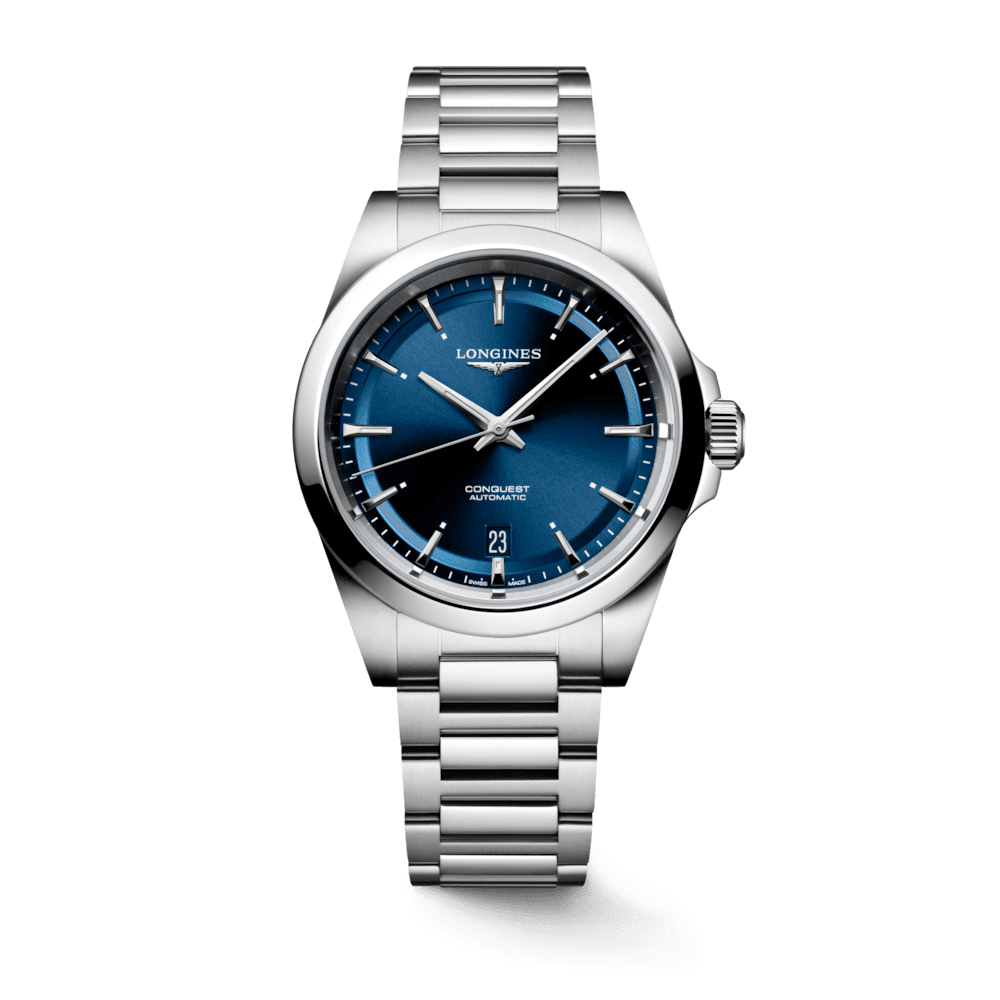
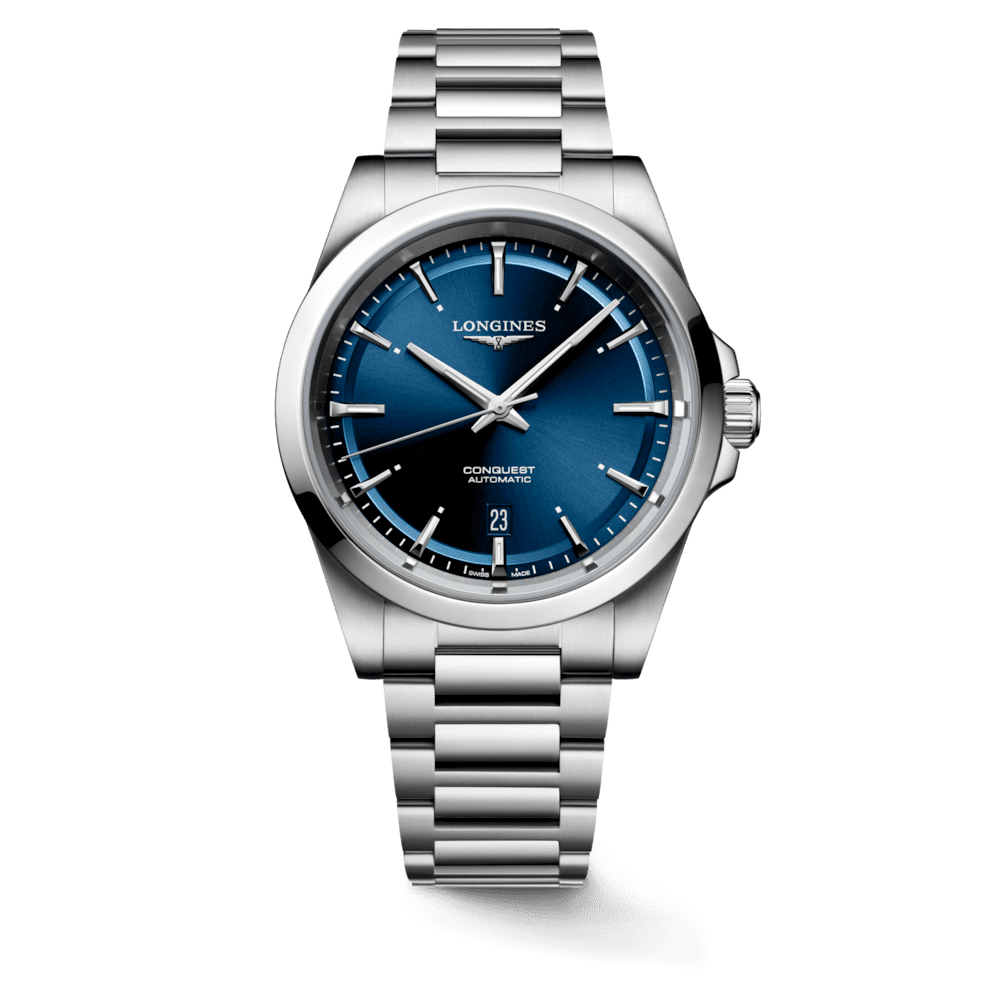
Which Longines Conquest should you buy?
Start with the way the watch fits, then compare the offer for the exact reference. The modern Conquest automatic is an everyday sports watch with a date and a relatively restrained dial. It makes sense for someone who wants one mechanical watch for work, travel and weekends, without a rotating dive bezel. The two blue-dial bracelet versions pictured above let you compare the same basic proposition in 38mm and 41mm cases.
Our starting recommendation is to try the 38mm first if you prefer a quieter presence or often wear a fitted cuff. Try the 41mm if you want more dial area and a broader visual footprint. That is a fit-based editorial recommendation, not a rule that assigns watch sizes to genders or wrist circumferences. A photograph close to your phone can make either size look much larger than it does across a room.
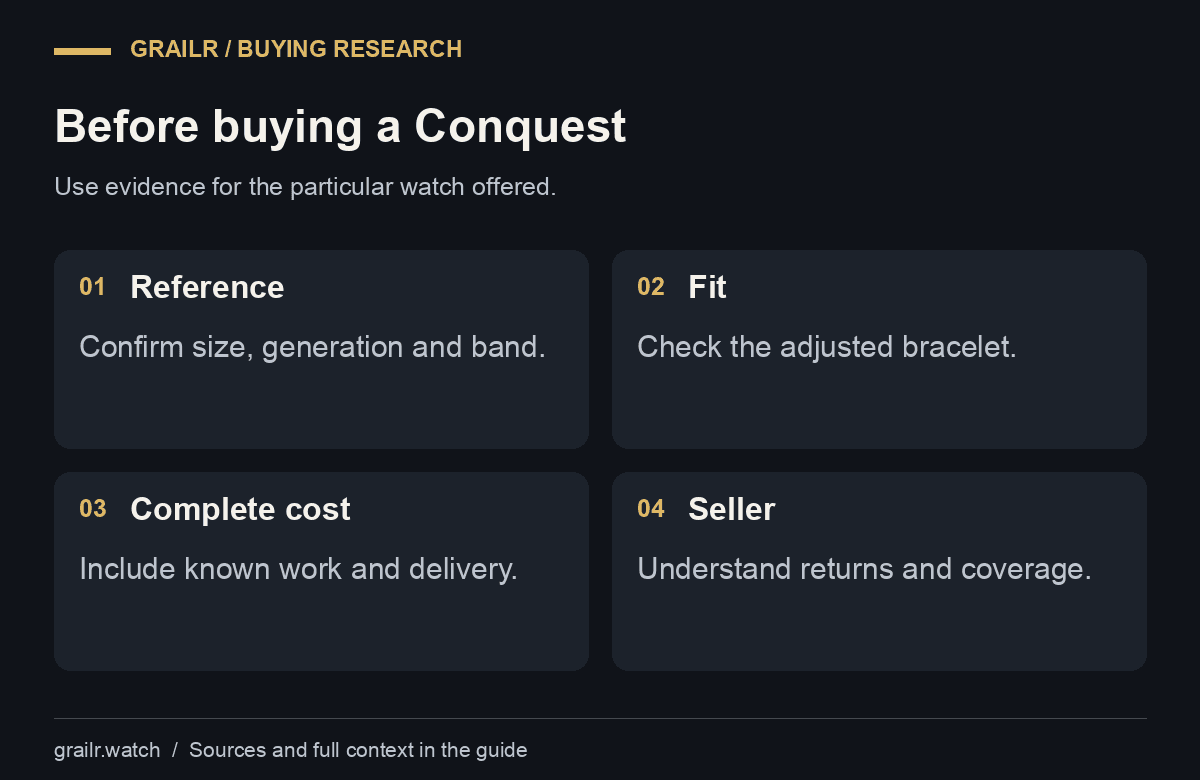
Do not buy simply because a listing says “Conquest.” Longines also uses the name across other sizes, generations and movement types. The references in this comparison are L3.720.4.92.6 and L3.830.4.92.6. The final configuration matters when checking dial colour, bracelet and replacement parts. Our watch reference-number guide explains why the family name is only the first step.
Conquest 38mm versus 41mm: the actual references
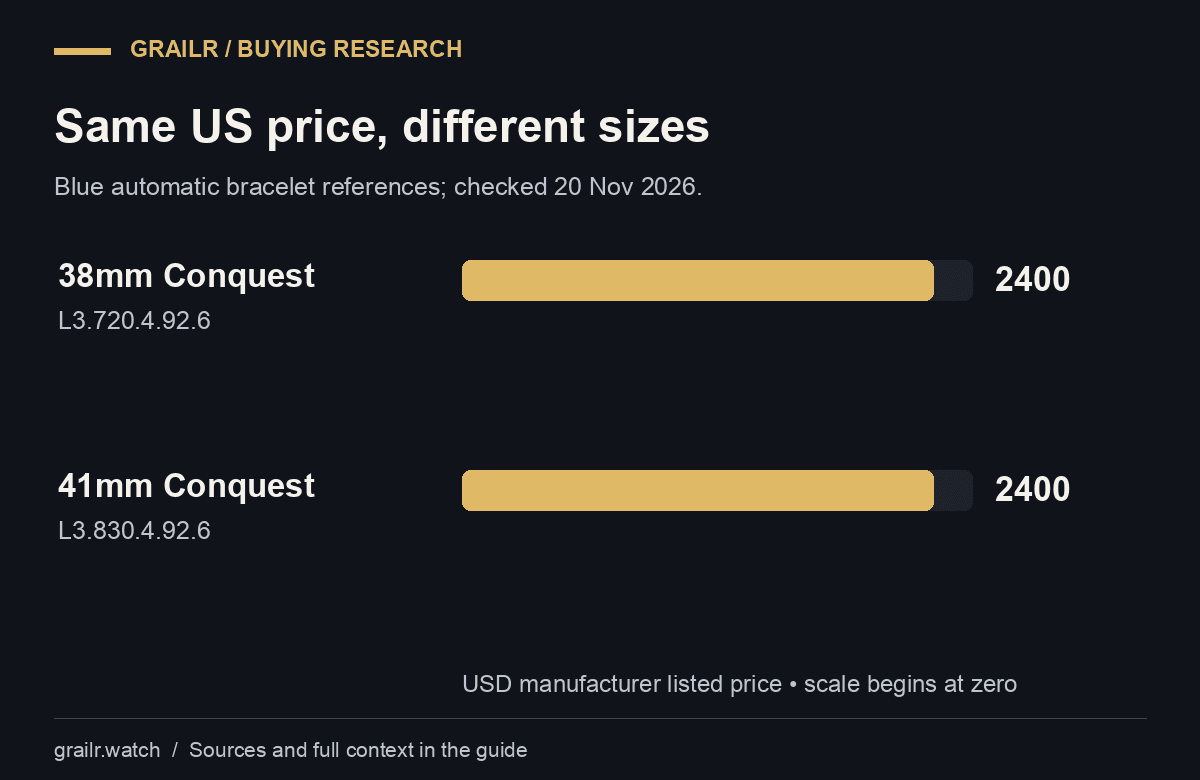
The manufacturer US pages list both watches at $2,400 on 20 November 2026. That makes this particular choice about size and wearability rather than paying extra for a larger case. Both have a sunray blue dial, steel bracelet, date, automatic movement, sapphire crystal and a screw-in crown. Longines quotes up to 72 hours of power reserve and 10 bar water resistance for these references.
| Feature | Conquest 38mm | Conquest 41mm |
|---|---|---|
| Full reference | L3.720.4.92.6 | L3.830.4.92.6 |
| Case diameter | 38mm | 41mm |
| Dial and bracelet | Sunray blue; stainless steel | Sunray blue; stainless steel |
| Movement | Automatic; date | Automatic; date |
| Quoted reserve | Up to 72 hours | Up to 72 hours |
| Water-resistance rating | 10 bar | 10 bar |
| Manufacturer US price | $2,400 | $2,400 |
Those are specifications for these current products, not promises about every used Conquest. An earlier watch with a similar dial can have a different movement, case or clasp. Ask the seller to photograph the identifying reference and provide its documents rather than transferring this table to an unidentified example. The Longines 38mm product page and 41mm product page are the primary comparison sources.
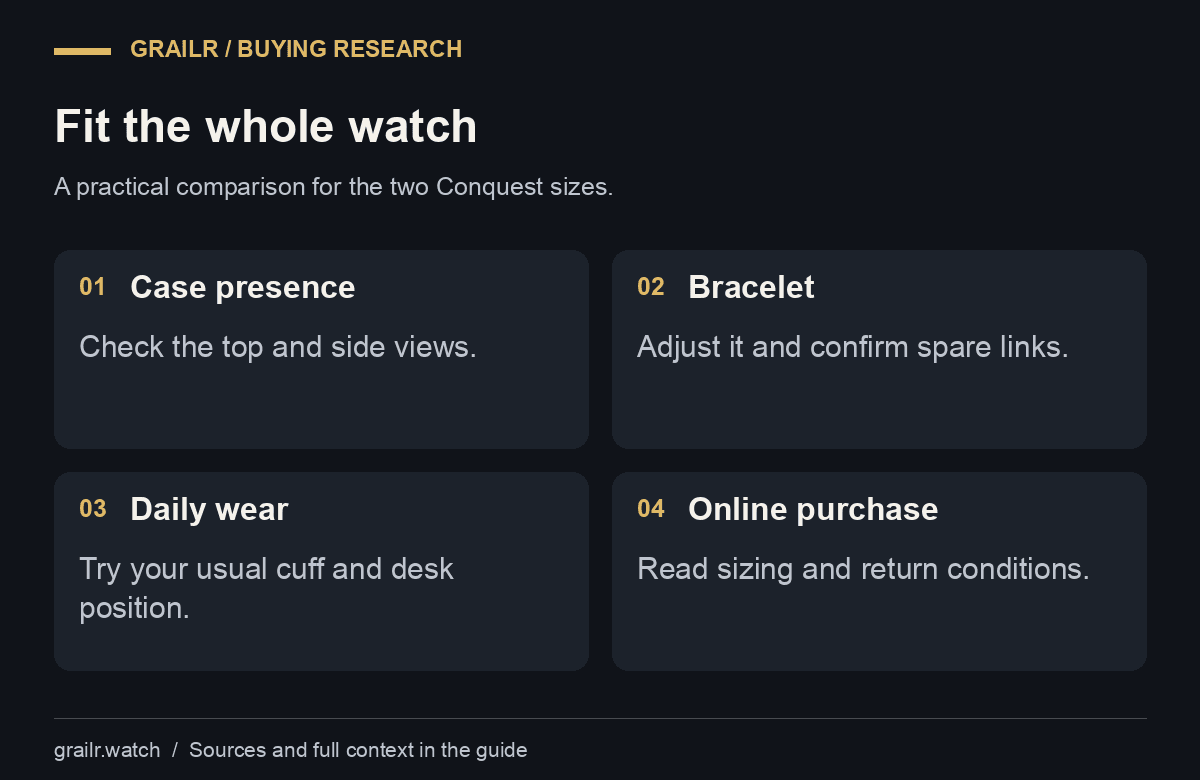
A useful fitting test goes beyond case diameter
Try the watch with its bracelet adjusted enough to sit in its intended position. A loose showroom bracelet can let the case slide down your hand and make the larger size seem more uncomfortable than it would be after sizing. Conversely, holding the case tightly against your wrist can hide a bracelet that does not articulate naturally around it. Check both the top view and the side profile with your arm relaxed.
Take a mirror photograph at a normal viewing distance. Then put your hand on a desk, bend your wrist, and pull a shirt cuff over the case. Look for a crown pressing into the back of your hand, a clasp sitting off-centre, or end links that project beyond the useful flat area of your wrist. Comfort matters more than a generic “ideal size” chart, especially if you plan to wear the watch all day.
If buying online, ask for a straight-on photograph beside a ruler and confirmation of the bracelet's maximum circumference. Ask whether all removed links are included. Missing links are not merely a box-and-papers issue: they can prevent you wearing the watch. Have the seller explain returns after bracelet adjustment before you arrange sizing. Compare those terms with the practical guidance in our used-watch price checklist.
Conquest, HydroConquest and other variants
If you want a rotating bezel and a stronger diving-watch identity, you may actually be shopping for a HydroConquest. Keep those searches separate. The words look similar, but the design and buying priorities are different. Our Longines HydroConquest guide covers that branch of the collection. A low HydroConquest asking price is not a direct comparable for the two watches on this page.
Also separate the automatic Conquest from quartz and chronograph listings. A battery-powered model can be a sensible purchase for someone who values a simple grab-and-go routine, but its price should not be used to declare an automatic overpriced. A chronograph adds different controls, functions and servicing considerations. Neither movement type is automatically the better personal choice; the useful question is whether the watch suits the way you will actually wear it.
The same discipline applies to straps. A watch sold on an aftermarket strap is not equivalent to the same reference supplied with its original bracelet, even if the head is identical. Ask whether the bracelet is included separately, whether any fittings were changed and whether the fitted strap has enough adjustment. A seemingly small configuration difference can explain a substantial part of an apparent bargain.
What should a used Conquest cost?
There is no defensible single used price for “a Longines Conquest” without a reference, condition and sale context. Use the current manufacturer listing as a new-watch reference point, then build a separate set of used comparisons. The $2,400 figure above is neither a used valuation nor a promise that every authorised retailer will quote the same checkout total. Region, tax and sale terms need their own comparison.
Create a shortlist of listings for the same full reference and bracelet configuration. Record the date, currency, condition description, accessories, service evidence, seller location and return policy. Remove listings for a different size or movement. Keep asking prices separate from transactions that actually completed; an unsold optimistic listing does not establish a market value. Our guide to watch valuation explains the evidence to collect.
| Item | What to record | Why it changes the decision |
|---|---|---|
| Watch identity | Full reference, dial and movement | Stops unlike models entering the comparison |
| Condition | Original photos and disclosed work | Describes the actual example, not a stock image |
| Bracelet | Fit, links and clasp condition | Determines usability and replacement needs |
| Service | Dated invoice and scope | Separates documented work from a seller's claim |
| Sale terms | Returns, warranty and seller identity | Defines what happens if the watch is wrong |
| Total outlay | Price plus known delivery, tax and work | Makes offers comparable on the same basis |
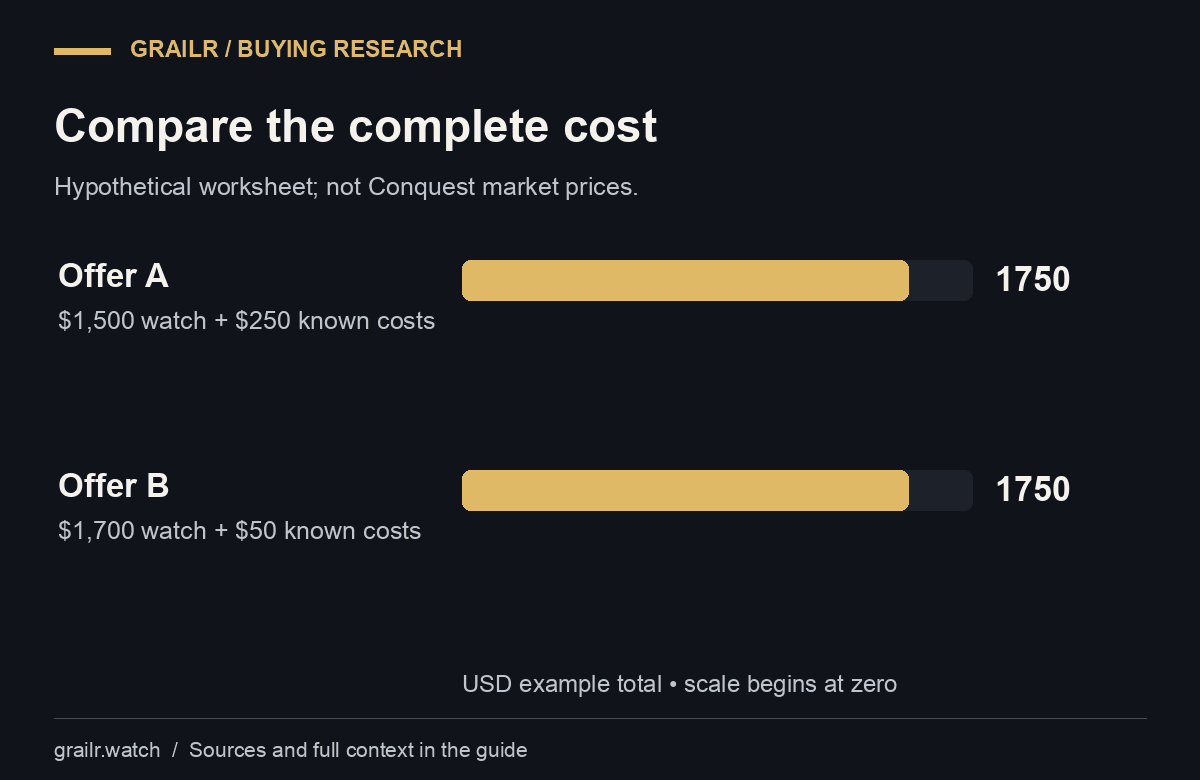
As a hypothetical exercise, a $1,500 offer plus $250 of known costs totals $1,750. A $1,700 offer with $50 of known costs reaches the same total. Those are invented worksheet figures, not current Conquest quotes. The useful lesson is to compare what you will spend and what evidence you receive, rather than the most attractive headline price.
Inspect the surfaces and bracelet before paying
Ask for sharp, unfiltered photographs of the dial, case sides, bezel, clasp and bracelet links. Reflections can conceal dents or make harmless marks look severe, so request more than one angle. Distinguish ordinary wear from an undisclosed repair or a part that differs from the reference being advertised. A stock photograph is useful for learning the design but cannot show the condition of the seller's watch.
Ask directly whether the case or bracelet has been refinished. “Excellent condition” does not answer that question. You may be comfortable with documented polishing, but the description should allow you to make that choice. Pay attention to consistent brushing, transitions between surfaces, and whether photographs show all sides. Do not treat a single visual detail as proof of authenticity; a knowledgeable physical inspection can answer questions a listing cannot.
Check that the crown engages properly and ask about current operation, calendar changes and known faults. A statement that the watch “runs” is not a timing report or evidence of a completed service. For swimming, ask about a recent water-resistance test appropriate to the watch's current condition. The original 10 bar rating does not tell you the state of used seals. Obtain a service quotation if maintenance is uncertain rather than inventing a universal allowance.
Choose the seller as carefully as the watch
Read the seller's return conditions, warranty scope and payment process before negotiating. Ask what happens if the delivered reference, bracelet or condition differs from the description. Keep the written listing and messages with the purchase record. On a marketplace, use the actual listing's protection terms; do not assume that every watch qualifies for a separate inspection or authentication programme.
The eBay Authenticity Guarantee overview explains that programme's scope. Check the particular listing and your location rather than relying on a general badge in a screenshot. A programme can add a useful transaction step, but it does not turn an asking price into evidence of value or replace reading the return policy.
When two offers look similar, favour the one whose evidence you can understand. Clear original photographs, a consistent reference, documented work and a straightforward return process can be more useful than saving a small amount on a vague listing. If an essential answer remains missing, keep looking. You do not need to resolve every uncertainty with a discount.
Use Grailr to prepare the next question
If you have a watch photograph but are unsure what you are looking at, Grailr technology can provide a suggested identification and an indicative value estimate. Use that starting point to decide which reference details and seller photographs to request. You can explore real saved photo-to-report examples before choosing a subscription.
For an identified Conquest, the useful next step is to compare the seller's asking price with the available evidence and known additional costs. An image alone does not disclose the service history, missing bracelet links or the seller's obligations. Put those facts beside the report rather than expecting a photo to answer them. This makes the scan part of a buying process, with a clearer reason for the next action.
Choose the 38mm or 41mm only after fit and configuration are settled. Then select the particular watch whose condition, price and sale terms make sense together. A better buying decision is not necessarily the cheapest Conquest or the largest discount; it is the one supported by the right evidence for the watch you want to wear.
Frequently asked questions
Is the Longines Conquest 38mm better than the 41mm?
Neither is universally better. The two references here offer the same listed US price and headline movement features. Start with the 38mm for a smaller presence, or try the 41mm for a broader dial, then check the complete watch on your wrist.
How much does the Longines Conquest cost?
Longines listed both blue automatic bracelet references in this comparison at $2,400 on its US website on 20 November 2026. That is a dated manufacturer price, not a used valuation or a guaranteed checkout total. Other references and regions differ.
Is the Conquest the same as the HydroConquest?
No. They are distinct branches of the range. Do not use a HydroConquest listing as a direct price comparison for the Conquest references here. Match the full reference, movement, size and band before drawing a conclusion.
Can I swim with a used Conquest?
The current references here have a 10 bar manufacturer rating. For a used watch, ask a competent service provider to assess its present water resistance before water use. The original specification does not establish the condition of its seals today.
Does a lower used price mean the watch is a bargain?
Only after the reference, condition, accessories, known work and sale terms are comparable. Add delivery, taxes and quoted necessary work to the asking price. An unexplained discount is a reason to ask questions, not evidence of value by itself.
Can Grailr identify a Longines from a photograph?
Grailr technology can suggest an identification and provide an indicative value estimate. Confirm the suggestion against the full reference and seller evidence. The photograph cannot establish service condition, complete originality or the terms of the sale.
Sources and research method
This is a desk-researched buying guide, not a hands-on test. Manufacturer specifications were checked on 20 November 2026. Price snapshots identify their currency and source; worked examples are hypothetical. Our recommendations are editorial judgments about fit, evidence and buying costs.