Buying guide
Seiko Turtle vs King Turtle: A Buying Guide
Compare Seiko Turtle SRPE93 and King Turtle SRPE03 prices, crystals, movements and fit, with practical checks for used watches and modified parts.
By Grailr Watch Intelligence · · 12 min read
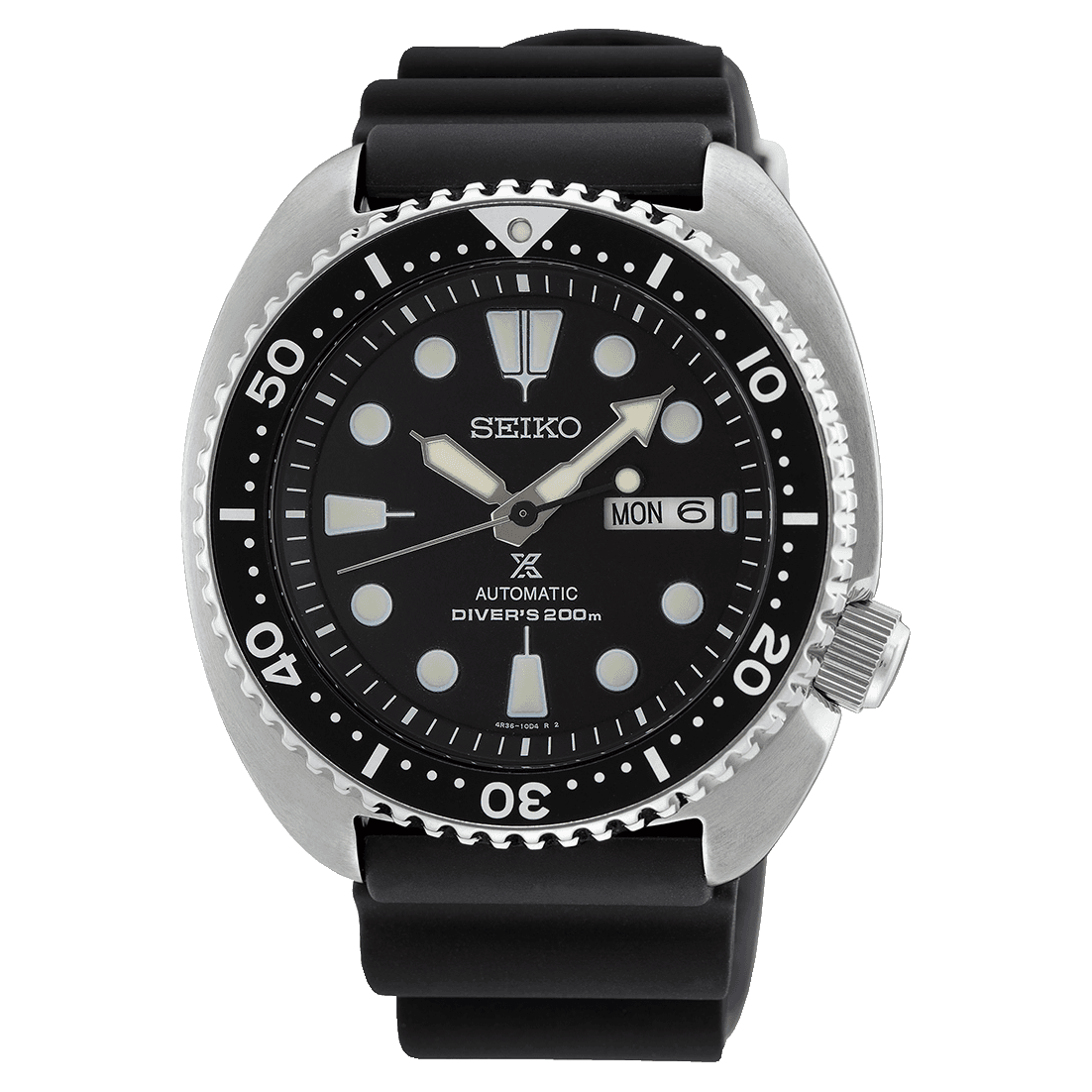
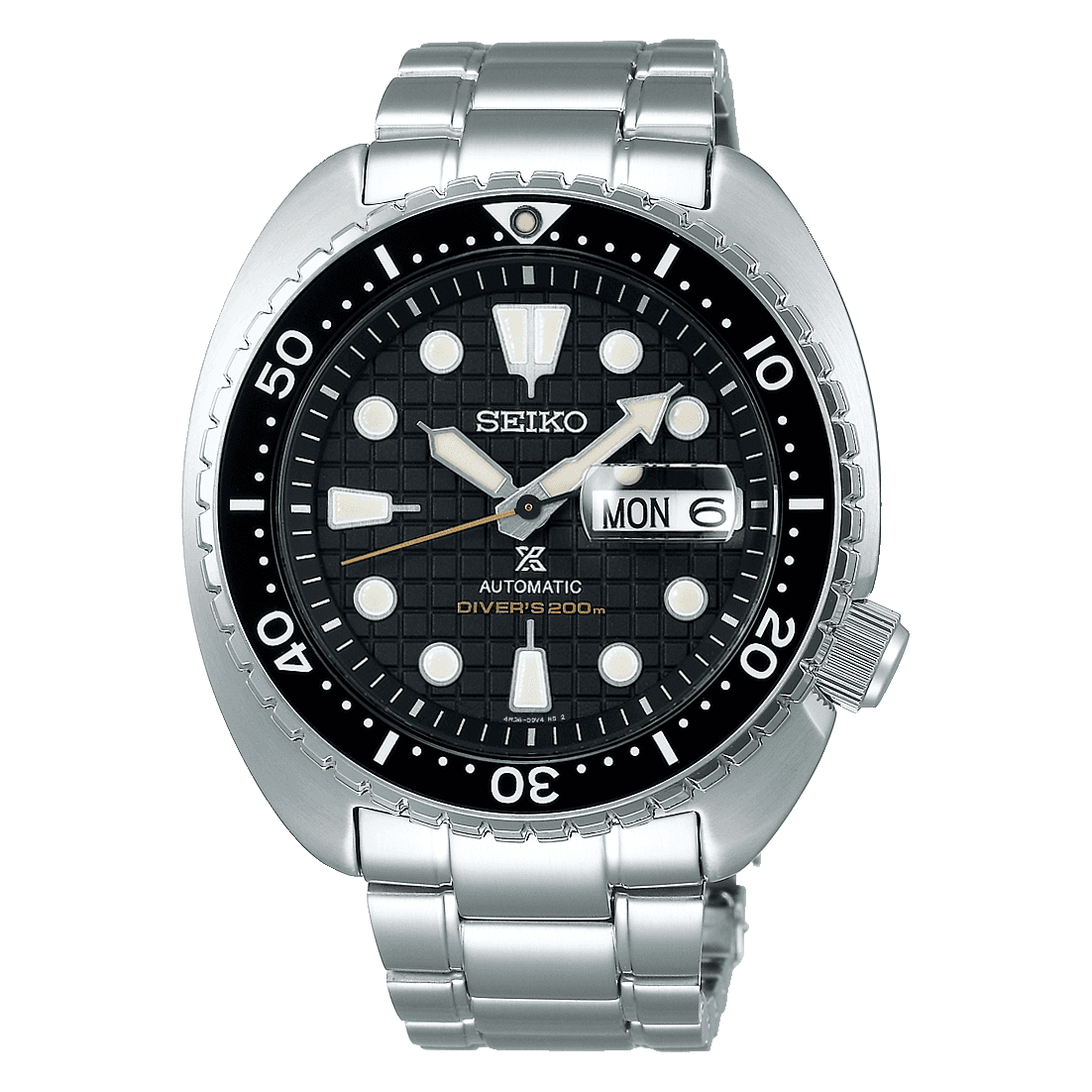
Seiko Turtle or King Turtle: what are you paying for?
The Seiko Turtle is a good shortlist candidate if you want a substantial automatic dive watch with a cushion-shaped case, readable dial and day/date display. The choice between the standard Turtle and King Turtle is often described as a movement upgrade. For the two references on this page, that is wrong: SRPE93 and SRPE03 both use Seiko's 4R36. The meaningful differences are the crystal, bezel construction, supplied band, weight and price.
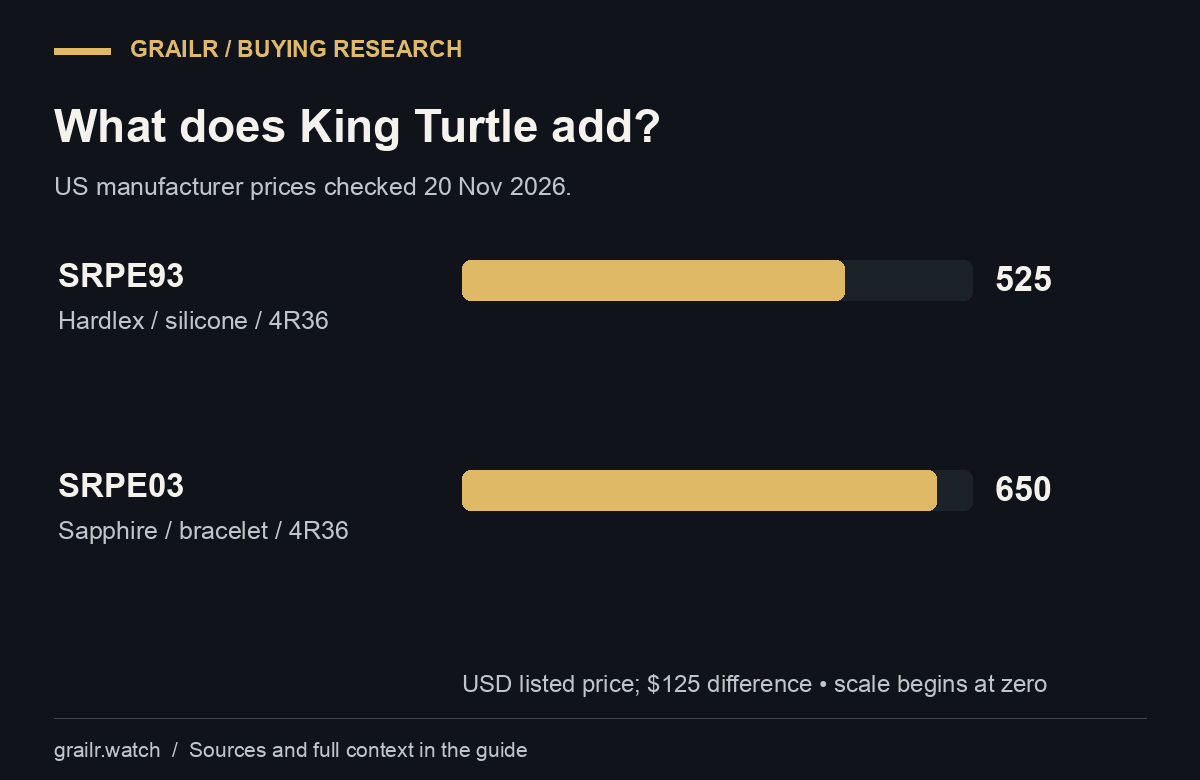
Our editorial starting point is the SRPE93 for someone who wants the simpler dial presentation and a silicone strap. Choose the SRPE03 if you specifically want sapphire, the ceramic bezel display, a date magnifier and a steel bracelet. At the manufacturer US prices checked on 20 November 2026, the gap is $125. Neither is automatically the better buy once you consider the actual seller, condition and fit.
“Turtle” and “King Turtle” are useful collector names, but the reference should lead your comparison. Listing titles can mix nicknames, regional suffixes and modified parts. The product photographs above show the manufacturer's SRPE93K1 and SRPE03K1 images for the US SRPE93 and SRPE03 pages. If another reference is offered, check its own specifications rather than assuming every Turtle shares this table.
The two watches compared
Seiko's SRPE93 product page lists a 45mm case, Hardlex crystal and silicone band at $525. The SRPE03 page lists sapphire with a magnifier, a ceramic bezel display and a bracelet at $650. Both have a 200m diver's rating, screw-down crown and unidirectional bezel. Those original ratings do not establish the current sealing condition of a used example.
| Feature | Turtle SRPE93 | King Turtle SRPE03 |
|---|---|---|
| Case diameter | 45.0mm | 45.0mm |
| Thickness | 13.4mm | 13.2mm |
| Movement and reserve | 4R36; approximately 41 hours | 4R36; approximately 41 hours |
| Crystal | Hardlex | Sapphire with magnifier |
| Bezel detail | Unidirectional rotating bezel | Ceramic display; unidirectional |
| Supplied band | Silicone | Stainless steel bracelet |
| Published weight | 124g | 198g |
| US listed price | $525 | $650 |
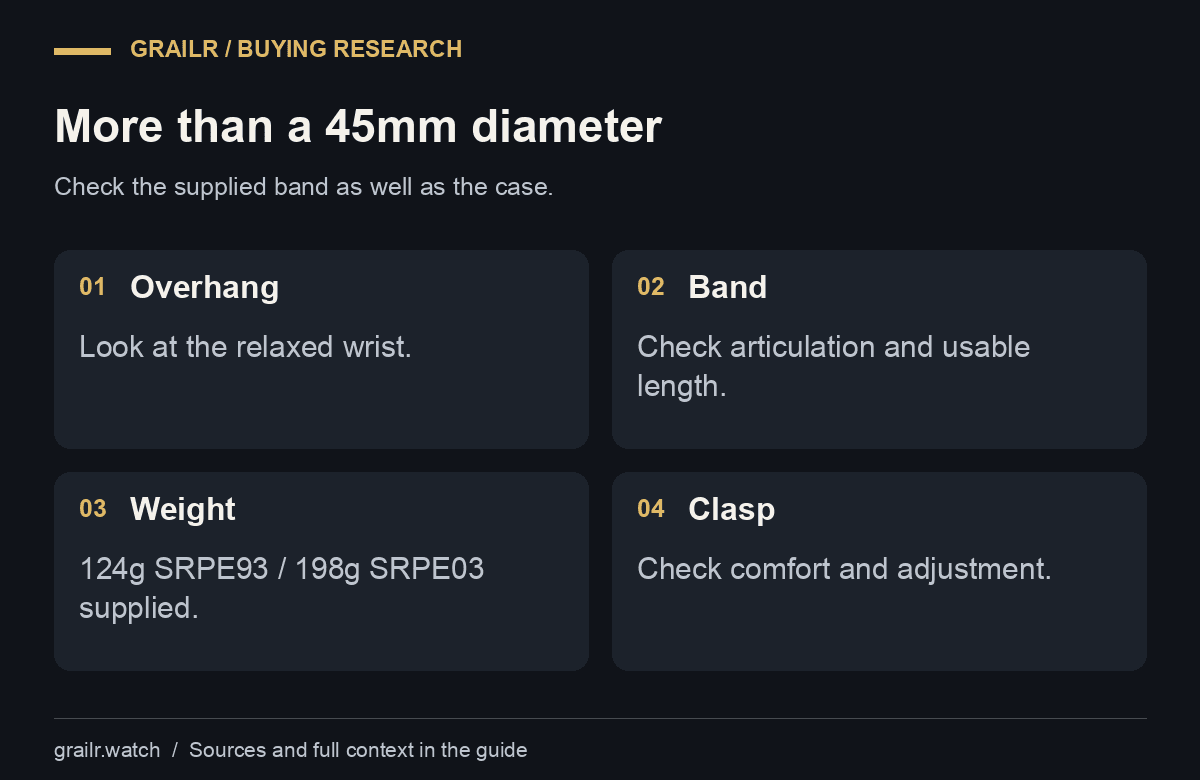
The $125 difference is about 24% of the SRPE93's listed price, but it is not a universal upgrade charge. A retailer discount, missing bracelet or used condition can change the comparison. The SRPE03's published weight is 74g greater in the supplied configuration; that does not mean the watch head alone is 74g heavier. Ask which band is included when evaluating the weight and price of an individual listing.
Will a 45mm Turtle fit your wrist?
A diameter figure does not tell you everything about a cushion case. Inspect how the case sits across the flat of your wrist and how quickly the strap or bracelet drops around it. Seiko gives a 47.7mm lug-to-lug measurement for the SRPE03. Do not silently copy that specification to every Turtle reference; use the exact product page or a seller's measured photograph where a dimension is missing.
The most revealing test is a few ordinary movements. Rest your hand on a desk, bend your wrist, reach into a pocket and pull your usual cuff over the watch. Check the crown area and the clasp underneath. Take a mirror photo from farther away as well as a close wrist shot. A phone held immediately above the watch exaggerates its presence and can make a useful comparison harder.
Band choice changes the experience. The SRPE93's silicone option may appeal if you dislike a heavy bracelet, but you still need the right adjustment range. For a used SRPE03, ask for the full bracelet circumference and every spare link. Check the clasp, safety lock and extension. A cheap watch that cannot be sized to your wrist is not a saving. Both pages list a 22mm lug spacing, but that alone does not guarantee an aftermarket end link will fit the case correctly.
Understand the 4R36 before judging its performance
The 4R36 is automatic with manual winding and a stop-seconds function. Its day/date display is useful, but it also means you should learn the correct setting routine. Seiko's 4R36 instructions warn against adjusting the calendar between 9pm and 4am. Follow the manual for the actual watch instead of experimenting with a resistant crown or calendar mechanism.
The manufacturer's movement specification gives a daily rate range of minus 35 to plus 45 seconds under its stated conditions. That is not a prediction that every watch will run at either extreme. Wear, state of wind, position and temperature affect mechanical performance. Equally, a seller's photograph of one timing-machine reading is not a guarantee of your real-world result.
If accuracy is a deciding factor, ask for a documented observation over several days and how it was measured. Separate a watch running within its expected design range from one needing diagnosis. A service or regulation claim should name the work and the person or business that performed it. Do not pay a premium for the word “regulated” without understanding what evidence accompanies it.
For context on different Seiko families, use our Prospex buying guide. If you mainly want a simpler everyday watch without these dive-watch proportions, the Seiko 5 Sports guide is another starting point. Compare actual references rather than assuming a higher collection label solves every personal preference.
New, used or modified: keep the comparisons separate
A new manufacturer-specification watch, a worn original example and a custom build can all appear in the same search results. Treat them as different purchasing decisions. Ask for the dial, hands, bezel, caseback, crown and band to be identified in the listing. If any parts were replaced, ask whether they are manufacturer parts, aftermarket parts or unknown. A familiar dial logo does not answer that question.
Modifications are not inherently a problem for a buyer who wants them and understands them. The issue is disclosure. Someone seeking an original SRPE03 should not unknowingly compare its price with a custom watch assembled around a similar movement. Ask the seller to explain the base reference and provide photographs before and after the work if available. If originality is central to your purchase, use an appropriate physical inspection.
Check the crystal, bezel edge, case surfaces and crown threads in the actual photographs. Ceramic and sapphire do not remove the possibility of damage. Ask whether the bezel moves correctly and the crown screws down without resistance. For a used dive watch, request the date and result of its latest water-resistance test before water use; neither a stock specification nor “never worn swimming” establishes current performance.
| Area | Request from seller | What remains unproven without it |
|---|---|---|
| Identity | Full reference and clear caseback photo | Whether the advertised configuration matches |
| Parts | Written modification and replacement history | Originality of dial, hands, bezel and band |
| Operation | Timing observations and known faults | Whether “running” means reliable daily use |
| Water use | Recent appropriate test documentation | Current condition of seals and crown |
| Bracelet | Circumference, spare links and clasp photos | Fit and completeness |
| Purchase terms | Return window and written coverage | Your options after delivery |
How to compare a Turtle price fairly
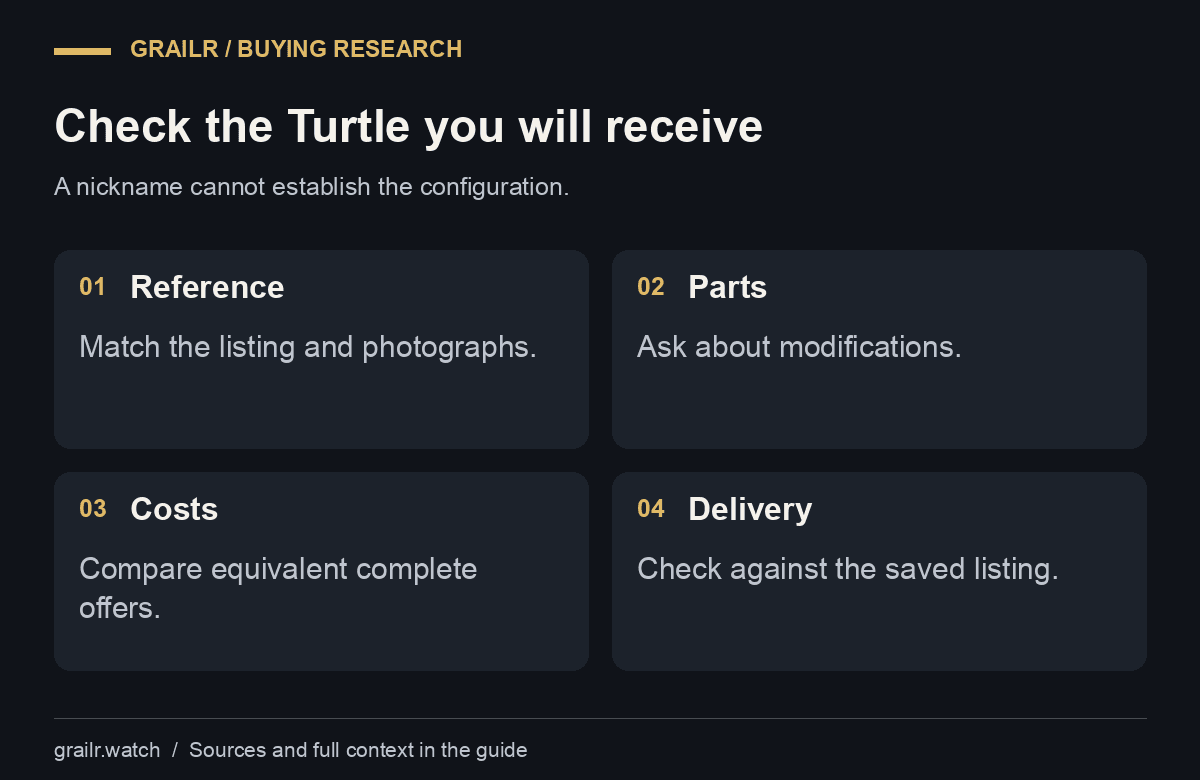
Begin with the same reference in the same condition category. Record whether the seller is including its original band, spare links, documents and any service evidence. Keep different currencies and tax arrangements explicit. A price from another country may not include the delivery, import charges or return costs you would face. The current $525 and $650 US manufacturer figures are useful reference points, not used-market valuations.
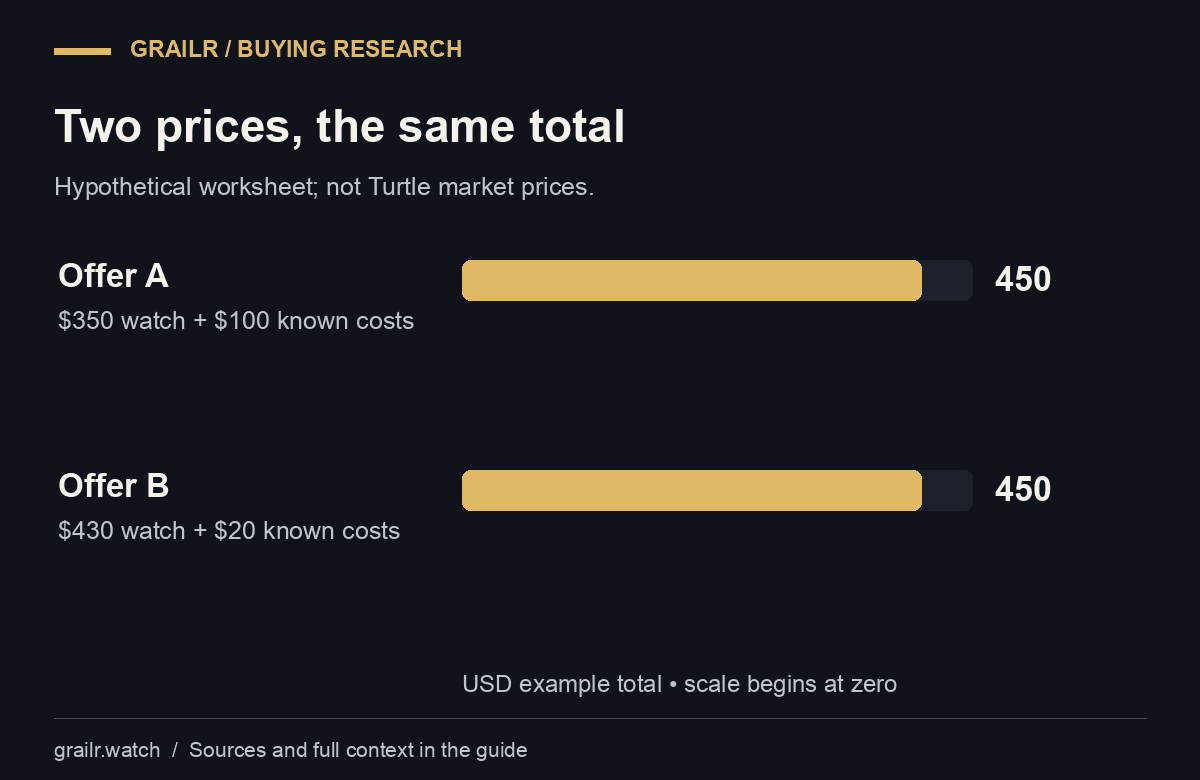
Use a simple total-cost worksheet. In a hypothetical example, a $350 watch plus $100 of known additional costs equals $450. A $430 watch plus $20 also equals $450. The second offer is not automatically better: you still need to compare the actual condition and what the seller promises. These invented numbers demonstrate the calculation and should not be read as a recommended Turtle purchase price.
Our used-watch price guide explains how to distinguish active asking prices from completed-sale evidence. Remove misleading comparables before calculating any range. A bare watch head, a watch with a fault and an unworn complete example should not be blended into one “average” without explaining the differences.
Check the seller and the delivery process
Prefer a listing with clear original photographs, consistent reference details and a seller who answers specific questions. Keep payment and messages within the agreed marketplace process when using one. Read the particular return conditions and ask whether a claimed seller warranty covers the movement, water resistance or only selected faults. A short phrase such as “fully guaranteed” is not a useful substitute for its terms.
Do not assume every watch receives a separate marketplace inspection. The eBay watch programme page describes eligibility and conditions; verify the actual listing rather than transferring an assumption from an expensive watch you bought previously. A protection programme and a fair price answer different questions, and neither tells you whether the watch will fit comfortably.
When the package arrives, check the reference, accessories and operation against the saved listing before resizing or changing parts. If something differs, document it and use the seller's stated process promptly. This gives you a clear record and avoids turning an uncomplicated return question into a dispute about subsequent alterations.
Use a scan to organise your research
Grailr technology can help suggest the watch in a photograph and provide an indicative value estimate. For Turtle shoppers, that can help you decide whether to investigate a standard model, King Turtle or an unclear listing further. Explore the saved watch-report examples to see the type of identification, price context and seller questions available before subscribing.
A scan cannot inspect the movement's physical condition or establish that every visible part is original. Use its output alongside the full reference, seller photographs, timing information and any service documents. If those sources disagree, pause and request better evidence. The most valuable result may be a specific question that stops you comparing the wrong watch.
For these two references, our conclusion is straightforward: choose the SRPE93 for the lighter supplied strap configuration and simpler specification, or the SRPE03 for its sapphire, ceramic display and bracelet if those features matter to you. Then buy the individual example with the clearest condition evidence and acceptable sale terms. The nickname on its own is not enough to make the decision.
Frequently asked questions
What is the difference between a Turtle and King Turtle?
For SRPE93 versus SRPE03, the main differences are crystal, bezel specification and supplied band. SRPE93 has Hardlex and silicone; SRPE03 has sapphire with a magnifier, a ceramic bezel display and a bracelet. Both use the 4R36. Other references need their own comparison.
Is the King Turtle worth the extra money?
The checked US manufacturer gap is $125. It can make sense if you want those specific exterior features and the bracelet. It is less compelling if you prefer silicone and the simpler dial presentation. Compare actual offers and condition, not just list prices.
Will a 45mm Seiko Turtle fit a smaller wrist?
Possibly, but diameter alone cannot answer that. Check the way the case and band sit on your wrist, the clasp position, and cuff clearance. Try it adjusted correctly or buy with clear sizing information and acceptable return terms.
How accurate is the Seiko 4R36?
Seiko publishes a minus 35 to plus 45 seconds daily range under stated conditions. An individual result varies with wear, winding and other factors. Request a documented observation if accuracy matters to you; a single timing-machine photograph is not a daily-wear guarantee.
Should I avoid a modified Turtle?
A disclosed modification can suit a buyer who wants it. Separate it from an original-reference purchase and ask which parts were changed, who did the work and what is known about current water resistance. A familiar logo does not establish originality.
Can a Grailr scan confirm a Turtle is genuine?
No. A scan provides suggested identification and indicative price context, which can help organise the next questions. Physical authenticity, parts originality and mechanical condition need suitable evidence and, where necessary, an appropriate in-person assessment.
Sources and research method
This is a desk-researched buying guide, not a hands-on test. Manufacturer specifications were checked on 20 November 2026. Price snapshots identify their currency and source; worked examples are hypothetical. Our recommendations are editorial judgments about fit, evidence and buying costs.