Tudor North Flag Buying Guide: Every Reference
The original 2015 North Flag and the 2026 Northflag GMT compared — specs, pricing, movements, resale data, and honest buying advice.
Price context: this guide includes indicative prices from its original publication period. They have not all been refreshed to current quotes. Use the linked primary sources for specifications and policies, and verify prices independently.
- The original North Flag (91210N) was Tudor’s first in-house movement watch, produced from 2015 to 2021 with a final MSRP of $3,850 on bracelet
- The 2026 Northflag GMT (M9140G1A0U) replaces the power reserve with a true GMT hand and earns Master Chronometer certification at $5,525
- Pre-owned originals trade between $3,000 and $3,800; the Northflag GMT currently trades above retail at around $6,000
- Both versions share a 40mm case diameter and 100m water resistance, but the GMT is 0.7mm thinner and 1.2mm shorter lug-to-lug
- The Northflag GMT competes directly with the Black Bay GMT ($4,075) and Pelagos FXD GMT ($4,625) within Tudor’s own lineup
What Is the Tudor North Flag?
The Tudor North Flag occupies a unique position in modern watchmaking history. Launched in 2015, it was the watch that announced Tudor had arrived as a serious manufacture — not merely a more affordable Rolex subsidiary, but a brand with the engineering talent to develop and produce its own movements in-house.
Three firsts came together in a single reference: Tudor’s first in-house calibre (the MT5621), its first power reserve indicator, and its first exhibition caseback. Before the North Flag, every Tudor ran an ETA or Sellita ebauche. After it, in-house movements spread across the entire collection.
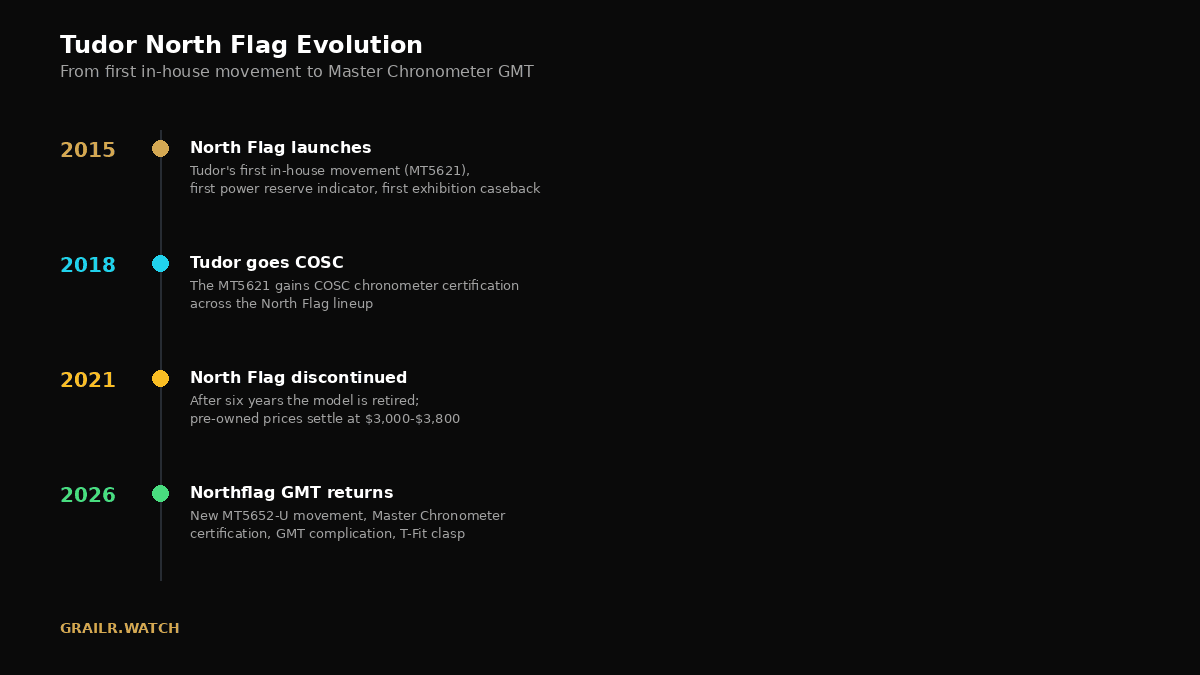
The original was discontinued in 2021 after a six-year run. In 2026, Tudor brought the name back as the Northflag GMT — dropping the space in the name, replacing the power reserve with a GMT complication, and upgrading the movement to Master Chronometer certification. The result is a fundamentally different watch that happens to share a silhouette.
This guide covers both versions: what each one offers, how they compare, where the money goes, and which one makes sense for you today.
The Original North Flag (91210N): 2015–2021
The North Flag ref. 91210N launched in two configurations: the 91210N-0001 on a steel bracelet and the 91210N-0002 on a leather strap with a folding clasp. Both shared the same 40mm 316L stainless steel case with a distinctive two-part bezel — a polished steel top ring over a matte black ceramic base that gave the watch a tool-watch character distinct from the more heritage-focused Black Bay collection.
At 13.4mm thick with a 50mm lug-to-lug measurement, the original wore larger than its 40mm diameter suggested. The integrated bracelet design meant aftermarket strap options were limited to Tudor’s own offerings, and the case shape made the watch sit tall on smaller wrists. These proportions were a conscious design choice — the North Flag was built as a field watch with industrial overtones, not a dress piece.
The star of the watch was always the MT5621 movement, visible through the sapphire caseback. COSC-certified with a 70-hour power reserve displayed via a sector-style indicator at 9 o’clock, it ran at 28,800 vibrations per hour and featured a silicon balance spring for magnetic resistance. At the time, this was genuinely impressive for a watch priced under $4,000. The movement later appeared in the Black Bay 36 and Black Bay 41 before being superseded by newer calibres.
Tudor discontinued the North Flag in 2021 without a direct replacement. The final MSRP stood at $3,725 on leather and $3,850 on bracelet. For five years, the North Flag existed only on the secondary market — a discontinued cult favourite whose fans were loud but whose production numbers were modest.
The 2026 Northflag GMT
The 2026 Northflag GMT (ref. M9140G1A0U-0001) is a comprehensive rethink of the original rather than a simple update. The name loses its space — “Northflag” instead of “North Flag” — and the watch loses its signature power reserve indicator in favour of a true GMT complication with an independently adjustable local hour hand.
Inside sits the MT5652-U, the same base movement found in the Pelagos FXD GMT. The “U” suffix denotes Master Chronometer certification by METAS — a significant step up from the original’s COSC certification. Where COSC tests the movement alone for 15 days in five positions, METAS tests the fully cased watch for resistance to magnetic fields up to 15,000 gauss, water resistance, power reserve, and rate accuracy. The power reserve drops from 70 hours to 65, still enough for a long weekend off the wrist.
The case dimensions tell an interesting story. Despite adding a GMT complication, Tudor shaved the thickness from 13.4mm to 12.7mm and reduced the lug-to-lug from 50mm to 48.8mm. The two-part ceramic bezel is gone, replaced by a plain steel bezel that gives the watch a cleaner, more modern appearance. The bracelet uses Tudor’s T-Fit clasp with five tool-free micro-adjustment positions across an 8mm range — a major upgrade from the original’s standard folding clasp.
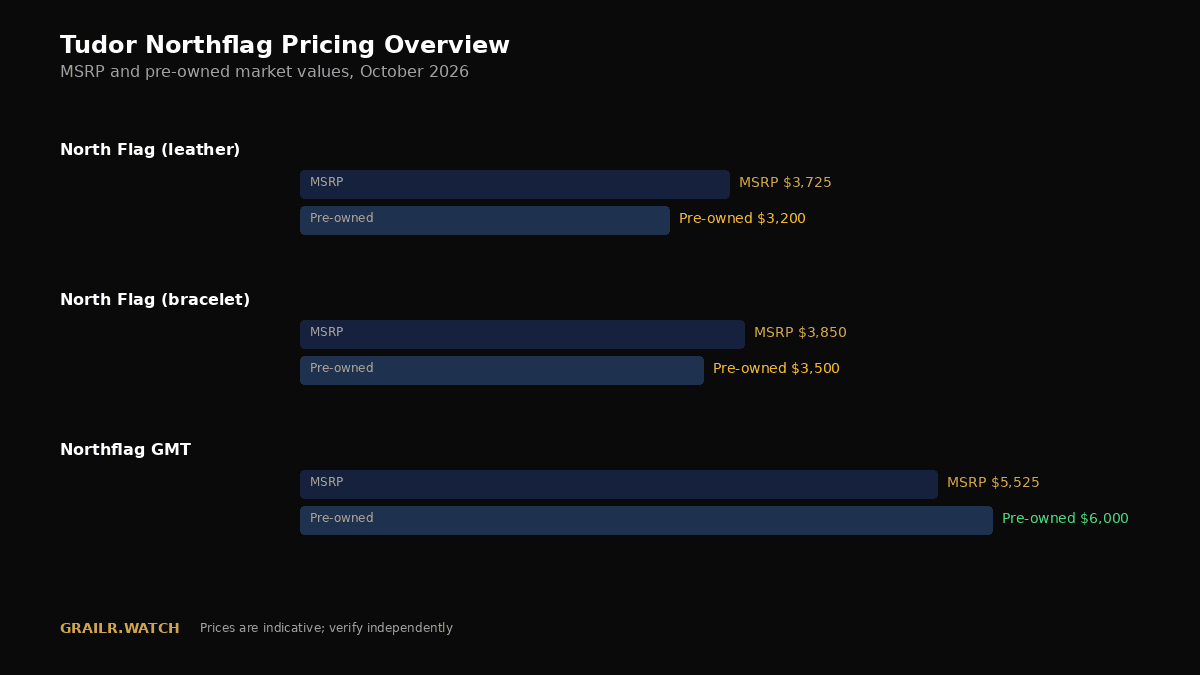
At $5,525, the Northflag GMT costs $1,675 more than the original’s final bracelet price. The premium buys Master Chronometer certification, a GMT complication, and improved ergonomics. Currently available only at Tudor boutiques, the watch trades at around $6,000 on the secondary market — a modest premium that suggests healthy demand without the kind of speculation that plagues some Rolex sport models.
Full Specifications Compared
Side by side, the two generations share a case diameter and water resistance rating. Everything else has changed.
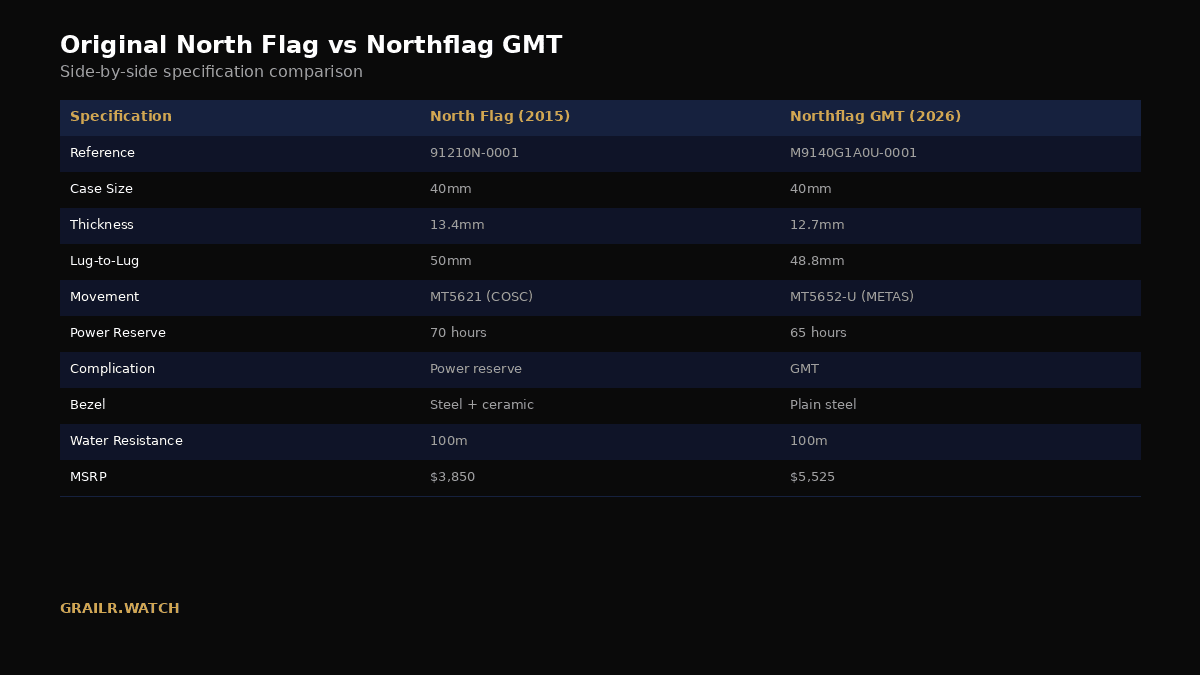
| Specification | North Flag (91210N) | Northflag GMT (9140G1A0U) |
|---|---|---|
| Production | 2015–2021 | 2026–present |
| Case diameter | 40mm | 40mm |
| Thickness | 13.4mm | 12.7mm |
| Lug-to-lug | 50mm | 48.8mm |
| Case material | 316L steel | 316L steel |
| Bezel | Steel + black ceramic ring | Plain steel |
| Water resistance | 100m | 100m |
| Movement | MT5621 | MT5652-U |
| Certification | COSC | Master Chronometer (METAS) |
| Power reserve | 70 hours | 65 hours |
| Functions | Hours, minutes, seconds, date, power reserve | Hours, minutes, seconds, date, GMT |
| Strap options | Bracelet or leather | Bracelet only |
| Clasp | Folding clasp | T-Fit micro-adjust (5 positions, 8mm range) |
| Exhibition caseback | Yes | Yes |
| MSRP | $3,725–$3,850 (final) | $5,525 |
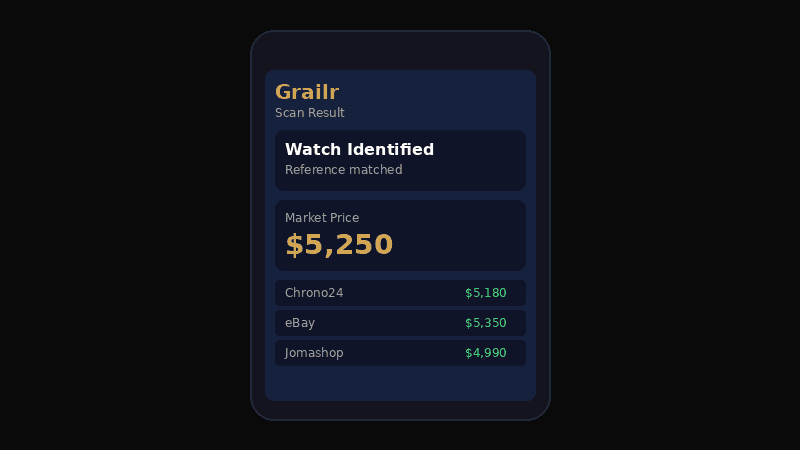
Check Any Watch Price in Seconds
Grailr scans your watch photo and pulls live pricing from Chrono24, eBay, and Jomashop.
- AI identifies brand, model & reference number
- Live market prices from 3+ sources
- Authentication confidence score
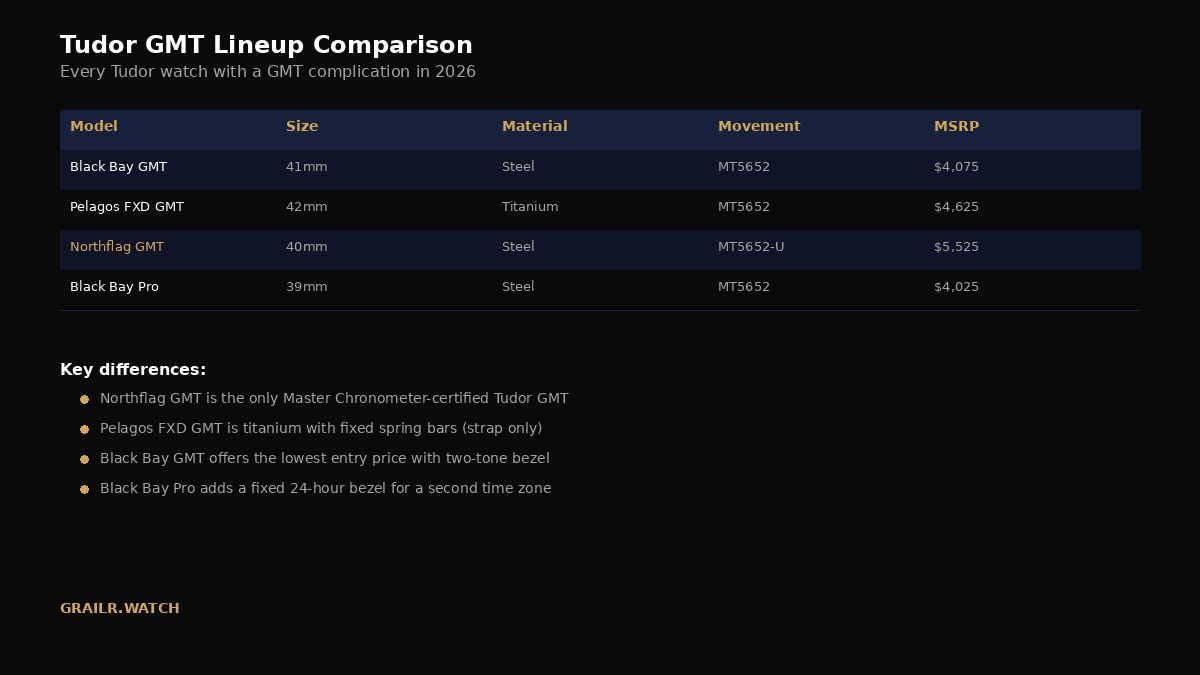
Northflag GMT vs Tudor’s GMT Lineup
The Northflag GMT enters an already crowded corner of Tudor’s catalogue. The Black Bay GMT and the Pelagos FXD GMT both offer GMT functionality at lower price points, so the Northflag needs to justify its premium. Here is how the three stack up.
| Feature | Northflag GMT | Black Bay GMT | Pelagos FXD GMT |
|---|---|---|---|
| Reference | M9140G1A0U | M79830RB | M25807 |
| Case size | 40mm | 41mm | 42mm |
| Case material | Steel | Steel | Titanium |
| Movement | MT5652-U | MT5652 | MT5652 |
| Certification | Master Chronometer | COSC | Master Chronometer |
| Water resistance | 100m | 200m | 200m |
| Bezel | Fixed steel | Bi-directional aluminium | Bi-directional ceramic |
| Bracelet | Steel, T-Fit clasp | Steel or NATO | Fixed bars, NATO only |
| Thickness | 12.7mm | 14.8mm | 12.7mm |
| MSRP | $5,525 | $4,075 | $4,625 |
The Black Bay GMT is the value pick. At $4,075, it delivers the same base MT5652 movement without Master Chronometer certification, a vintage-inspired coloured bezel insert (burgundy/navy or brown/black), and 200m of water resistance. It is also 1mm larger and noticeably thicker at 14.8mm. If you want a GMT Tudor and every dollar matters, the Black Bay is hard to argue against.
The Pelagos FXD GMT matches the Northflag’s Master Chronometer certification and 12.7mm thickness but uses a titanium case, comes only on a NATO-style strap (fixed spring bars, no bracelet option), and offers 200m water resistance. At $4,625, it is $900 less than the Northflag GMT but lacks a bracelet. If you want a lightweight travel watch and don’t need metal on the wrist, the FXD is compelling.
The Northflag GMT justifies its premium through three things: the T-Fit micro-adjust bracelet (Tudor’s best clasp), the slimmest case profile of any bracelet-equipped Tudor GMT, and the industrial design language that sets it apart from the vintage-inflected Black Bay. It is the watch for buyers who want a modern tool-watch aesthetic and the convenience of a quick-adjust bracelet on a GMT. For context, the nearest rival from another brand — the Rolex GMT-Master II — starts at roughly $10,800 and is significantly harder to obtain.
Resale Value and Market Data
The original North Flag’s secondary market tells a story of quiet, steady demand rather than speculative frenzy. With a final MSRP of $3,850 on bracelet, current pre-owned prices sit between $3,000 and $3,800 depending on condition, completeness (box and papers), and whether the watch is on its original bracelet or leather strap. Fair market value estimates hover around $3,792 for a complete bracelet example in good condition.
That works out to roughly 80–100% retention of the original MSRP — respectable for a discontinued mid-range Tudor, and competitive with other discontinued references like the Black Bay Heritage 79220 or the Pelagos two-liner. The limited production run and the absence of a direct replacement kept values from cratering after discontinuation, but the watch never developed the kind of cult premium you see with vintage Submariners.
The Northflag GMT tells a different story. At its $5,525 MSRP, the watch currently trades at around $6,000 on the secondary market — roughly a 9% premium. Boutique-only distribution limits supply, but this modest premium suggests the market views the Northflag GMT as a genuinely desirable watch rather than a speculative flip target. For comparison, the watches that hold their value best typically retain 90% or more over five years. Early secondary premiums often normalize within 12–18 months, so patience may be rewarded.
If you are considering either version as a purchase, Grailr’s value estimate tool can give you an indicative price based on current listings. Compare that estimate against at least two or three independent offers before committing.
5 Tips Before You Buy a Tudor North Flag
1. Check the Power Reserve Indicator (Original Only)
The sector-style power reserve display at 9 o’clock is the original’s signature feature. Wind the watch fully and verify the indicator reaches the top of the sector and tracks smoothly as the reserve depletes. A sticky or inaccurate indicator could point to a mainspring or gear-train issue.
2. Inspect the Ceramic Bezel Ring
The original’s two-part bezel has a black ceramic lower ring that chips more easily than a steel surface. Examine the edge where the steel top meets the ceramic base for hairline fractures. A chipped ceramic ring is not a simple polish job — it typically requires a full bezel replacement through Tudor service at $300–$500.
3. Verify the Exhibition Caseback
Both versions have display casebacks, which makes visual movement verification straightforward. The original should show a rotor engraved with the Tudor rose and “MT5621.” The GMT should show “MT5652-U” and Master Chronometer text. Use Grailr’s authentication tool as a starting point, and compare the movement finish against known reference images.
4. Try the T-Fit Clasp (GMT Only)
The Northflag GMT’s T-Fit clasp offers five tool-free micro-adjustment positions across an 8mm range. Test every position before buying. The mechanism should click cleanly into each detent with no play between positions. If buying pre-owned, confirm the clasp hasn’t been bent or forced past its intended range.
5. Budget for the Boutique-Only Reality
The Northflag GMT is currently sold only through Tudor boutiques, not authorised dealers. This means no grey-market discounts. If the $5,525 retail price is a stretch, consider waiting 12–18 months for the secondary market to normalize or look at the original North Flag on bracelet, which offers a similar design language at roughly $3,500 with the trade-off of no GMT and a thicker case.
Frequently Asked Questions
Is the Tudor North Flag discontinued?
The original North Flag (ref. 91210N) was discontinued in 2021 after a six-year production run. Tudor relaunched the line in 2026 as the Northflag GMT (ref. M9140G1A0U-0001) with a GMT complication and Master Chronometer certification. The original is available only on the pre-owned market.
What is the difference between the North Flag and the Northflag GMT?
The original had a power reserve indicator and COSC-certified MT5621 movement. The 2026 Northflag GMT replaces the power reserve with a fourth GMT hand, uses the Master Chronometer-certified MT5652-U, adds a T-Fit micro-adjust bracelet, and is thinner at 12.7mm versus 13.4mm. The ceramic bezel ring is also gone, replaced by plain steel.
How much is a Tudor North Flag worth today?
Pre-owned original North Flag watches trade between $3,000 and $3,800 depending on condition and whether box and papers are included. The 2026 Northflag GMT retails at $5,525 and trades at around $6,000 on the secondary market. Use Grailr’s appraisal tool for a current estimate based on live listings.
Does the Tudor North Flag hold its value?
The original retains roughly 80–100% of its final $3,850 MSRP. The Northflag GMT is currently trading above retail, but early secondary premiums often normalize within the first year. Overall, Tudor watches retain value competitively within the $3,000–$6,000 segment.
What movement does the Tudor Northflag GMT use?
The MT5652-U — a self-winding movement with Master Chronometer certification, a true GMT function with an independently adjustable hour hand, 65-hour power reserve, and 28,800 vibrations per hour. It is the same base calibre as the Pelagos FXD GMT with the added “U” designation for METAS testing.
Is the Tudor Northflag GMT better than the Black Bay GMT?
The Northflag GMT costs $1,450 more than the Black Bay GMT ($4,075) but adds Master Chronometer certification, a T-Fit micro-adjust clasp, and a slimmer case profile (12.7mm vs. 14.8mm). The Black Bay GMT offers a vintage-inspired design and coloured bezel options. Neither is objectively superior — the choice comes down to whether you prioritise modern tool-watch aesthetics or heritage styling.
Related Guides
Tudor Pelagos Buying Guide
Every titanium Pelagos reference compared with specs, pricing and resale data.
Tudor Black Bay Guide
The complete Black Bay lineup from the 54 to the Chrono, with real pricing.
Rolex GMT-Master II Guide
Pepsi, Batman, Sprite and every GMT-Master II reference compared.
Watches That Hold Their Value
Which brands and models retain the most value over time.
The Bottom Line
The Tudor North Flag story is really two stories. The 2015 original was a statement of independence — proof that Tudor could build its own movements and design watches that stood on their own merits rather than borrowing Rolex’s reflected prestige. It remains a compelling pre-owned buy between $3,000 and $3,800 for anyone who values a power reserve indicator and a piece of Tudor’s manufacturing history.
The 2026 Northflag GMT takes the same industrial design language and turns it into a modern travel watch. Master Chronometer certification, the T-Fit clasp, and a true GMT complication in a 12.7mm-thick case make it genuinely competitive in the $5,000–$6,000 bracket — significantly less than the Rolex GMT-Master II and arguably more functional than any Tudor GMT before it.
Whether you choose the original or the relaunch depends on what you want the watch to do. If the power reserve indicator is the draw and budget matters, the 91210N on bracelet is excellent value. If you travel frequently and want Tudor’s latest certification and ergonomics, the Northflag GMT is hard to beat at its price point. Either way, scan the watch with Grailr before you buy to get a live price comparison across multiple sources.
Ready to Find Your Tudor?
Scan any Tudor watch photo to get live pricing, identification details, and an authentication confidence score — free.
Scan a Watch Now