Buying guide
Girard-Perregaux Laureato: 38mm vs 42mm Buying Guide
Compare Girard-Perregaux Laureato 38mm and 42mm references, movements, fit and current price evidence, with practical checks for buying a used watch.
By Grailr Watch Intelligence · · 12 min read
Should you buy a Girard-Perregaux Laureato?
The Laureato deserves a place on your shortlist if you want a steel watch whose case, textured dial and integrated bracelet work as one design. The useful buying question is whether you prefer its appearance and fit at the complete price offered. Treating it only as an alternative to a more famous watch misses the details that will determine whether you enjoy wearing it.
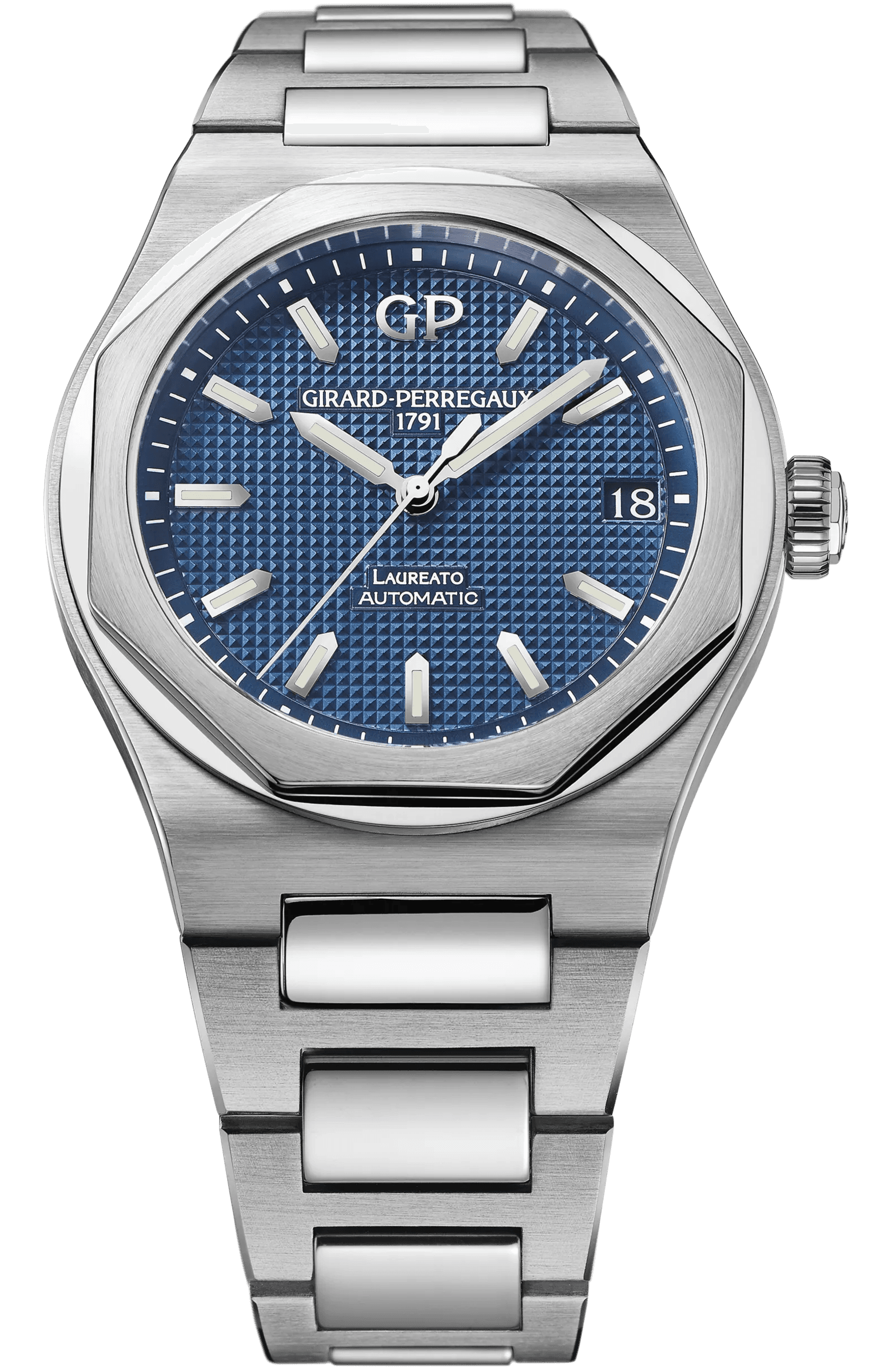
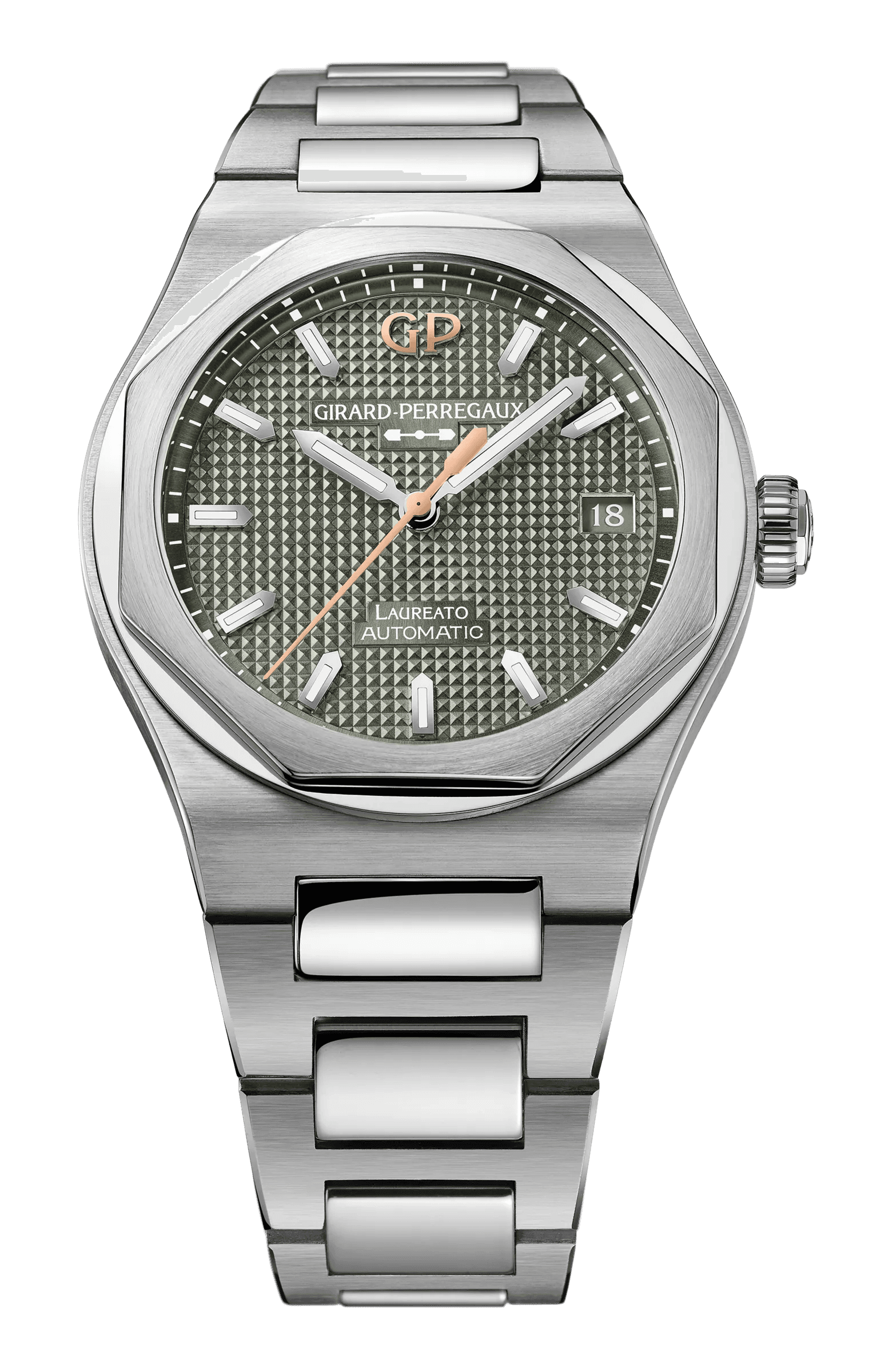
This guide compares the blue 42mm 81010-11-431-11A and the 38mm Sage Green 81005-11-3407-1CM, pictured above. They are not simply the same watch in different diameters. They have different movement families, dial treatments and stated thicknesses. Our editorial recommendation is to try the 38mm first if you prefer a smaller presence; try the 42mm if you want more dial area and specifically like its blue configuration.
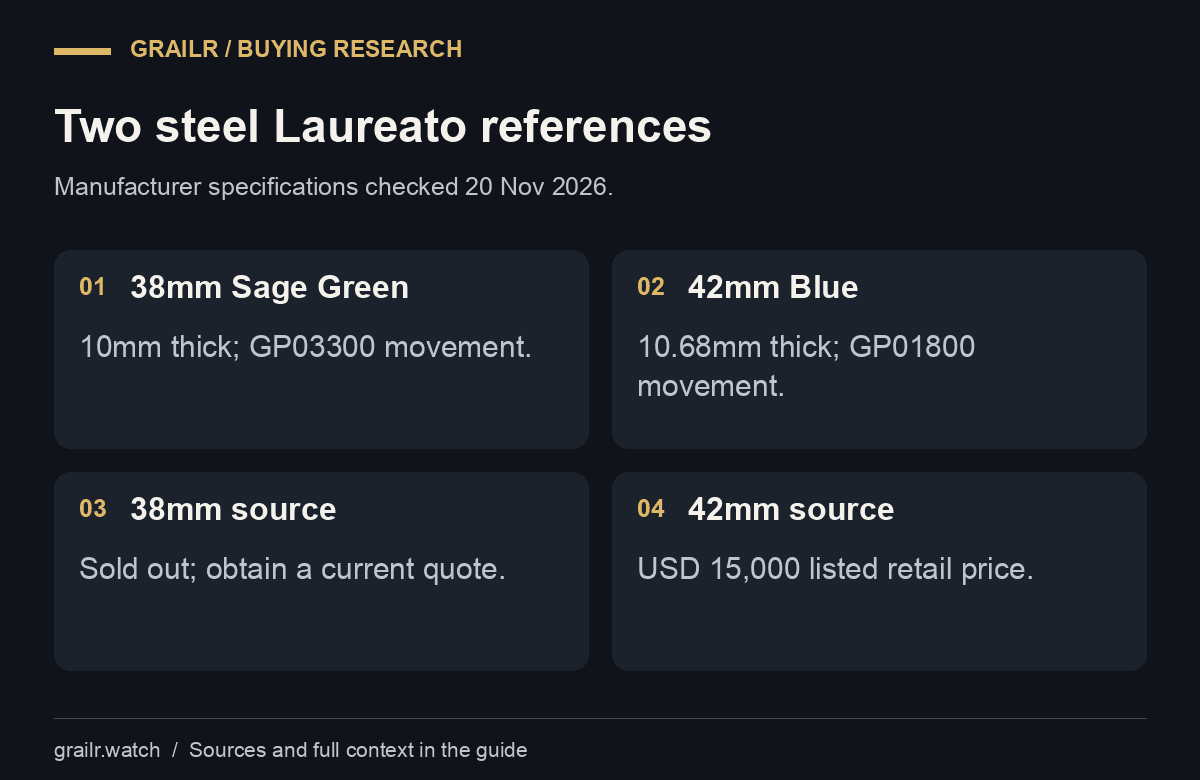
The manufacturer listed the blue 42mm at $15,000 on the US-facing page checked on 20 November 2026. The Sage Green page displayed “Sold out” without a current comparable checkout price. We do not fill that gap with an old launch price and pretend the two numbers were observed on the same basis. Ask for a current quotation and availability for the particular 38mm reference.
Laureato 38mm versus 42mm: compare full references
Girard-Perregaux's blue 42mm page identifies the GP01800 automatic movement and a 10.68mm case height. The 38mm Sage Green page identifies the GP03300 and a 10mm case. Both selected references use steel cases and bracelets, sapphire glazing and a stated 100m water-resistance rating.
| Feature | Laureato 42mm Blue | Laureato 38mm Sage Green |
|---|---|---|
| Full reference | 81010-11-431-11A | 81005-11-3407-1CM |
| Diameter | 42mm | 38mm |
| Thickness | 10.68mm | 10mm |
| Movement family | GP01800 automatic | GP03300 automatic |
| Case and bracelet | Stainless steel | Stainless steel |
| Water-resistance rating | 100m | 100m |
| Observed manufacturer page | USD 15,000 | Sold out; obtain current quote |
The table describes those exact references. Do not transfer its figures to ceramic, precious-metal, chronograph, skeleton or anniversary editions just because they share the Laureato name. The full suffix is particularly useful when checking the dial and bracelet configuration. Our watch reference-number guide explains why a family name is not enough for a reliable comparison.
Why the bracelet can decide the right size
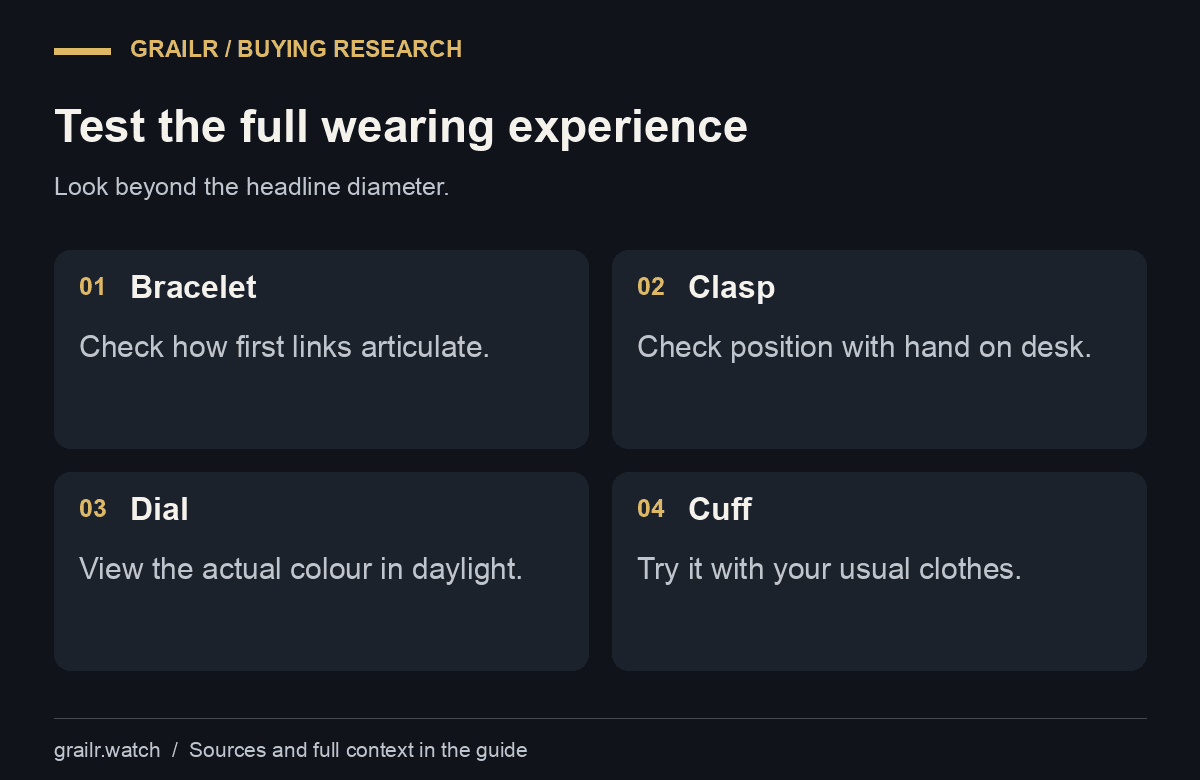
An integrated bracelet deserves a fitting test of its own. Look at how the first links leave the case and how the whole assembly sits on the flat part of your wrist. A watch can have a modest thickness and still feel broad if its bracelet does not wrap comfortably. Try the size with the bracelet adjusted rather than using an unbalanced, loose showroom fit as the final verdict.
Check the clasp underneath with your hand on a desk. Move your wrist, pull a cuff over the watch and look at a mirror from a normal distance. Close phone photographs can exaggerate the case, while a tightly framed advertising image can hide the bracelet's practical footprint. Take both a top view and a side view with your arm relaxed. Neither a wrist-circumference rule nor a single diameter measurement replaces this exercise.
For an online used purchase, ask for the maximum bracelet circumference and the number of spare links included. Confirm that any sizing parts belong to this reference. If the bracelet needs components, request a real quotation and lead time before buying. An apparent discount can disappear when missing parts prevent you wearing the watch as intended. Clear return conditions are especially useful when you cannot try the exact size first.
Blue and Sage Green: assess the actual dial
The two photographed watches give different visual effects even before size enters the decision. The blue 42mm uses a blue textured dial with silver-coloured accents, while the Sage Green 38mm includes warm-coloured accents against its green surface. These visible details are part of the reason to choose an exact reference instead of treating dial colour as a minor filter at the end of a search.
Ask for photographs in ordinary indirect daylight as well as the seller's preferred lighting. Texture, reflections and the apparent colour can change substantially with angle and exposure. If a particular shade is the main reason for buying, try to see that reference in person. A manufacturer photograph is useful for identifying the intended design, but it cannot guarantee how a watch will look beside your skin, clothes or usual lighting.
For a used example, inspect the actual dial and hands rather than relying on the reference's stock image. Ask about any replacement parts or documented service work that affected them. A replacement made through a service channel may be entirely acceptable to you, but it should be disclosed so the price comparison reflects the watch being offered. Do not decide originality from one photograph alone.
Understand the movement without turning it into a score
The current blue 42mm page describes the GP01800 as a self-winding movement with at least 54 hours of power reserve. The 38mm Sage Green uses the smaller GP03300 family. Those are useful identifiers for research and service enquiries, but a movement name does not tell you the present mechanical condition of a used watch. Ask for evidence about the individual example.
A seller's claim that a watch is “recently serviced” should come with a date, provider and scope of work. Regulation, a water-resistance test and a complete service are different things. Ask which work was actually performed and whether the invoice identifies the watch. If the seller cannot produce the document, treat the service claim as unverified rather than automatically assigning it a premium.
If daily accuracy matters to you, ask how the watch has been observed and under what conditions. A single attractive timing-machine result does not establish performance through your routine. Likewise, a running watch is not necessarily a watch free of maintenance needs. Get an appropriate inspection or quotation when the remaining uncertainty would materially affect your decision.
What is a fair price for a used Laureato?
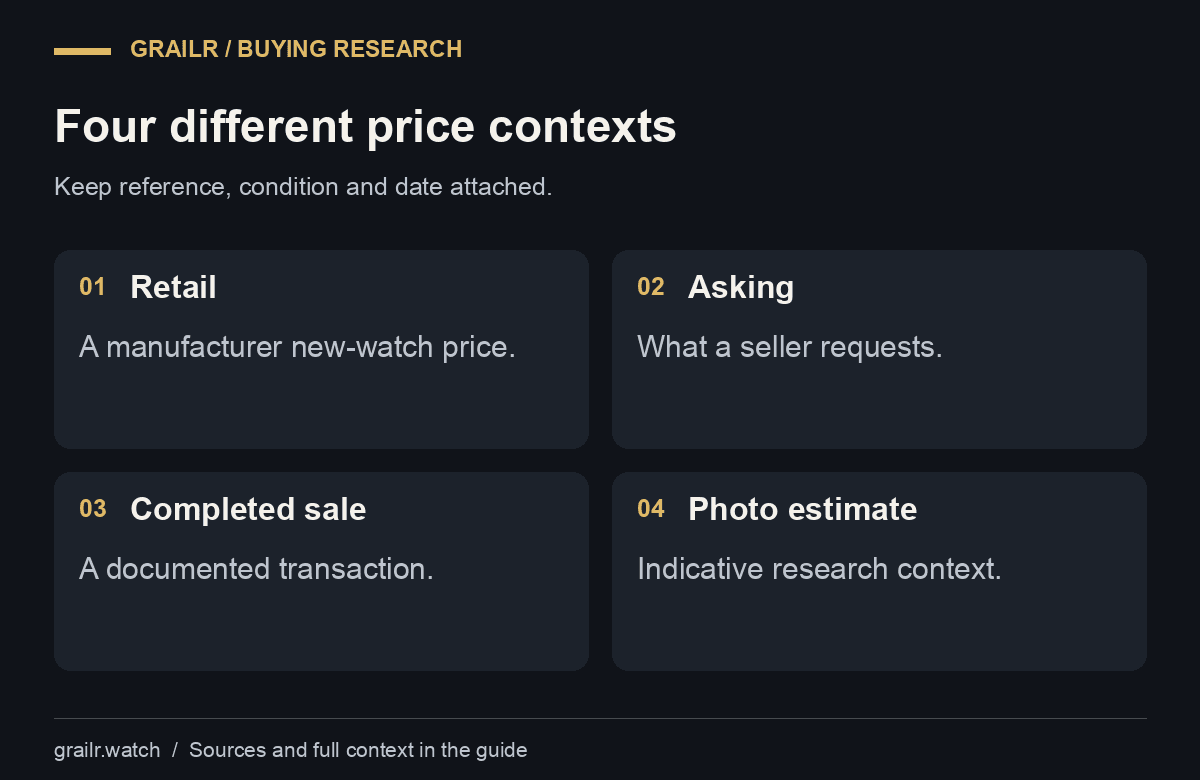
Start with the exact reference and condition category. A 38mm green watch, a 42mm blue watch and a ceramic edition do not belong in one undifferentiated price average. Record the observation date, currency, accessories, bracelet completeness and seller terms for each comparable. Separate active asking prices from documented completed sales. A listing that has not sold is an offer, not proof that another buyer accepted its valuation.
Use the $15,000 manufacturer figure above only as a dated retail reference for the specific blue 42mm. It is not a current used value and does not establish a percentage discount that every example should achieve. The Sage Green page's unavailable price should remain unavailable in your worksheet until you have a current source. Honest blanks are more useful than a neat table filled with incomparable numbers.
| Field | Record for each offer | Why it matters |
|---|---|---|
| Identity | Complete reference and dial | Separates genuinely comparable watches |
| Price basis | Currency, date and new/used category | Prevents false discount comparisons |
| Case condition | Photos, polishing and replacement disclosures | Describes the individual watch |
| Bracelet | Fit, components and all spare links | Establishes completeness and usability |
| Maintenance | Invoice, scope and current findings | Distinguishes documented work from a claim |
| Terms | Returns, warranty and total charges | Shows what the purchase includes |
Our used-watch price guide provides the broader comparison method. If one seller is substantially cheaper, identify the reason before celebrating the difference. It may be a straightforward commercial choice, but it can also reflect missing parts, condition, location, weaker terms or a different reference. The number becomes useful only after you understand what it buys.
Inspect the case finishing and bracelet condition
The Laureato's mix of polished and brushed surfaces makes clear photography especially important. Ask for front, side and underside views, including the bezel, case edges, bracelet and clasp. Reflections can hide marks or create apparent lines that are not damage. Request neutral lighting and several angles rather than trying to diagnose everything from one glamorous image.
Ask whether the case or bracelet has been refinished, by whom and when. Refinishing is not automatically disqualifying, but it belongs in the description and price comparison. Do not infer untouched condition simply because the watch looks shiny or because the seller uses “mint.” If original surface geometry is a priority for you, arrange an inspection by someone qualified to assess that particular watch.
Check the crown's operation, the clasp and the bracelet's movement. Ask for disclosure of impacts and known faults. For water use, obtain appropriate current water-resistance evidence; the original 100m rating does not report the condition of today's seals. Avoid a do-it-yourself immersion test. A service professional can assess the watch and quote any required work without turning a buying inspection into accidental damage.
A complete purchase includes the seller's obligations
Read returns and warranty terms before negotiating. Ask what happens if the watch arrives with a different reference, missing links or condition not shown in the listing. Keep the written answers with the advertisement. If a physical inspection is important, agree how and when it happens within the actual return or transaction process rather than assuming you can arrange it after every deadline has passed.
For a marketplace purchase, check any protection programme on the specific listing. The eBay watch Authenticity Guarantee overview is a starting point for that platform's terms. It does not establish eligibility everywhere, prove the price is fair or answer every question about refinishing and future maintenance. Read what the service actually covers.
When comparing sellers, put clarity beside price. A slightly higher offer with complete bracelet parts, documented work and understandable return terms can be easier to evaluate than a cheaper listing with unresolved details. That is an editorial buying preference, not a mathematical claim that expensive sellers are safer. The evidence must still support the individual offer.
Use the Laureato's own merits to make the decision
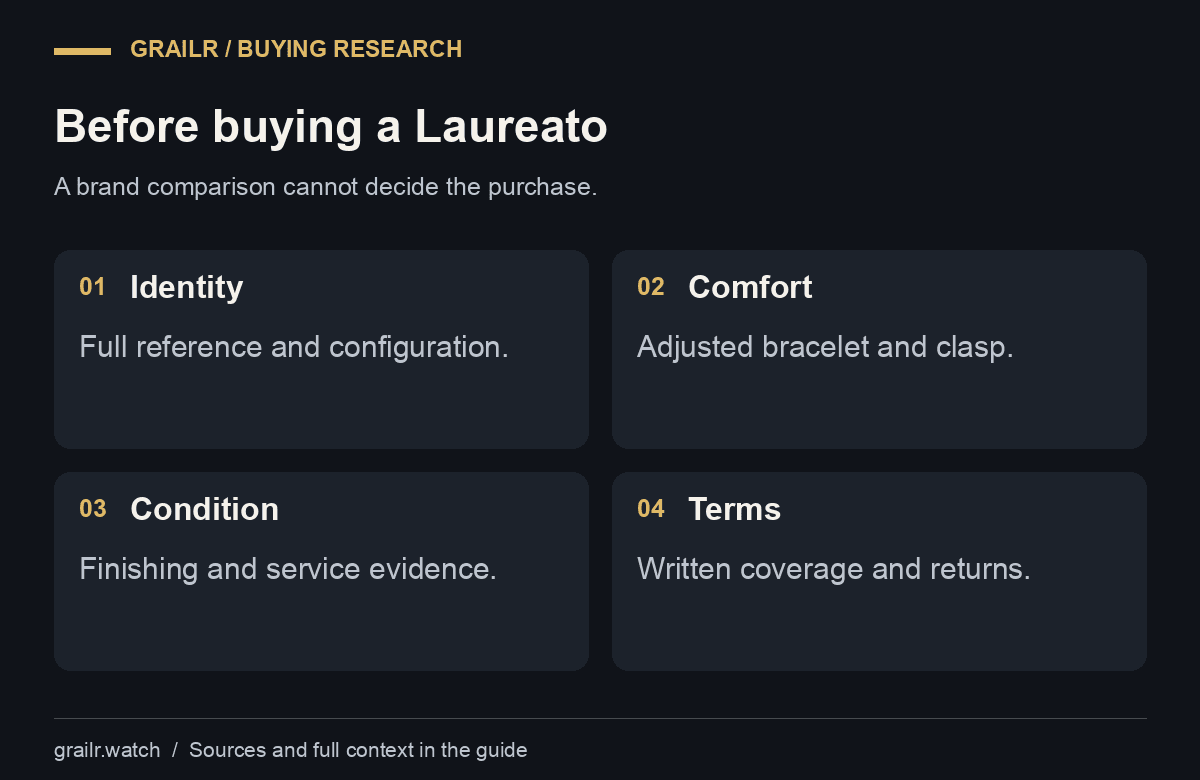
Our watch brand tier guide explains why prestige categories cannot decide a specific purchase. Choose a Laureato because you enjoy its design, movement presentation and wearing experience, with maintenance and transaction costs you understand. Do not buy it on a promise that the market will eventually “discover” it or that a comparison with another brand guarantees appreciation.
Grailr technology can help suggest the watch in a photograph and provide an indicative value estimate. Explore the saved photo-to-report examples, then confirm the suggestion against the full reference and seller evidence. The result can help direct your next questions; it cannot physically inspect the watch, verify its complete history or turn an asking price into a completed sale.
For the two steel references here, settle size and dial preference first, then assess the actual offer. A comfortable 38mm with the right configuration can be the better personal purchase even if a larger watch is easier to find, and the reverse is equally possible. The goal is a watch you understand and want to wear, supported by a clear transaction.
Frequently asked questions
Should I buy a 38mm or 42mm Laureato?
Try the complete watch and adjusted bracelet. The 38mm is a sensible starting point for a smaller presence; the 42mm offers more dial area. Case shape, first-link articulation, clasp position and personal preference matter alongside diameter.
Do the 38mm and 42mm Laureato use the same movement?
Not the two references in this guide. The blue 42mm uses the GP01800 family, while the 38mm Sage Green uses GP03300. Other Laureato references require their own specification check. A movement name does not establish a used example's condition.
How much is the blue 42mm Laureato?
The manufacturer page for 81010-11-431-11A listed USD 15,000 when checked on 20 November 2026. This is a dated new retail reference, not a used valuation or a price for every Laureato. Confirm current availability and the checkout basis.
Why is there no 38mm Sage Green price in the table?
The checked manufacturer page showed sold out without a comparable current price. We have left that gap explicit instead of substituting an old launch figure. Obtain a current reference-specific quotation and separate it from used asking prices.
What matters most on a used Laureato?
Confirm the full reference, bracelet fit and spare parts, case-finishing history, documented service and sale terms. Ask for original photographs from several angles. An attractive stock image and a claim of mint condition cannot describe every aspect of the individual watch.
Is the Laureato a guaranteed investment?
No. Buy it because you want the watch and understand the complete ownership cost. Brand comparisons, limited availability or a large discount do not guarantee future value. Evaluate the actual reference, condition and transaction rather than a predicted return.
Sources and research method
This is a desk-researched buying guide, not a hands-on test. Manufacturer specifications were checked on 20 November 2026. Price snapshots identify their currency and source; worked examples are hypothetical. Our recommendations are editorial judgments about fit, evidence and buying costs.