Identification guide
Omega Serial Number Lookup: Date and Identify Your Watch
Research an Omega serial number with historical dating anchors, Speedmaster exceptions and practical checks for references, documents and used-watch listings.
By Grailr Watch Intelligence · · 12 min read
Start with the number, then establish what it describes
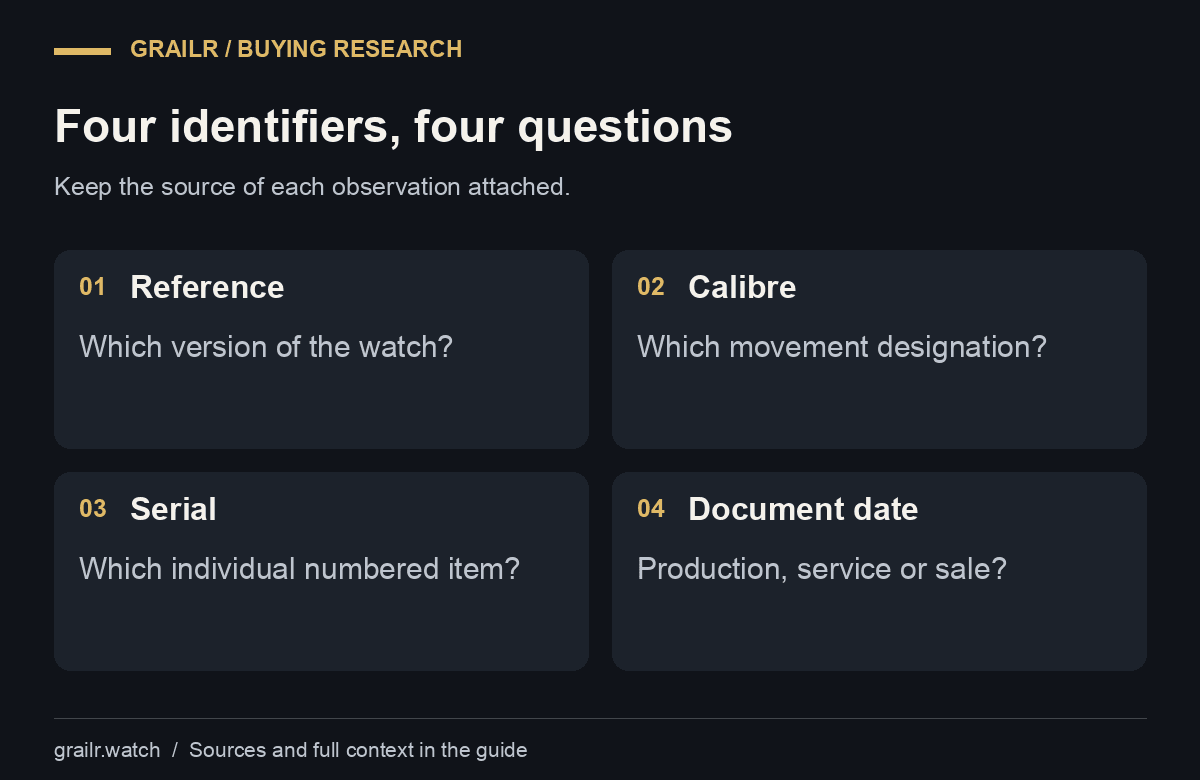
An Omega serial-number lookup can help narrow the age of a watch, but the useful first step is identifying which number you have. A model reference describes a version of a watch. A movement calibre identifies its mechanism. A serial identifies an individual numbered item. Putting a reference into a serial chart produces an answer to the wrong question, even if the result looks convincing.
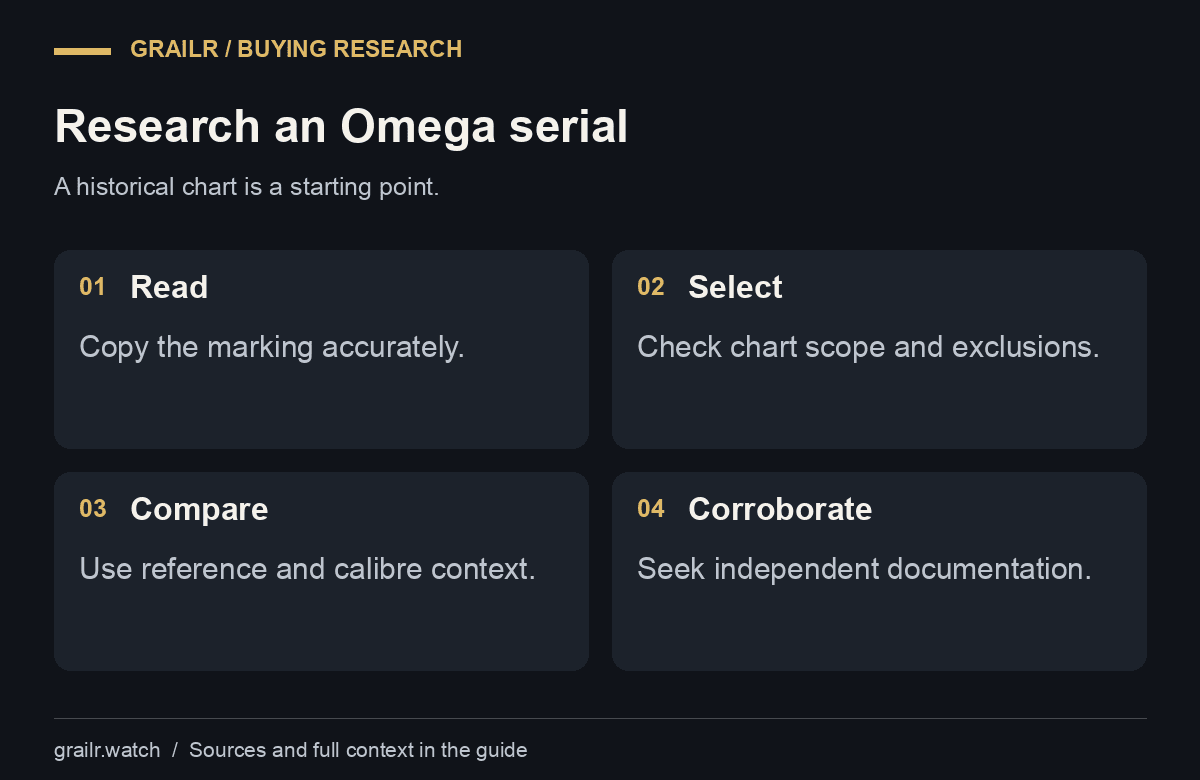
This guide gives you a practical research sequence, selected historical dating anchors and a checklist for a purchase. It is not connected to Omega's private production records. If you are holding an inherited watch or looking at an incomplete advertisement, aim first for a well-supported identification. An exact birthday, a clean ownership history and a fair purchase price are separate questions.
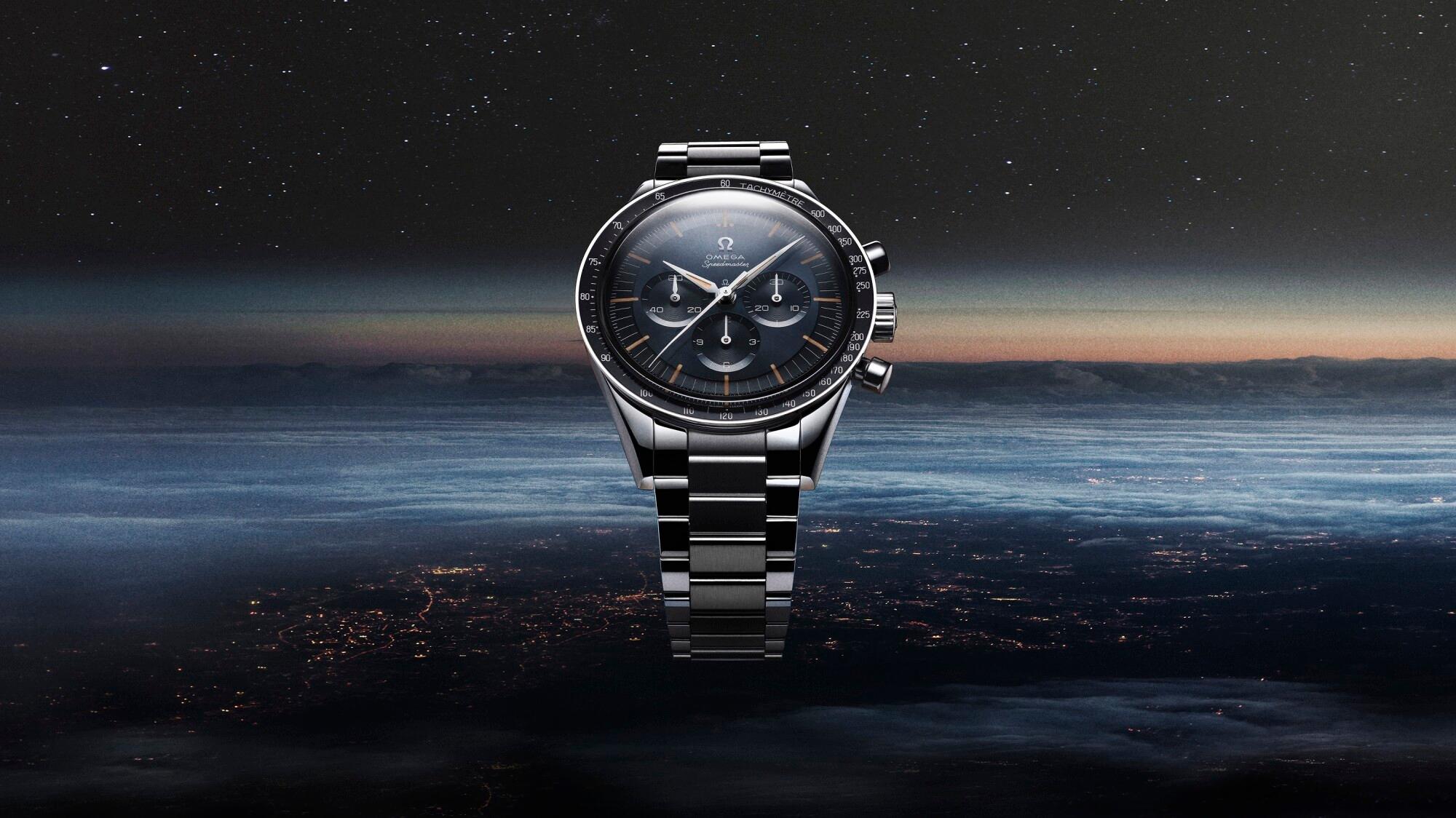
The photograph above shows the modern bracelet version of the First Omega in Space, reference 310.30.40.50.06.001. Omega presented this updated collection in 2024 with heritage styling. That makes it a useful reminder: a watch can look deliberately old without being an old individual watch. The picture is an official product image, not a dated movement or a seller's condition report. No serial number has been inferred from its dial.
Record these four identifiers separately
Make a simple record before searching. Copy punctuation and leading zeros exactly, and distinguish what you can actually read from what the seller has typed. If one character is unclear, mark it as uncertain instead of silently choosing the digit that produces the preferred year. Ask for another photograph in different light. Keep a full-resolution original privately and a separate cropped image for discussion.
| Field | What to record | What it does not settle |
|---|---|---|
| Model reference | Complete reference from reliable documentation or an appropriate inspection | The date of an individual watch |
| Movement calibre | Mechanism designation, if documented or visible to a watchmaker | Its present condition or originality |
| Serial number | Complete number and where it was observed | Authenticity, ownership or fair price |
| Document date | Sale, service or archive date with its source | Whether it is also a manufacturing date |
Location varies with the watch, so do not assume the first number on a case is the serial you need. The historical chart discussed below concerns movement numbering. If reading the relevant marking requires opening the watch, use a qualified watchmaker. Avoid levering a caseback or removing a movement simply to complete an internet search. A clear inspection record is more useful than a photograph obtained by damaging the case or seal.
Our watch reference-number guide explains why similar-looking references need careful comparison. When contacting a seller, ask which evidence supports each field in the table. A box label, a typed listing and an engraving are different sources. Agreement is useful; disagreement needs an explanation before money changes hands.
Historical Omega serial chart: selected starting points
Chuck Maddox's original historical serial-number guide, last revised in 2004, describes its dating as approximate and directs Speedmaster research to a separate table. The selected anchors below illustrate that historical method. They are not an official current database, a complete sequence of ranges or permission to extrapolate dates for modern watches.
| Movement serial anchor | Approximate year in the historical chart | How to use it |
|---|---|---|
| 12,000,000 | 1950 | A starting point for period research |
| 17,000,000 | 1960 | Compare the actual movement and reference |
| 20,000,000 | 1963 | Check that the chart fits the watch family |
| 28,000,000 | 1969 | Do not transfer this directly to a Speedmaster |
| 40,000,000 | 1977 | Seek supporting reference and document evidence |
These are selected points, not consecutive boundaries. A number between two rows does not automatically mean a year halfway between them. Do not turn this short table into a formula or label every number above one anchor as belonging to that year. Follow the linked original source and its exclusions, then record an estimated period with the evidence that supports it.
For example, if research points to approximately 1960, write that as an estimate until stronger documentation resolves it. A seller may describe a watch by its purchase year, an inherited family recollection or a restoration date. Ask what the advertised year means. The result should make the listing easier to understand rather than decorate it with precision the evidence cannot support.
Speedmaster serials need their own research
Roman Hartmann's Speedmaster chart places case references, calibres and serial prefixes together. It also explicitly excludes some movement variants and limited editions. This is why a general Omega chart should not be treated as a universal Speedmaster decoder. Check the chart's actual coverage before using a row, and preserve the reference and movement information alongside any suggested date.
A particularly useful comparison is the 26-million prefix: Hartmann associates it with both 1968 and 1969 entries, while the general Maddox table puts its 26-million anchor at 1968. That overlap is a warning against exact-year certainty from a prefix alone. It is not an instruction to choose the more desirable year or advertise the watch as a special historical example.
The Speedmaster buying guide provides broader family context. For an individual purchase, ask a specialist to resolve the relevant reference, movement and component combination. A dial, bezel or bracelet can be important to a collector without changing what a serial-number chart is capable of proving. Keep the assessment of parts separate from the approximate movement date.
A vintage design is not evidence of a vintage production date
Omega's 2024 First Omega in Space announcement explains the modern collection's relationship to the earlier CK 2998. The current example pictured here uses calibre 3861. Its historical appearance and commemorative caseback language should not be read as the manufacture date of a particular example. The reference-specific Omega instruction booklet identifies the bracelet model shown.
The practical lesson applies beyond this one watch. Separate the design's inspiration, the reference's introduction, the individual movement's production and the first retail sale. Those dates may all differ. When a listing says “1962,” ask whether that refers to an engraving, an anniversary theme or evidence about the physical watch being sold.
For a modern watch, begin with its documentation and the manufacturer's current support route rather than extending a vintage chart beyond its published coverage. Do not assume an online form has consulted Omega simply because it returns a confident year. Look for an explanation of the data source, eligible models and uncertainty. A tool that cannot explain its output is a weak foundation for a significant purchase.
Archive extracts and authenticity examinations answer different questions
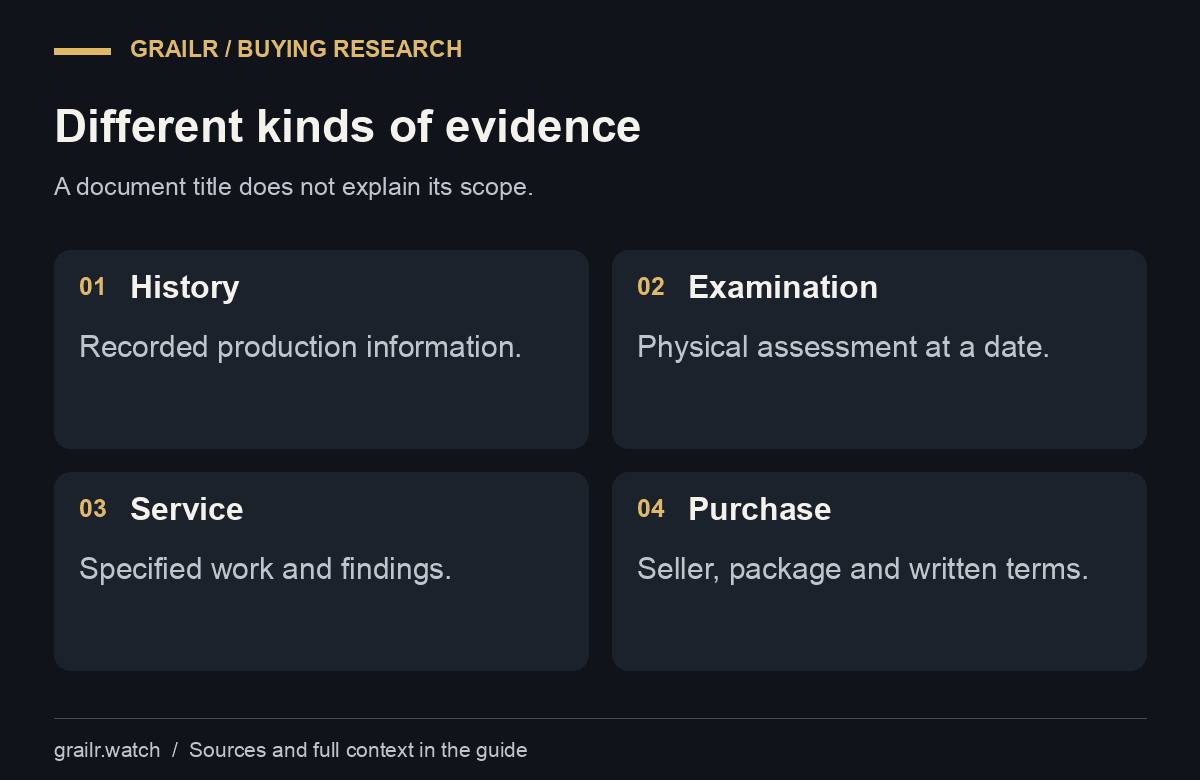
In its 2019 certificate announcement, Omega distinguished historical production information from an examination of a vintage watch's condition and authenticity at the time of assessment. That distinction matters when a seller presents paperwork: understand what the document actually says, which watch it identifies and when the assessment took place.
The announcement is historical evidence, not confirmation of today's service availability, eligibility, fee or turnaround. Contact Omega through its current official customer-service channels before paying for a proposed archive or examination service. This guide deliberately does not publish the old announcement's fee as a current quotation or promise that an archive application can presently be submitted.
Ask to see the complete relevant document rather than a cropped heading. Check how the reference and serial are linked to the watch, what was examined and what conclusions were actually recorded. Keep unrelated personal information private. If a document describes a watch at an earlier point, ask what work or replacements have happened since. A document should help you investigate; its title alone should not end the investigation.
When a number and a listing disagree
Treat a mismatch as a question to resolve. It might reflect a transcription error, a misunderstood reference, a replacement component or a more serious problem. Do not accuse the seller based on one blurred picture, but do not invent a reassuring explanation either. Ask for original photographs, the source of the advertised year and an explanation in writing.
A useful message is: “Please confirm the complete reference and the location of the serial you supplied. What supports the stated production year, and are there any known replacement parts or previous restoration?” Follow with questions specific to the answer. If the listing claims recent service, request the date, provider and scope of work rather than accepting a statement that it was checked.
For an inherited watch, keep a research folder containing photographs, family records and professional observations. Avoid polishing or replacing parts merely to make identification easier. Discuss proposed work and your preservation priorities with the watchmaker first. The aim is a clear record of the object you have, not forcing it to match an attractive photograph found online.
Use the identification to make a better buying decision
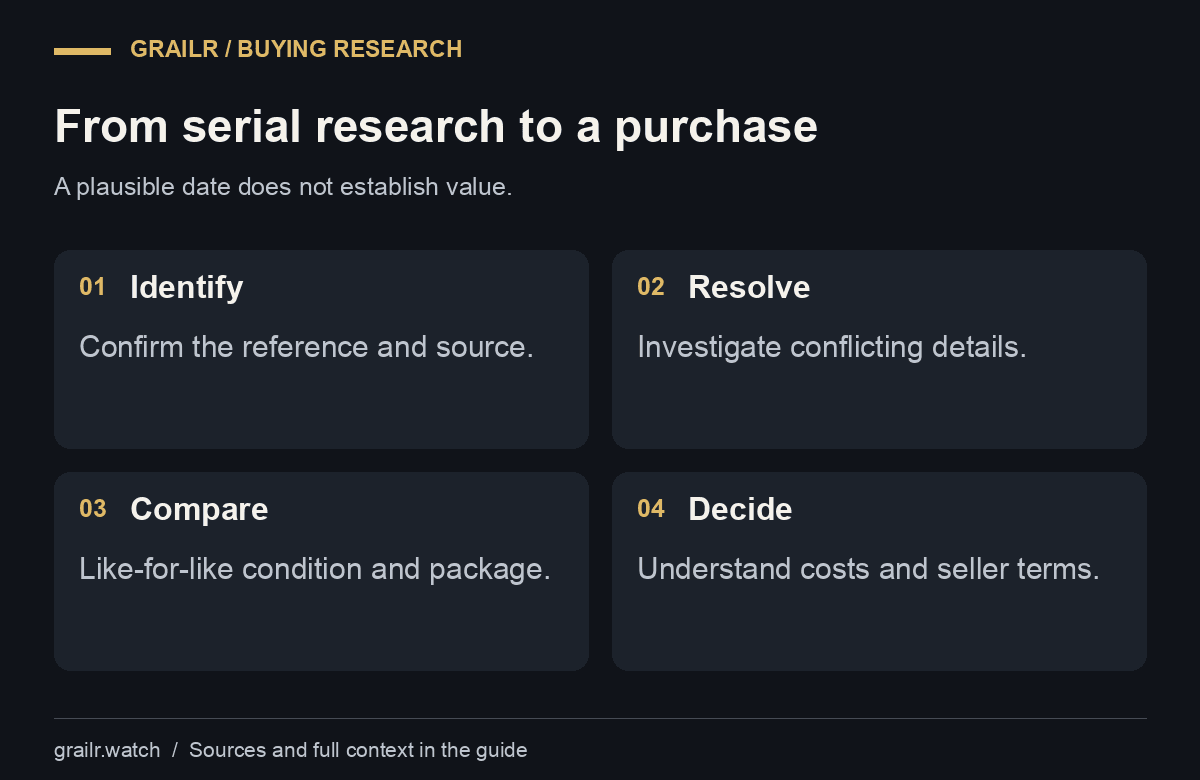
Once the reference is reasonably supported, compare like-for-like offers. Separate asking prices from documented transactions, and distinguish new retail figures from used examples. Account for condition, bracelet completeness, service evidence and the seller's terms. The date estimate is one piece of context; it does not assign a value to the watch or tell you what another buyer will pay.
Use our used-watch price comparison guide to structure the calculation. Write down the asking price, delivery and any known immediate work. Obtain quotations for uncertain work instead of hiding it inside an optimistic discount. If an unusual historical claim is the main reason for a premium, resolve that claim before treating the premium as justified.
Grailr technology can help you start from a photograph, suggest the watch and provide indicative value context with questions to investigate. The identification examples show the kind of report you can review before choosing a subscription. Grailr does not query Omega's private serial records or turn a dial photograph into a certificate. Its useful role is helping you organize the next checks and compare a proposed purchase with clearer context.
Frequently asked questions
Can I find an exact Omega production year from a serial?
Sometimes stronger records can resolve the date, but a public historical chart alone should be treated as approximate. Establish which numbering system and watch family it covers. Record uncertainty instead of turning a candidate period into a guaranteed year.
Is an Omega reference number the same as its serial?
No. Keep the model reference, movement calibre and individual serial in separate fields. Ask where each number was observed and preserve a clear photograph or document. An advertisement can contain several numbers that answer different questions.
Does every Speedmaster use the general Omega chart?
No. Use appropriate Speedmaster-specific research and check its stated exclusions. The linked historical Hartmann table includes reference and calibre context; it is not a current universal lookup service. Resolve an uncertain result with reference-specific evidence.
Does a valid-looking serial prove the watch is genuine?
No. A plausible marking cannot inspect the complete watch, verify every component or establish ownership. If originality is central to the price, seek an appropriate physical assessment and clear purchase terms rather than relying on a calculator screenshot.
Can I order an Omega archive extract through Grailr?
No. Grailr does not submit archive applications or have access to private Omega serial records. Ask Omega about currently available services, eligibility, fees and turnaround. A historical announcement is not proof that an application route is available today.
How does Grailr help when I only have a photo?
Grailr technology provides a suggested watch identification and indicative value context to support further research. Use that starting point to request the correct reference, photographs and seller answers. It does not read a hidden serial or replace an inspection.
Sources and research method
This is a desk-researched identification guide, not an official manufacturer database or a physical inspection. Sources were checked on 20 November 2026. Historical dates retain their original context; collector dating methods are attributed and qualified. Worked serial examples are fictional. Product photographs are credited and do not establish the date, condition or originality of an individual watch.