Best Sport Watches for Men: Top Brands Ranked in 2026
From the Rolex Submariner to the Casio G-Shock — every major sport watch brand compared with real pricing, specifications and resale data.
Price context: this guide includes indicative prices from its original publication period. They have not all been refreshed to current quotes. Use the linked primary sources for specifications and policies, and verify prices independently.

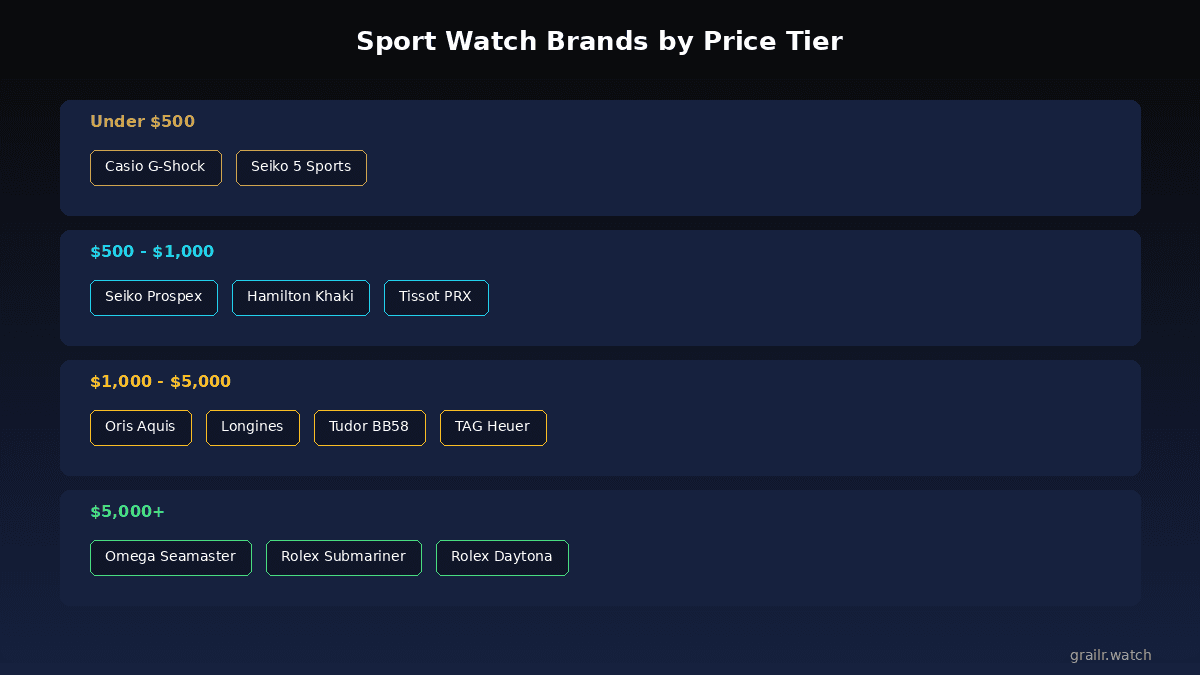
- Sport watch pricing spans from $100 (Casio G-Shock) to $50,000+ (Rolex Daytona Platinum) — every budget has serious options
- Rolex Submariner and Omega Seamaster lead the luxury segment; Tudor Black Bay dominates $3,000–$5,000
- Water resistance, shock protection, and legibility matter more than complications for actual sport use
- Resale retention ranges from 30% (fashion brands) to 110%+ (Rolex steel sports) depending on brand and model
What Makes a Sport Watch?
A sport watch is built to survive activity. That sounds simple, but the category covers everything from a $100 digital beater to a $50,000 platinum chronograph. What unites them is a set of engineering priorities that differ from dress watches: water resistance (minimum 100m for most categories), shock protection, legibility under variable lighting, and construction that tolerates sweat, impact and temperature changes.
The major sport watch subcategories include dive watches (unidirectional bezel, 200m+ WR), chronographs (stopwatch function for timing), GMT watches (dual time zones for travellers), pilot watches (large crowns and high-contrast dials) and field watches (military heritage, extreme durability). Many modern sport watches blend these categories — the Omega Seamaster Planet Ocean, for instance, combines a dive bezel with a chronograph.
This guide ranks the best sport watch brands at every price level, with real 2026 pricing and the specifications that matter for daily wear and actual athletic use.
Luxury Sport Watches ($5,000+)
Rolex ($10,250–$50,000+)
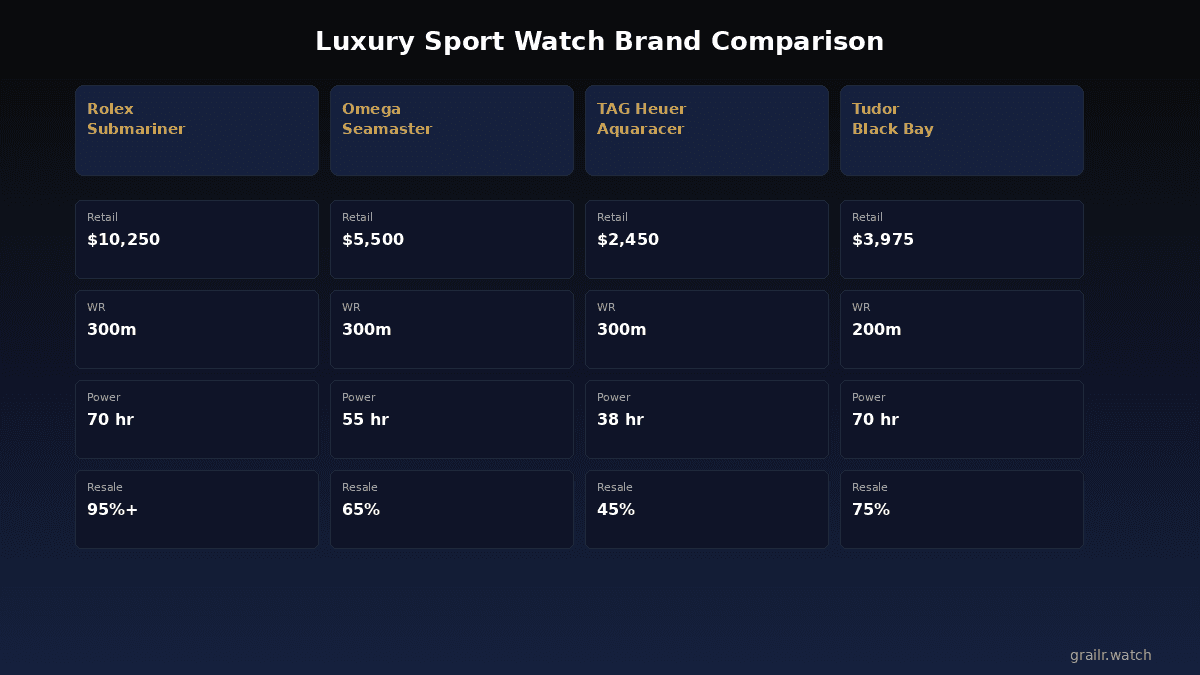
Rolex defines the luxury sport watch category. The Submariner Date ($10,250) is the single most recognizable dive watch in the world: 41mm Oystersteel case, Cerachrom bezel, 300m water resistance and the Cal. 3235 with a 70-hour power reserve. The GMT-Master II ($11,050) adds a second time zone for travellers. The Daytona ($15,100 in steel) is the chronograph benchmark — and trades at double retail on the secondary market due to extreme demand.
Every Rolex sport model uses the same Oystersteel alloy, Superlative Chronometer certification (±2 sec/day) and Triplock crown seal. What you’re paying for is reliability proven over decades, the strongest resale retention in the industry, and immediate visual recognition. The trade-off is availability: most steel sport Rolex models carry waitlists measured in months or years at authorised dealers.
Omega ($5,500–$25,000)
Omega’s sport lineup centres on two pillars. The Seamaster Diver 300M ($5,500) is a 42mm dive watch with the Co-Axial Master Chronometer Cal. 8800, ceramic bezel and helium escape valve. The Speedmaster Professional ($7,100) remains the only watch qualified for NASA EVA, running the manually wound Cal. 3861 with a 50-hour power reserve.
The Planet Ocean ($7,100) pushes water resistance to 600m and offers GMT and chronograph variants. Omega’s Master Chronometer certification (METAS-tested to ±0/+5 sec/day and 15,000 gauss magnetic resistance) gives it a measurable edge over COSC-only competitors. Resale retention runs 60–75% of retail, well below Rolex but consistent and predictable.
TAG Heuer ($2,450–$15,000)
TAG Heuer bridges the gap between mid-range and luxury sport watches. The Aquaracer Professional 300 ($2,450) delivers 300m water resistance with a ceramic bezel at an accessible price. The Carrera Chronograph ($5,250) pairs the in-house Heuer 02 movement (80-hour power reserve) with motorsport heritage stretching back to 1963. The Monaco ($6,600), with its square case and Steve McQueen association, is one of the most distinctive chronographs in production. TAG’s Autavia line ($3,400) offers a modern take on the classic pilot-chronograph format.
Mid-Range Sport Watches ($1,000–$5,000)
Tudor ($2,225–$4,700)
Tudor, Rolex’s sibling brand, delivers the strongest value proposition in this tier. The Pelagos ($4,700) is a titanium dive watch with 500m water resistance, in-house MT5612 movement (70-hour power reserve) and a spring-loaded clasp that self-adjusts over a wetsuit. The Black Bay ($3,975) uses the same movement in a steel case with vintage-inspired design. The Black Bay 58 ($3,675) in 39mm is the enthusiast favourite for daily wear.
Longines ($1,300–$3,600)
Longines punches well above its price with the Spirit collection ($1,575–$1,850), which pairs an in-house automatic (Cal. L888.4, 72-hour power reserve) with COSC chronometer certification and a silicon hairspring. The HydroConquest ($1,300) is one of the best dive watches under $1,500, with 300m water resistance, a ceramic bezel insert and a screwdown crown. The Legend Diver ($2,700) is a refined re-edition of the brand’s 1960s dive watch, popular with vintage enthusiasts.
Oris ($1,650–$3,800)
The independent Swiss brand specialises in mechanical dive and pilot watches at mid-range prices. The Aquis Date ($1,950) is the core sport model: 41.5mm steel case, 300m water resistance, ceramic bezel insert and the Calibre 400 automatic with a five-day (120-hour) power reserve and a 10-year warranty. The Divers Sixty-Five ($2,250) offers vintage styling in a slimmer 40mm case. Oris’s environmental partnerships — each Aquis variant often supports an ocean conservation project — add a story that resonates with younger buyers.
Affordable Sport Watches (Under $1,000)
Seiko ($250–$900)
Seiko’s Prospex line is the benchmark for affordable mechanical sport watches. The SPB series ($600–$900) offers 200m water resistance, Seiko’s 6R35 automatic (70-hour power reserve) and a level of finishing that embarrasses Swiss watches at twice the price. The iconic SKX series has been discontinued but its successor, the Seiko 5 Sports ($250–$350), continues the lineage with the 4R36 movement and 100m water resistance. For digital toughness, the Seiko Prospex Solar Tuna ($350–$500) is nearly indestructible.
Casio G-Shock ($100–$700)
The G-Shock is the most durable sport watch at any price. The DW5600E ($50–$70) has survived being run over by trucks in torture tests. The mid-range GA2100 “CasiOak” ($100–$130) adds analogue hands in a slim octagonal case. At the top end, the full-metal GMW-B5000 ($500–$700) wraps the same module in stainless steel or titanium with Bluetooth connectivity, Tough Solar charging and Multi-Band 6 atomic timekeeping. No mechanical watch under $5,000 matches a G-Shock for pure survival capability.
Tissot & Hamilton ($350–$900)
Tissot’s PRX Powermatic 80 ($725) is a steel sport watch with the Powermatic 80 movement (80-hour power reserve) and a Gerald Genta-inspired integrated bracelet design. It competes aesthetically with watches costing five times more. Hamilton’s Khaki Field Mechanical ($500) is a hand-wound field watch with military heritage, 80-hour power reserve and sapphire crystal — the best manual-wind sport watch under $1,000. The Khaki Navy Scuba ($645) adds 100m dive capability.
Specifications Compared
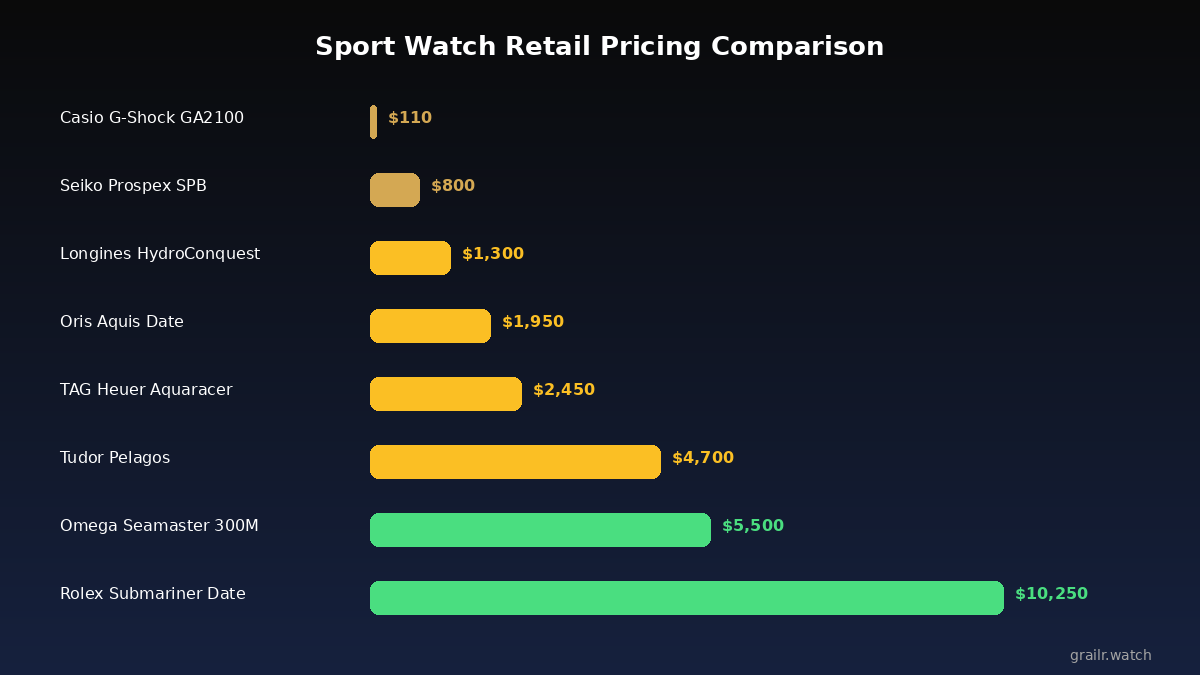
| Watch | Size | WR | Power Reserve | Retail |
|---|---|---|---|---|
| Rolex Submariner Date | 41mm | 300m | 70 hr | $10,250 |
| Omega Seamaster 300M | 42mm | 300m | 55 hr | $5,500 |
| Tudor Pelagos | 42mm | 500m | 70 hr | $4,700 |
| TAG Heuer Aquaracer 300 | 43mm | 300m | 38 hr | $2,450 |
| Oris Aquis Date | 41.5mm | 300m | 120 hr | $1,950 |
| Longines HydroConquest | 41mm | 300m | 72 hr | $1,300 |
| Seiko Prospex SPB | 42mm | 200m | 70 hr | $800 |
| Casio G-Shock GA2100 | 45mm | 200m | 3 yr (battery) | $110 |
Prices are approximate 2026 retail for standard steel/resin models. Special editions and precious-metal variants carry significant premiums. Power reserve listed for mechanical movements; battery life shown for quartz.
Check Any Sport Watch Price
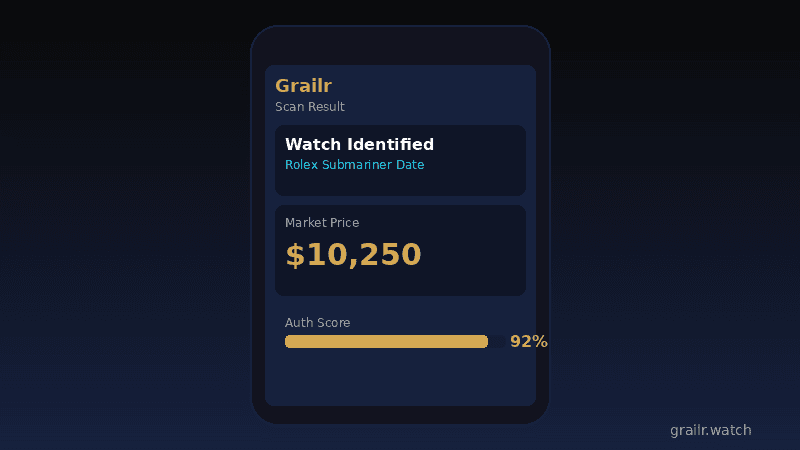
Grailr scans your watch photo and suggests a model identity with indicative market pricing from active listings. Verify independently before buying.
- Identifies brand, model & reference number
- Indicative prices from active listings
- Authentication confidence scoring
Resale Value by Brand
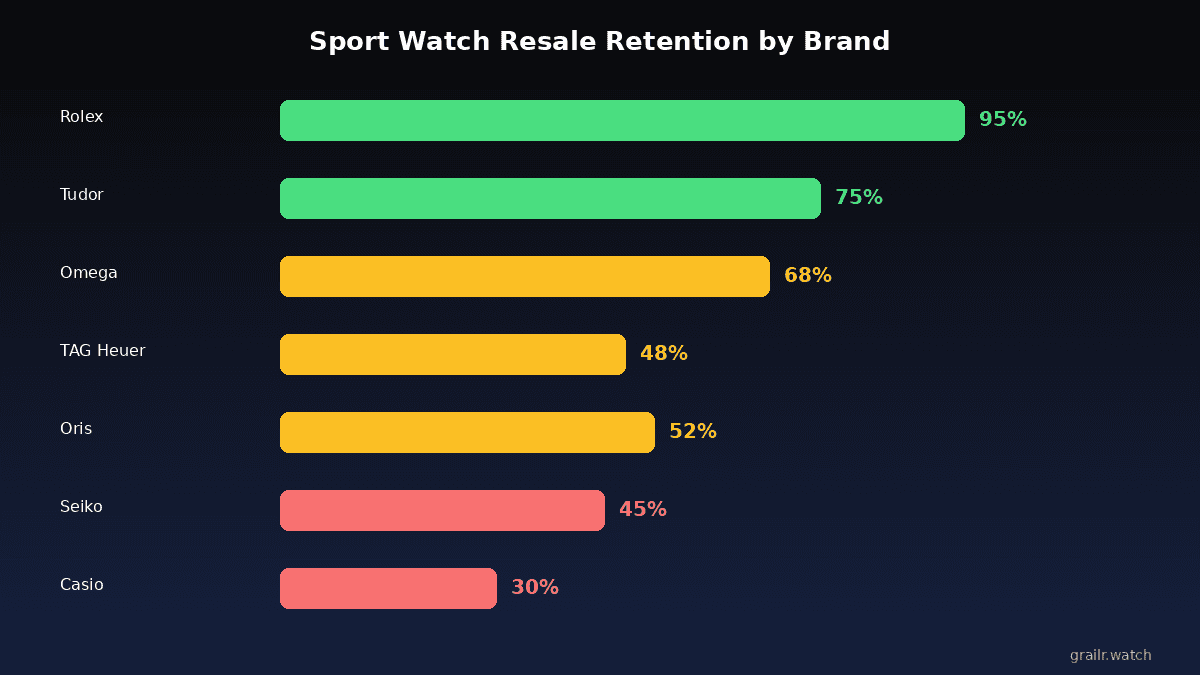
Resale retention varies dramatically by brand. A Rolex Submariner bought at retail will likely be worth the same or more in five years. An entry-level quartz sport watch will lose half its value the moment you cut the tag. Here’s how the major sport watch brands hold up on the secondary market:
| Brand | Typical Retention | Best Model | Worst Model |
|---|---|---|---|
| Rolex | 90–120% | Daytona (150%+) | Air-King (88%) |
| Tudor | 65–80% | BB58 (78%) | 1926 (55%) |
| Omega | 60–75% | Speedmaster (78%) | Aqua Terra (55%) |
| TAG Heuer | 40–55% | Monaco (60%) | Formula 1 (30%) |
| Oris | 45–60% | Aquis LE (65%) | Big Crown (40%) |
| Seiko | 35–55% | Marinemaster (70%) | Seiko 5 (30%) |
| Casio | 20–40% | GMW-B5000 (55%) | Basic G-Shock (15%) |
These figures are indicative editorial estimates based on observed asking prices, not verified transaction data. Actual resale depends on condition, box/papers, service history and market timing. If resale matters to you, read our guide to watches that hold value for a deeper analysis.
How to Choose Your Sport Watch
1. Start with Activity
If you actually swim or dive, you need minimum 200m water resistance and a screw-down crown. For running and gym work, shock resistance matters more than water depth — a G-Shock or field watch is more practical than a dive watch. For travel, a GMT complication is genuinely useful.
2. Set a Realistic Budget
Excellent sport watches exist at every price point. A $300 Seiko 5 Sports will keep time within 20 seconds a day and survive years of daily wear. Spending more buys better finishing, in-house movements and resale retention — not necessarily better timekeeping or durability.
3. Try Before You Buy
Sport watches tend to wear larger than their case diameter because of thick bezels and crown guards. A 42mm dive watch wears like a 44mm dress watch. Visit an authorised dealer and try the actual model on your wrist — photographs lie about perceived size.
4. Consider Pre-Owned
Sport watches above $2,000 depreciate 15–30% in the first year. A one-year-old piece in excellent condition with box and papers gives you the same watch at a meaningful discount, often with warranty remaining. Check our guide on fair pre-owned pricing.
5. Bracelet vs Strap
Steel bracelets add wrist presence and survive water better. Rubber straps are lighter and more comfortable during exercise. Many sport watches offer both options — buy on bracelet if the model supports it, since aftermarket bracelets rarely match OEM quality.
Frequently Asked Questions
What is the best sport watch brand for men?
Rolex leads in resale value and prestige with the Submariner and Daytona. Omega offers the best value-to-quality ratio with the Seamaster and Speedmaster. For under $5,000, Tudor's Black Bay line delivers Swiss manufacture quality at accessible prices.
How much should I spend on a sport watch?
Genuine Swiss sport watches start around $500 with Tissot and Hamilton. The $1,000-$3,000 range offers excellent in-house movements from Oris, Longines and Tudor. Above $5,000 you enter luxury territory with Omega, and above $10,000 with Rolex.
Do sport watches hold their value?
Luxury sport watches from Rolex retain 90-120% of retail. Omega retains 60-75%, Tudor 65-80%, and TAG Heuer 40-55%. Below $2,000, most sport watches depreciate 40-60% but deliver years of daily wear.
What water resistance do I need for a sport watch?
100 metres (10 ATM) is sufficient for swimming and recreational water sports. 200 metres handles snorkelling and surface water sports. 300 metres is the standard for serious dive watches. Anything above 300m is for professional or saturation diving.
Are Japanese sport watches as good as Swiss?
Seiko's Prospex line and Citizen's Promaster compete directly with Swiss watches costing 2-3 times more on durability and accuracy. Where Swiss brands lead is in finishing, in-house movement prestige and resale value. For daily wear and actual sport use, Japanese watches offer exceptional value.
What is the difference between a dive watch and a sport watch?
A dive watch is a specific category of sport watch built to ISO 6425 standards with a unidirectional rotating bezel, minimum 100m water resistance and luminous markers. Sport watches as a broader category include chronographs, GMT watches, pilot watches and field watches that prioritise durability over dress-watch elegance.
Related Articles
The Bottom Line
The best sport watch is the one that matches your activity, budget and wrist. The Rolex Submariner remains the undisputed champion of luxury sport watches, but a Seiko Prospex will survive the same dive at a fraction of the price. Our top pick by tier: the Tudor Black Bay 58 ($3,675) for the sweet spot of in-house movement, heritage design and strong resale; the Longines HydroConquest ($1,300) for the best dive watch under $1,500; and the Casio G-Shock GA2100 ($110) for pure, indestructible value.
Found a Sport Watch You Like?
Grailr uses a photo to suggest a watch identity and an indicative price estimate. Check the exact reference and condition independently; a photo scan cannot authenticate a watch.
Scan a Watch NowSources and price context
- Rolex Submariner official collection — Current models, specifications, case dimensions and retail pricing from the manufacturer.
- Omega Seamaster Diver 300M collection — Co-Axial Master Chronometer specifications, water resistance ratings and current retail pricing.
These primary sources support the specific specification and pricing points noted above. Prices and resale percentages elsewhere in this guide are indicative editorial figures, not a verified transaction dataset or guaranteed returns. Confirm the exact reference, region, condition and current quote before buying; asking prices are not completed-sale prices.