Buying guide
Tissot Seastar 1000: Quartz vs Automatic Buying Guide
Compare the Tissot Seastar 1000 quartz and automatic in 40mm. Check price, thickness, servicing and used-watch condition before choosing your next watch.
By Grailr Watch Intelligence · · 12 min read
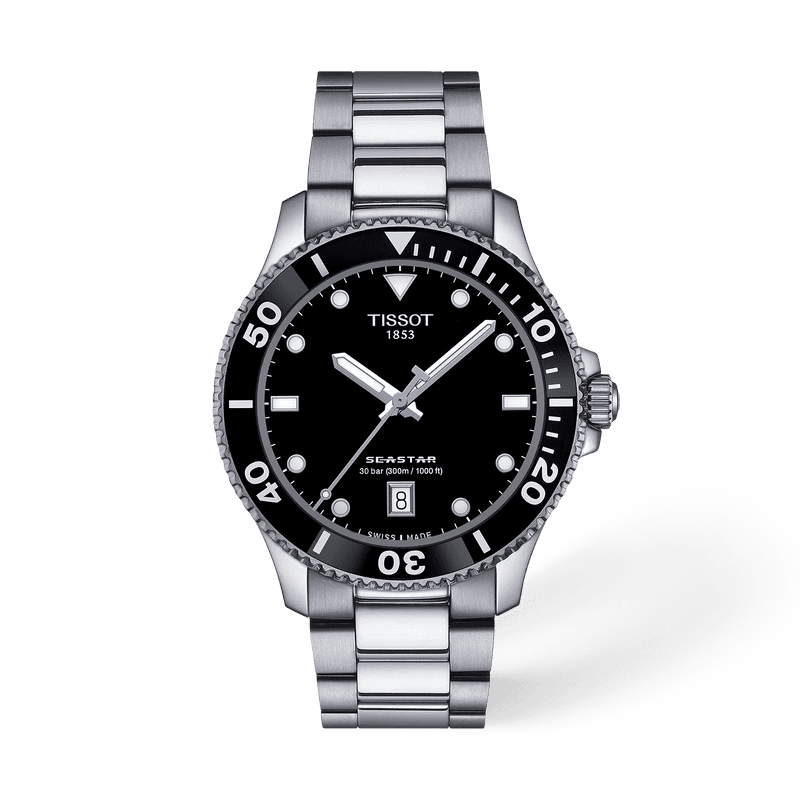
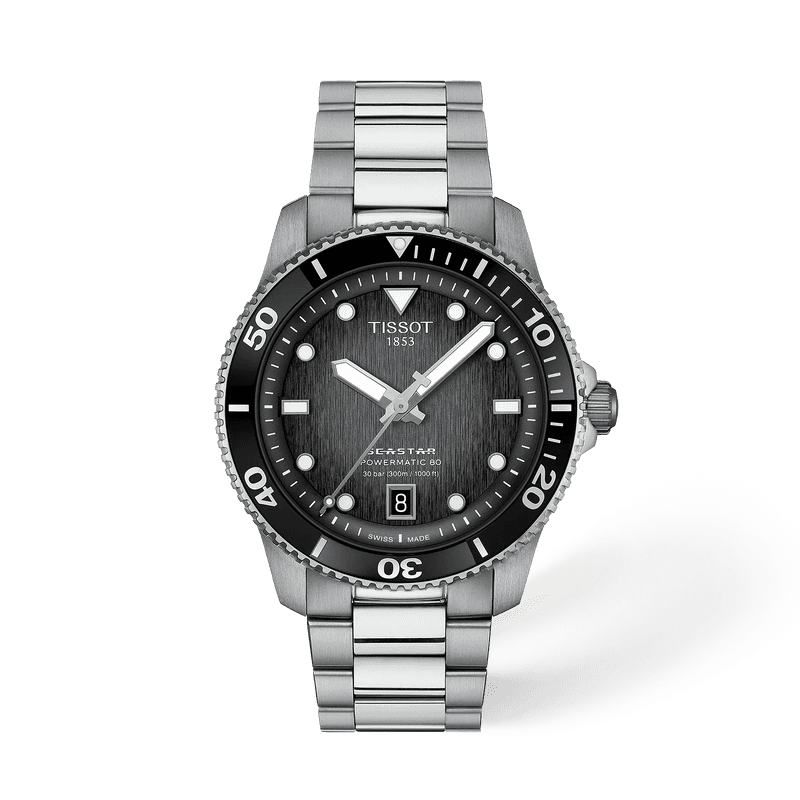
The Tissot Seastar 1000 quartz and automatic can look close enough in a small listing photo that you compare prices before noticing which watch you are buying. That is the wrong way round. The movement changes the ownership routine, and the case thickness changes how the watch sits under a sleeve. A lower price may simply belong to a different reference.
This guide compares the black-dial, steel-bracelet 40mm quartz T120.410.11.051.00 with the 40mm automatic T120.807.11.051.00. Our recommendation is straightforward: start with quartz if convenience and a thinner case matter most; consider the automatic if the mechanical movement is part of the enjoyment you want to buy. Then evaluate the actual offer, including condition and likely costs.
Tissot Seastar 1000 quartz vs automatic: the useful differences
The broader Tissot collection guide helps place the Seastar alongside the brand’s other watches. The family name alone will not resolve a listing. Tissot sells Seastar watches in different sizes and configurations, including chronographs. Keep the full reference in your notes and compare it with the dial, caseback and seller documentation. This article is about two three-hand 40mm watches, not every Seastar 1000 or the larger Seastar 2000 family.
| Specification | Quartz T120.410.11.051.00 | Automatic T120.807.11.051.00 |
|---|---|---|
| US manufacturer price shown | $515 | $875 |
| Movement | Quartz, three hands and date | Powermatic 80 automatic with date |
| Case width | 40mm | 40mm |
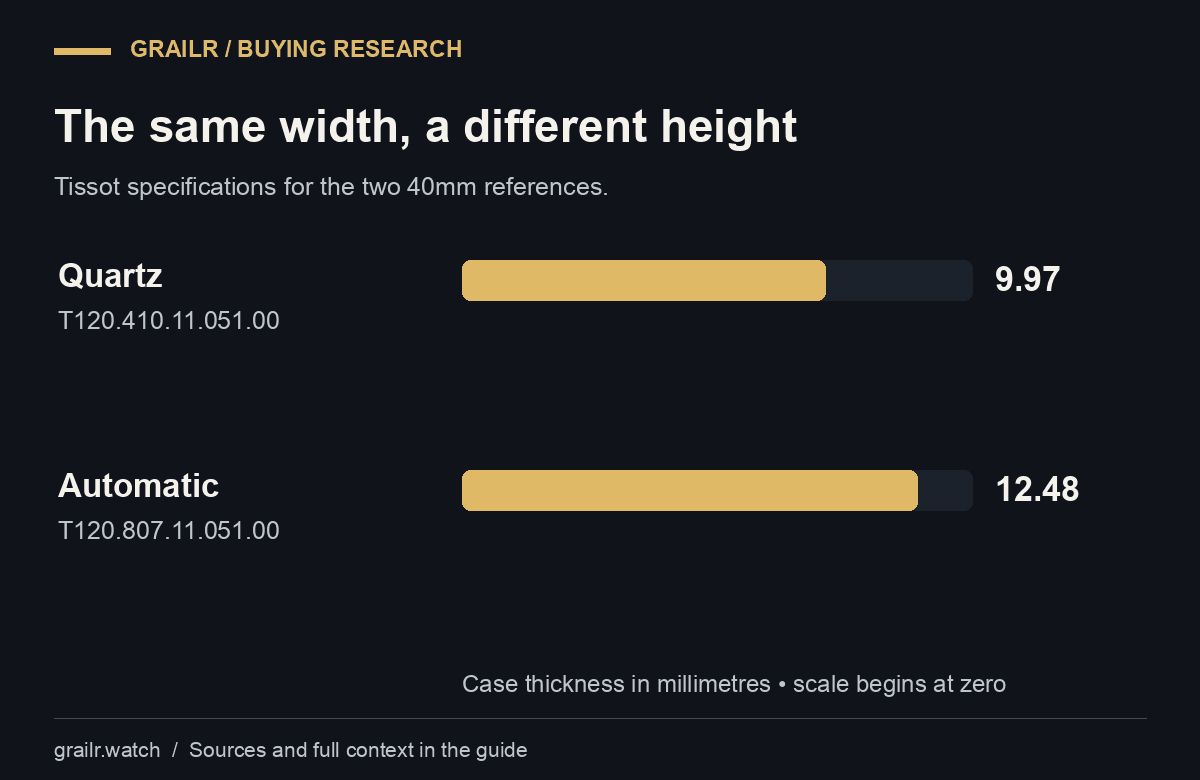
| Case thickness | 9.97mm | 12.48mm |
| Published weight | 134g | 148g |
| Lug width | 20mm | 20mm |
| Factory water-resistance rating | 30 bar / 300m | 30 bar / 300m |
| Running provision | Battery, end-of-life indicator | Up to 80-hour reserve |
The figures come from Tissot’s quartz product page and automatic product page. They are a dated US manufacturer snapshot, not a statement that every retailer charges the same price. Confirm tax, delivery and current availability at purchase. A used watch’s running performance or water resistance is not established by this table.
There is no need to turn the choice into a contest about which movement is more respectable. You are choosing a watch to wear. If a mechanical movement adds enjoyment every time you pick it up, that can justify an extra spend for you. If you mainly want to read the time and get on with your day, quartz deserves a serious place on the shortlist.
How the two 40mm cases can feel different
Diameter is only one measurement. These references share a headline size, but the automatic case is taller and its published weight is higher. That can change the impression of the watch without changing the width printed on a retailer’s filter. Try both if possible, especially if your reason for choosing 40mm is comfort rather than a particular look.
Evaluate the bracelet with the clasp in a sensible position beneath your wrist. A loose fit can make either watch feel more cumbersome than it will after adjustment. Move your wrist through ordinary activities and try it with your usual sleeve. Ask about available adjustment and spare links; “sized for a seven-inch wrist” is not enough if you need to know how much additional length is supplied.
For an online purchase, ask for a side photograph and a clear view of the clasp. A close-up front image can hide case height, bracelet marks and how the first links behave. The factory weight also includes a specified configuration; an already shortened bracelet or replacement strap can change the weight of the example in your hand.
Both have a published 20mm lug width. Treat that as a starting measurement for strap research, not confirmation that every end link, bracelet or accessory will fit. If you intend to replace the bracelet immediately, include the cost before comparing the deal with another complete watch. An attractive sticker price can lose its advantage when you add the parts required for the setup you actually want.
Pick the movement around your routine
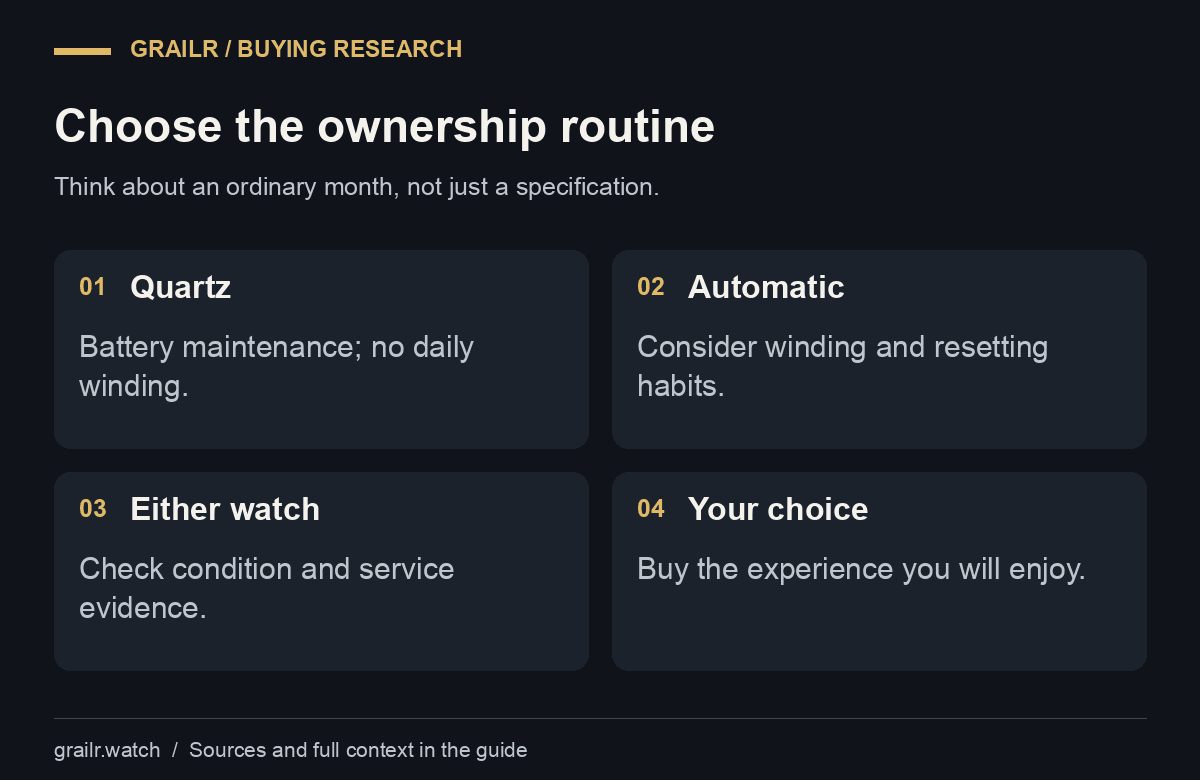
Our automatic versus quartz guide explains the underlying ownership differences. Quartz is the simpler starting point for someone who rotates several watches and dislikes resetting them. The battery still needs attention eventually, but you do not wind the watch because it has spent a weekend in a drawer. Ask a used seller when the battery was last changed and what work accompanied that replacement. A moving seconds hand today does not establish the remaining battery life.
The automatic appeals if interacting with a mechanical watch is part of the purchase. Think about when you wear it and whether resetting the time is a pleasure or an irritation. The stated reserve is a model specification from a full wind; wearing patterns and the condition of a used example matter. Do not pay extra because a listing implies “automatic” means it never needs maintenance.
If you are new to mechanical watches, read the supplied manual before setting the date or operating the crown. Ask the seller to demonstrate normal operation without forcing anything. A stiff, damaged or uncertain control is a question for a competent watchmaker, not a feature you should excuse because the rest of the watch photographs well.
The most useful buying test is to imagine owning the watch for a normal month. Which would you reach for? Which fits your clothing and activities? Would you still prefer the automatic if nobody else knew what movement was inside? Your answer is more useful than a generic claim that one choice is always the better investment.
What does the extra automatic price buy you?
At the manufacturer prices captured above, the difference is $360. That is a comparison between two new US product listings on a particular date. It is not a resale premium, an expected future return or a promise that an automatic example is worth $360 more in every condition. Used offers need to be compared within their own reference first.
If you are considering a discounted new watch, clarify who supplies the warranty and which documents arrive with it. A lower price may come with different support or return arrangements. That does not settle the decision by itself; it gives you a different offer to assess. Keep the seller’s promises in writing and read the terms before payment.
For a used watch, record whether the bracelet is complete, whether there is service evidence and what the seller means by “excellent.” A missing link, damaged bezel or unresolved running issue can matter more to your immediate outlay than a small discount. Our used-watch price checklist provides a way to keep these facts beside each offer.
| Question | Useful evidence | Reason to pause |
|---|---|---|
| Correct reference? | Watch photographs and matching documentation | Listing title and photographs disagree |
| Ready to wear? | Bracelet length, spare links and working clasp | Required parts are missing or unpriced |
| Maintenance understood? | Battery or service invoice; running details | “Serviced” has no date or description |
| Water use appropriate? | Relevant recent inspection or test evidence | Factory rating is offered as the only proof |
| Terms acceptable? | Seller identity, written returns and delivery terms | Pressure to pay before questions are answered |
Do not mix active listings with completed sales in a spreadsheet labelled “market value.” An asking price shows the seller’s position. It does not show the final negotiation, whether the watch sold or what was included. Use several matched offers when possible and keep limited evidence visible. A tidy average of unrelated watches can be less useful than three carefully described comparables.
Used Seastar checks: bezel, crown, crystal and bracelet
Ask for photographs of the dial, crystal edges, bezel, case sides, crown, caseback and clasp. Request a short description of any marks that are difficult to show. Look for consistency between the wording and the photographs rather than trying to certify a watch from pixels. If important areas remain hidden, the immediate task is to obtain better evidence.
Ask whether the bezel operates normally and whether the crown screws down correctly. A seller can describe these behaviours without claiming to have conducted a technical inspection. Do not force a crown or attempt a repair to make a prospective purchase pass a casual check. Where a problem is suspected, obtain a professional assessment or choose a clearer offer.
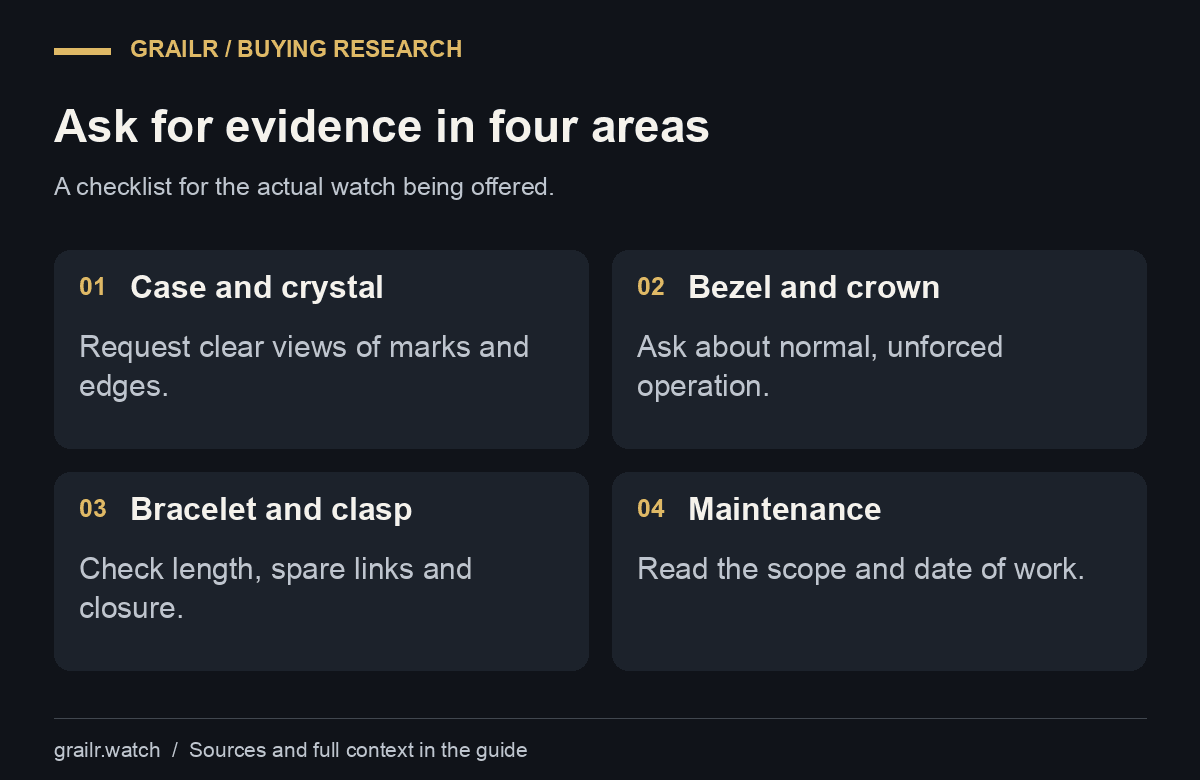
Water resistance deserves its own question if you intend to use the watch around water. Tissot’s quartz-watch instructions describe operating precautions and maintenance. A rating printed on the watch does not tell you when an older example was last tested or whether a previous repair affected its seals. Ask about the actual watch, not just its original specification.
A pressure-test result also has a date and scope. Ask who performed it and keep the evidence with the watch’s history. Do not infer professional diving suitability from a marketplace listing or a photograph. If that is your intended use, obtain advice and checks appropriate to the activity and follow the manufacturer’s instructions.
Service costs: make the allowance specific
Tissot’s US service-price page distinguishes light, partial and complete maintenance. At our check, its two-to-three-hand categories listed $130 for complete quartz service and $210 for complete mechanical service. Shipping was excluded, and the page notes that agreed third-party centres may charge differently. Treat this as published service-category context, not a quote for your particular watch.
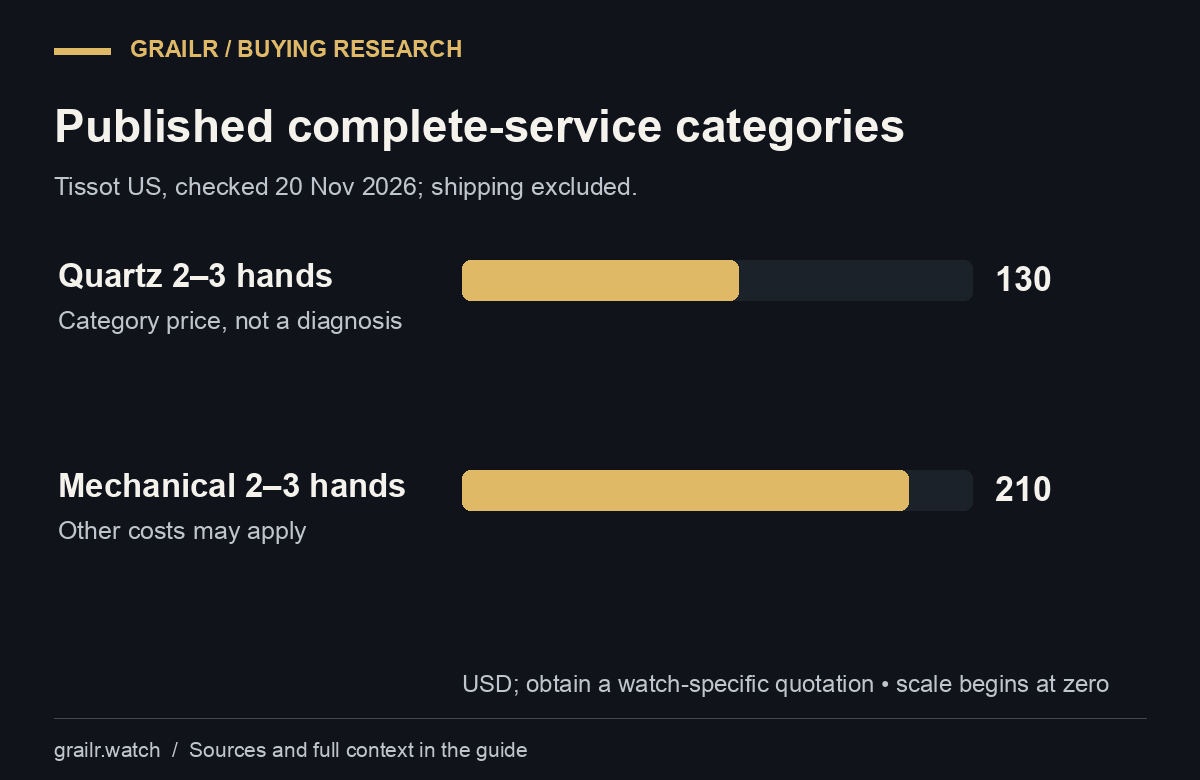
The distinction between a battery change and broader maintenance matters. Tissot describes partial service as including water-resistance restoration and, for quartz, battery replacement. Ask what was actually done rather than accepting “new battery” as a complete account of condition. If a seller claims recent work, an invoice can clarify the date, provider and scope.
You do not need to assume every used watch immediately needs complete service. Equally, an unknown repair requirement should not become zero in your budget merely because you prefer the purchase to work out. Ask for a diagnosis or quotation where a specific concern exists. Cosmetic parts, damage and missing components may change the total beyond a generic service category.
For a simple hypothetical comparison, a $300 asking price plus $25 delivery and a confirmed $60 maintenance quote totals $385 before tax or other costs. A $370 delivered offer would be cheaper on that narrow arithmetic if it genuinely needs no immediate work. These are invented offers, not observed Seastar listings. The lesson is to use confirmed costs and then compare condition and terms alongside the subtotal.
- Record the exact service being quoted and who will perform it.
- Keep delivery and taxes separate so the same costs are not counted twice.
- Mark unresolved repairs as unknown instead of guessing.
- Revisit the comparison if new evidence changes the condition assessment.
Turn your shortlist into a buying decision
Begin with the reference and your preferred routine. Eliminate watches that cannot be made to fit comfortably within your budget. For the remaining candidates, collect comparable evidence and calculate the known total outlay. A simple shortlist of three understandable offers is often more useful than dozens of saved advertisements with no notes about what makes them different.
Grailr can help you keep that research moving. Upload a clear watch photograph to explore the suggested identity and indicative value, then use your web report to compare an asking price and known costs. Save the report while you request the missing information. Confirm the suggested reference using manufacturer details and seller evidence, especially when closely related models look similar.
Read the current rules of the platform and seller you actually use. Chrono24’s buyer guidance is one example of why transaction arrangements need checking rather than assuming every listing comes with identical protection. Keep messages and payment inside the agreed process, and preserve the description and terms that informed your decision.
Our editorial choice would be quartz for the buyer prioritising convenience and a thinner everyday watch, and automatic for the buyer who actively wants the mechanical ownership experience. Either can be a satisfying purchase when the particular watch is right. If condition or identity remains unclear, asking another question is progress. A subscription report is a research aid; the final decision still depends on evidence about the watch you will receive.
Frequently asked questions
Which Tissot Seastar 1000 should I buy: quartz or automatic?
Start with quartz if a thinner case and a straightforward ownership routine are your priorities. Consider the automatic if you want the mechanical movement as part of the experience. Compare the condition and total cost of actual offers before deciding.
Are both of these Seastar references 40mm?
Yes, the compared black-dial references are both listed as 40mm. They differ in thickness and published weight, so the common diameter does not establish that they feel the same on your wrist.
Does the automatic cost $360 more everywhere?
No. That difference comes from the two official US retail prices observed on 20 November 2026. Retailer offers, taxes, configuration, location and used condition can produce different comparisons. It is not a resale premium.
Is a used Seastar still water resistant?
The factory rating does not establish a particular used watch’s current condition. Ask about maintenance, damage and recent testing, and arrange appropriate professional checks for your intended use. Follow the instructions for the exact reference.
Does a new battery mean the quartz watch was serviced?
Not necessarily. Ask for the invoice and scope of work. A battery replacement and maintenance that includes sealing or water-resistance checks are different services; the seller should explain which was performed.
Can Grailr tell me whether a Seastar listing is worth considering?
Grailr provides identification assistance and indicative value research from a photo. Your web report can help compare an asking price and known costs. Confirm the exact reference and condition with the seller; the report does not physically inspect or authenticate the watch.
Sources and research method
This is a desk-researched buying guide, not a hands-on test. Manufacturer specifications were checked on 20 November 2026. Price snapshots identify their currency and source; worked examples are hypothetical. Our recommendations are editorial judgments about fit, evidence and buying costs.